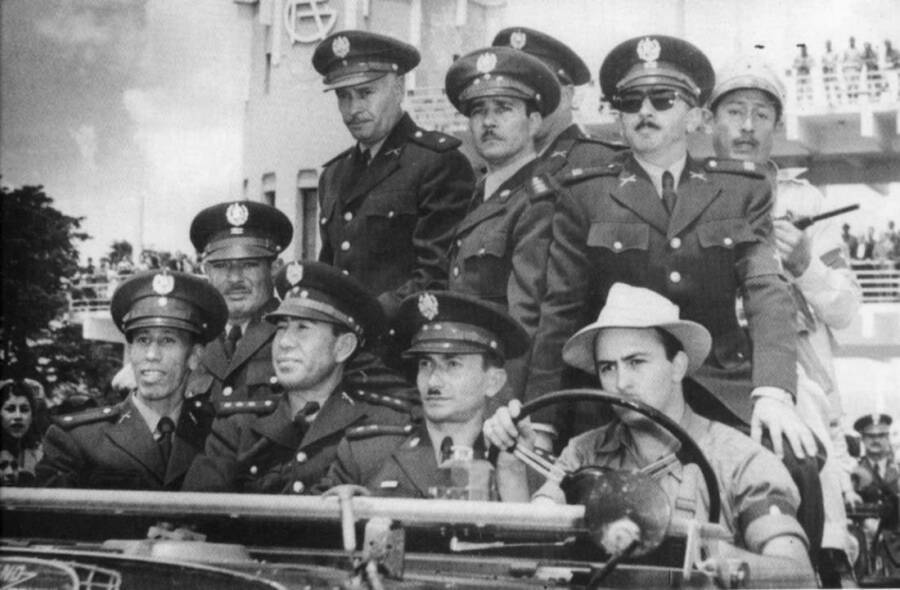
President Jacobo Árbenz of Guatemala, ousted in a CIA-backed coup on June 27, 1954, shaking hands with government officials before his exile.
Operation PBSUCCESS: The CIA's Secret War in Guatemala
In 1954, the CIA orchestrated a covert operation to topple Guatemala's democratically elected government. Operation PBSUCCESS sparked decades of unrest, revealing the clandestine reach of U.S. foreign policy during the Cold War era. Uncover the chilling details of this historical scandal and its profound global implications.
What Happened
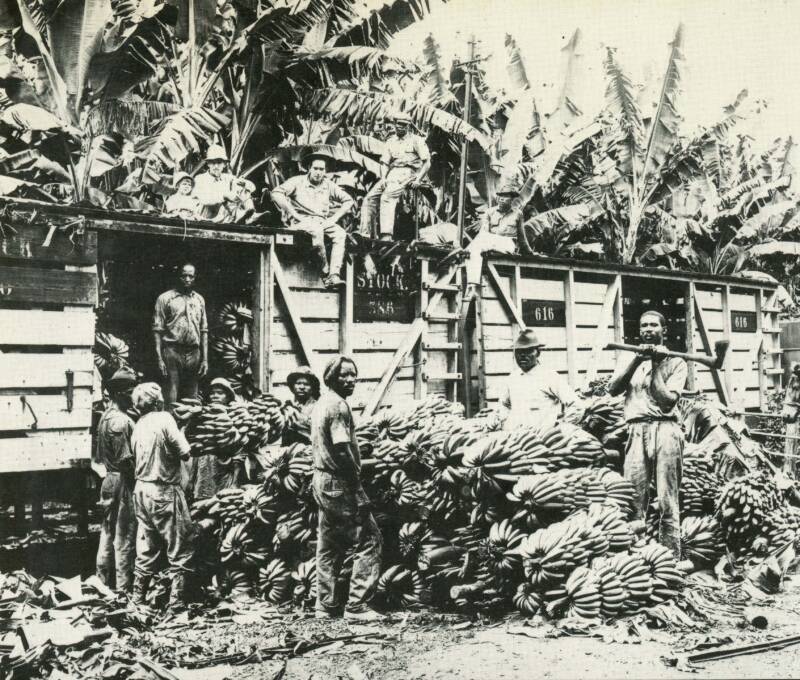
In the early hours of June 18, 1954, a small band of Guatemalan rebels, led by exiled military officer Carlos Castillo Armas, crossed the Honduran border into Guatemala. Their bold advance heralded the culmination of a covert campaign mounted by one of the world's most secretive agencies—the CIA. The United Fruit Company, a powerful American corporation, stood to lose its substantial holdings in Guatemala to Jacobo Árbenz’s sweeping agrarian reforms. Pushed by corporate interests and steered by Cold War ideology, President Dwight D. Eisenhower approved Operation PBSUCCESS in August 1953, setting the stage for the overthrow of a democratically elected government.
The crux of the operation was psychological warfare. In an era when the world teetered on the edge of nuclear confrontation, the specter of communism was enough to manipulate public perception and political will. In the months leading up to the coup, radio broadcasts, leaflets, and misinformation campaigns painted Árbenz as a Soviet stooge, threatening the Western Hemisphere from within. Despite minimal armed support, the operation relied on fearsome rumors and staged battles to project an illusion of an indomitable rebel force poised to strike.

As Armas's troops pressed forward, Árbenz quickly realized his military's reluctance to engage in full combat, crippled as they were by psychological tactics and propaganda. The radio waves were filled with the sounds of invisible legions marching toward the capital, while demoralizing bulletins reported fictitious government defections. Árbenz’s June 27 resignation stemmed from a belief that survival under foreign-backed insurrection was untenable.
Árbenz’s successors, beholden to U.S. interests, dismantled his reforms, reversing progress under the pretext of curbing communist influence. The United States justified its actions as preemptive defense, but in reality, it was an economic and strategic maneuver to cement capitalist dominance in its geographical backyard.

Once the dust settled, Castillo Armas rose to power, instigating a period of authoritarian rule that ignited a prolonged civil war. While Operation PBSUCCESS itself unfolded over mere weeks, its reverberations rippled through the decades, ingraining unrest into Guatemala’s national psyche.
The coup stands as a stark testament to the lengths to which global powers will go to protect their interests, even at the expense of nascent democracies. Fifty years later, declassified CIA documents detail the operation’s depth, laying bare the shadowy interplays of money, power, and fear during a critical juncture in history.

Timeline of Key Events
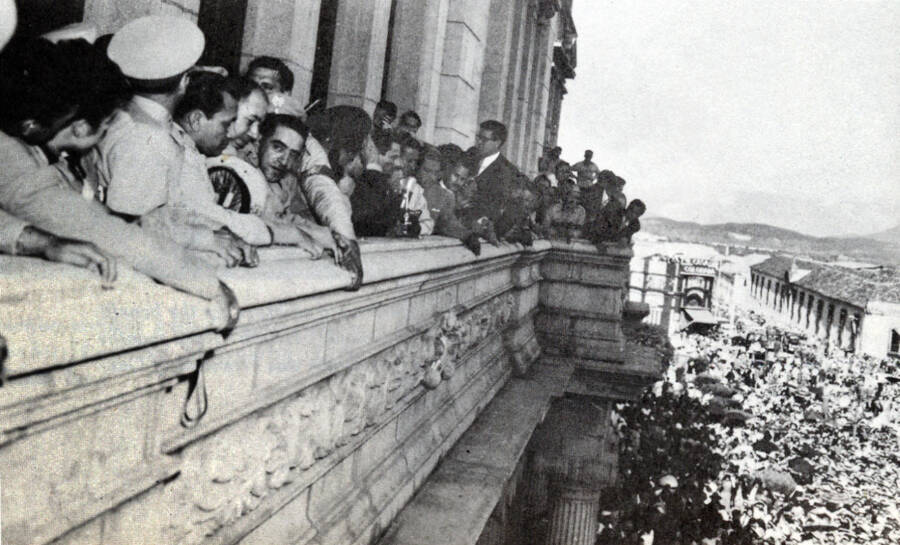
1952 — Jacobo Árbenz institutes agrarian reform, threatening U.S. corporate interests.
1953 — Eisenhower approves Operation PBSUCCESS, assigning it to the CIA.
1953 — Psychological campaigns begin under CIA guidance.
March 1954 — Airborne propaganda operations aim to sow discord in Guatemala.
June 15, 1954 — CIA-backed forces led by Carlos Castillo Armas invade from Honduras.
June 18, 1954 — U.S. ships blockade Guatemala’s coast to prevent aid.
June 25, 1954 — Guatemalan military morale collapses amid psychological warfare.
June 27, 1954 — Jacobo Árbenz resigns and seeks asylum.
July 1954 — Castillo Armas becomes President of Guatemala.
1954 — CIA launches Operation PBHistory to scour Árbenz documents.
1955 — Méndez Montenegro is officially elected President.
1960 — Civil war breaks out as remnants of the Árbenz era resist.
1966 — United States increases military aid under new Cold War tensions.
1970s — Leftist guerrilla movements grow in response to government oppression.
1982 — Efraín Ríos Montt's coup leads to a bloodiest phase of the civil war.
1996 — Guatemalan civil war officially ends.
1997 — Truth Commission links coup to subsequent rights abuses.
2003 — U.S. public acknowledgment of PBSUCCESS comes in declassified documents.
2011 — CIA's involvement acknowledged in formal U.S. apology.
2013 — Statue of Árbenz unveiled in Guatemala City, restoring his legacy.
What Is Documented
The core details of Operation PBSUCCESS have been meticulously documented through declassified government files, primarily released between the late 1990s and early 2000s. These documents reveal a highly coordinated plan by the U.S. government to destabilize Jacobo Árbenz's administration in Guatemala. The operation was sanctioned by President Eisenhower in August 1953, with a concrete budget allocation of $2.7 million, directed towards psychological warfare, political action, and subversion, as detailed in CIA and National Security Archive revelations.
Key figures such as CIA Director Allen Dulles helmed these operations, with assistance from United Fruit Company executives, illustrating the intertwining interests of corporate lobbying and national foreign policy. Primary sources, including a series of internal CIA communiqués and State Department cables, paint a picture of a substantial misinformation campaign, aimed at discrediting Árbenz as a communist threat. This encompassed the use of radio broadcasts—under the guise of indigenous uprising leadership—and falsified reports of Soviet arms being shipped to Guatemala.
The intervention did not utilize large military forces, a fact corroborated by Congressional hearings and archived CIA briefing memos. Instead, a small cohort of exiled Guatemalan military personnel, outfitted with propaganda tools, sufficed in toppling Árbenz's support. Their invasion efforts were supported logistically and strategically by the United States, through clandestine supply drops and covert coordination with complicit Guatemalan officials.
Further documented facts illustrate the aftermath: Castillo Armas's rise to power resulted in immediate rollbacks of progressive land reforms. This was succeeded by systemic repression, evidenced in Human Rights Watch reports and international oversight data, setting off decades of civil unrest that were foreseen by State Department analysts post-coup.

What Has Been Alleged
Allegations surrounding Operation PBSUCCESS extend beyond the officially documented accounts, with certain claims rooted in speculative assessments and testimony from exiled figures. Among these claims is the assertion, chiefly postulated by Guatemalan rebels and leftist historians, that the U.S. deployed secret paramilitary groups rather than the lightly armed exile forces that the CIA admitted to supporting.
A prominent figure in such claims, journalist Stephen Schlesinger, argues in his writings that the invasion force was significantly more equipped than reported, possibly receiving clandestine aid not only from the U.S. but also from neighboring South American countries. This narrative remains unproven due to a lack of physical evidence or credible testimonies directly corroborating advanced armament or expanded regional collusion.
Moreover, certain sectors of academic critics posit that the political assassinations post-coup may have had covert U.S. vetoes preceding their execution. While no declassified documents directly imply CIA involvement or sanction of these eliminations, the prevalent theory rests on anecdotal sources and secondary interviews with disenfranchised Guatemalan insiders from that era.

The role of companies beyond United Fruit has also been subject to scrutiny. Accusations allege that other American companies, particularly those involved in telecommunications, facilitated the communications network that enabled rapid dissemination of false information—although these allegations lack substantial documentary foundations within the released archival materials.
Finally, it is contended that some CIA operatives went rogue, engaging in unauthorized tactics to ensure Armas's ascendancy. These assertions remain speculative, largely fueled by subsequent defector claims and notations in controversial footnotes of CIA internal correspondence.
What Remains Disputed
Despite the extensive declassification efforts, several aspects of Operation PBSUCCESS remain hotly disputed. Official narratives issued by the United States government, such as the 'non-involvement' clause in direct combat, clash with claims from international and Guatemalan scholars, who suggest a more hands-on military involvement by U.S. advisors than officially recognized.
The deployment of psychological strategies has also been a point of contention. While CIA documents confirm the use of psychological warfare, the scope and effect of these tactics have been contested. U.S. accounts argue the psychological operations were purely informational, aimed at demoralizing the Arbenz government without provoking undue chaos. However, independent accounts from inside Guatemala claim these tactics sowed more violence and confusion than American briefings acknowledge.
Moreover, the impact of broadcasted fake news, relayed through CIA-backed radio stations, has been debated. Some assert that the psychological impact was overstated in later American critiques— a narrative of perceived omnipotence to bolster the 'myth' of the CIA's ability to topple a regime with minimal force, potentially aggrandizing U.S. influence beyond its actual reach.

These disputes highlight a schism between corroborated U.S. documentation and local histories, underscoring the complexities of interpreting Cold War-era interventions across national boundaries.
What Was Later Confirmed
Among the details that were initially denied but later confirmed through continuous pressure for transparency and eventual declassification, the true extent of corporate influence on governmental policy in the coup became evident. In particular, records revealed the close-knit relationship between high-ranking CIA officials and the United Fruit Company, as prominent figures like Allen Dulles maintained financial ties with the corporation, presenting clear conflicts of interest. These revelations only came to light through investigative journalism and Freedom of Information Act (FOIA) requests in subsequent decades.
Declassified documents also confirmed the significant role played by psychological warfare, achieved through operations managed by the CIA's Psychological Strategy Board. This was initially downplayed in early explanations of the coup's success but was later illustrated clearly through internal memoranda detailing the fabricated incidents intended to instill a sense of inevitable defeat among Árbenz’s allies.
Furthermore, the CIA’s orchestration of Operation PBHistory, an effort aimed at collecting Árbenz’s government documents post-coup to further substantiate false claims of communism, was uncovered years later. This aspect of PBSUCCESS showed the U.S. government’s attempt to justify their actions retroactively, refining the narrative to match new geopolitical rhetoric.

Acknowledgments of such covert actions were decidedly absent from public accounts until the late 20th century, reflecting an evolving transparency regarding Cold War policies and their geopolitical ramifications.
Common Myths & Exaggerations
Several myths have permeated the public's understanding of Operation PBSUCCESS. A persistent misconception is that the CIA utilized significant military force, akin to a large scale invasion. On the contrary, while the operation mobilized Guatemalan exiles, direct military force from the U.S. was minimal, relying more heavily on subversive tactics.
Another myth is that all blame for subsequent instability in Guatemala lies squarely on the coup itself. While the coup indeed triggered decades of unrest, the roots of ongoing civil strife were also deeply embedded in long-standing socio-economic disparities and internal political dynamics predating the event.
It is also erroneously believed by some that Árbenz was a confirmed communist, a myth perpetually debunked by historians and evidenced by a lack of conclusive ties to the Soviet Union despite intense scrutiny by Operation PBHistory and others.
False claims about the 'universal support' within the U.S. government also abound. Though the operation was backed by key figures, internal memoranda and external commentaries revealed significant dissent and ethical concerns about such covert interventions argued by a minority of officials and independent analysts.
Why It Matters
Operation PBSUCCESS is a poignant case study in Cold War interventions, demonstrating how geopolitical strategies can reshape national destinies in the pursuit of ideological hegemony. It set a dangerous precedent for U.S. foreign policy, whereby covert operations became legitimate tools of diplomacy—a modus operandi that would manifest in various global contexts, from the Middle East to Southeast Asia.
The coup provided a blueprint for future CIA interventions, like those in Iran and Chile, encouraging a pattern of willingness to subvert foreign governments perceived as hostile to American interests, often disregarding legitimate democratic processes. This reflects complex debates about the ethics and legality of such interventions and the long-term consequences for international relations.
With the legacy of Operation PBSUCCESS still unfolding in Guatemala, the coup offers insights into the enduring impacts of foreign intervention. It perpetuated cycles of violence, enabled political repression, and destabilized societal structures, issues that continue to resonate in global politics today, particularly in regions where external powers exert clandestine influence.
The coup's shadow lingers, reminding us that the ghosts of past policies reverberate through history, shaping interpretations of modern governance and national autonomy. Keeping such episodes at the forefront can inform present-day policy-making, highlighting the importance of transparency, accountability, and respect for national sovereignty.
Connections to Other Archive Entries
Operation PBSUCCESS doesn't exist in a vacuum. It shares historical space with similar interventions, such as the 1953 Iranian coup and the 1973 Chilean coup, both backed by the U.S. under the guise of curbing communism.
These operations are interconnected through their methodologies—using fear of communism to justify regime changes—and illustrate a period of U.S. foreign policy marked by corporate interests aligned with national strategies. The dynamics at play in PBSUCCESS similarly influenced later intelligence operations like the Vietnam War's destabilization campaigns, demonstrating a clear throughline in Cold War-era tactics.
Also noteworthy is the role of media manipulation, a component shared across these operations. It reflects a broader narrative of power exerted through media and highlights the intersection of technology and political strategy that persists into the digital age, underscoring Operation PBSUCCESS’s relevance in discussions about cyber warfare and modern information dissemination practices.
Sources & References
PRIMARY SOURCES
SECONDARY SOURCES
The Hidden History Archive is part of The Beacon Wire entertainment and informational platform. All archive articles are based on public sources, declassified documents, court records, and reputable journalism. Facts are clearly separated from allegations, disputed claims, and unsupported speculation. Nothing in this archive should be interpreted as legal advice or as incitement to harm. Readers are encouraged to consult primary sources directly.
We use cookies to improve your experience and analyze site usage. See our Cookie Policy for details.