
CIA headquarters, Langley, Virginia, where clandestine programs like Project Stargate unfolded between 1970 and 1995.
Project Stargate Unmasked: CIA's Bold Experiment in Psychic Espionage
Explore the clandestine corridors of Cold War intrigue where the CIA ventured into the realms of psychic research. With Project Stargate, the agency investigated remote viewing as a tool for espionage, a move as audacious as it was enigmatic. This exploration raises profound questions about the lengths intelligence bodies will go to for gaining an upper hand in global geopolitics.
What Happened
On a cold December day in 1972, Ingo Swann captivated a small but significant audience with an extraordinary claim: he could "see" distant locations without being physically present. This pronouncement, held in a shadowy room under the watchful eyes of government officials, caught the attention of the CIA. The agency, locked in a relentless Cold War chess game with the Soviet Union, was never one to scoff at an opportunity to tilt the scales of intelligence. Thus, Project Stargate was born, a daring foray into the mystifying world of psychic phenomena.
Project Stargate's primary focus was the practice of 'remote viewing', a purported ability to, through mental means alone, discern information about unseen or distant targets. Housed initially within the Stanford Research Institute (SRI), this project garnered the talents of physicists Russell Targ and Harold E. Puthoff. Together, they embarked on a mission that could only be described as pioneering — or perhaps, misguided, depending on your vantage point.

Among the maze of subjects and seers, Swann emerged as a leading figure. He and his fellow participants were subjected to extensive testing, designed to probe and quantify this elusive ability. In early trials, subjects attempted to describe objects concealed within envelopes or rooms. Astonishingly, their sketches and annotations bore uncanny resemblances to the actual items, stirring both excitement and skepticism among the observers.
Successes, however, did not escape scrutiny. By 1978, with burgeoning support from the Defense Intelligence Agency, the program saw a swell in investment. Remote viewers were tasked with ambitious projects — identifying hostage locations, mapping out secret Soviet installations, even tracking down lost military equipment. The results were mixed at best, but amidst the failures were flashes of brilliance that kept the project alive.
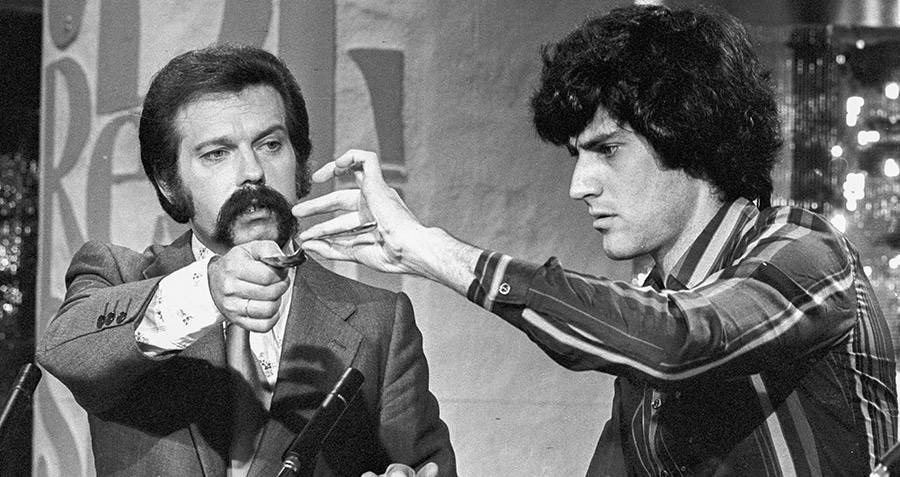
Yet, scientific validation remained elusive. While some results astounded, they were met equally by interrogations of methodology, bias, and coincidence. Meanwhile, the agency held its cards close, intrigued yet cautious. The speculative nature of psychic espionage incited both hopeful interest and defensive derision. By the time the curtain fell, and Project Stargate was shuttered in 1995, it had traversed a path filled with controversy and curiosity, leaving behind a legacy far larger than its tangible achievements.
Timeline of Key Events

1972 — Ingo Swann claims his psychic abilities can allow him to 'see' distant places.
1973 — The CIA begins funding research into psychic phenomena at the Stanford Research Institute.
1975 — The project's success leads to increased funding and officially being named 'Project Stargate'.
1978 — The Defense Intelligence Agency takes a keen interest and becomes involved in the program.
1981 — Remote viewers reportedly locate the site of a downed Soviet bomber without physical information.
1983 — The House Permanent Select Committee on Intelligence requests a review of the project’s efficacy.
1984 — Remote viewing data is allegedly used to map missile sites in the Soviet Union.
1985 — Academic reviews are published questioning the scientific validity of remote viewing results.
1986 — The CIA shifts administrative control of the project but continues secretive funding.
1990 — Declassified files hint at broader, clandestine remote viewing applications.
1992 — Congressional hearings briefly mention the project's existence, shrouded in secrecy.
1993 — Internal reviews within intelligence agencies suggest phasing out Stargate.
1995 — A CIA report suggests Stargate's results are below intelligence operational standards. Project Stargate is formally ended.
1996 — Declassified documents begin trickling into public awareness under the Freedom of Information Act.
1998 — Prominent accounts including those of Russell Targ publish works explaining their view.
2002 — Media exposes and documentaries discuss Project Stargate’s larger-than-life ambitions.
2009 — Further documents released add to the public and academic understanding of Stargate's scope.
2016 — New interest arises with modern discussions on the potential of untapped human consciousness.
2021 — Online forums and conspiracy discussions reignite interest in the potential 'hidden success' of Stargate.
2023 — Scholars and analysts continue debating the ethical implications and realism of such psychic endeavors.
2026 — The global community reflects on Project Stargate, understanding its unique historical anomaly.
What Is Documented
Among the archives of declassified documents, the truth of Project Stargate reveals itself as both bizarre and documented. The program began its life under the auspices of the CIA in the early 1970s, formalized by a drive to harness 'remote viewing' as a tactical advantage. Over its lifespan, the project evolved through various stages, adopting titles such as 'Grill Flame' and 'Center Lane' before ultimately settling on 'Stargate' as its enduring moniker.
Documentation from the Defense Intelligence Agency (DIA) in 1978 marked a significant milestone, emphasizing an analytical rigor that matched scientific curiosity. Within these pages lies evidence of the CIA's perseverance in quantifying psychic phenomena, supported by funded studies at the Stanford Research Institute led by luminaries Russell Targ and Harold E. Puthoff.
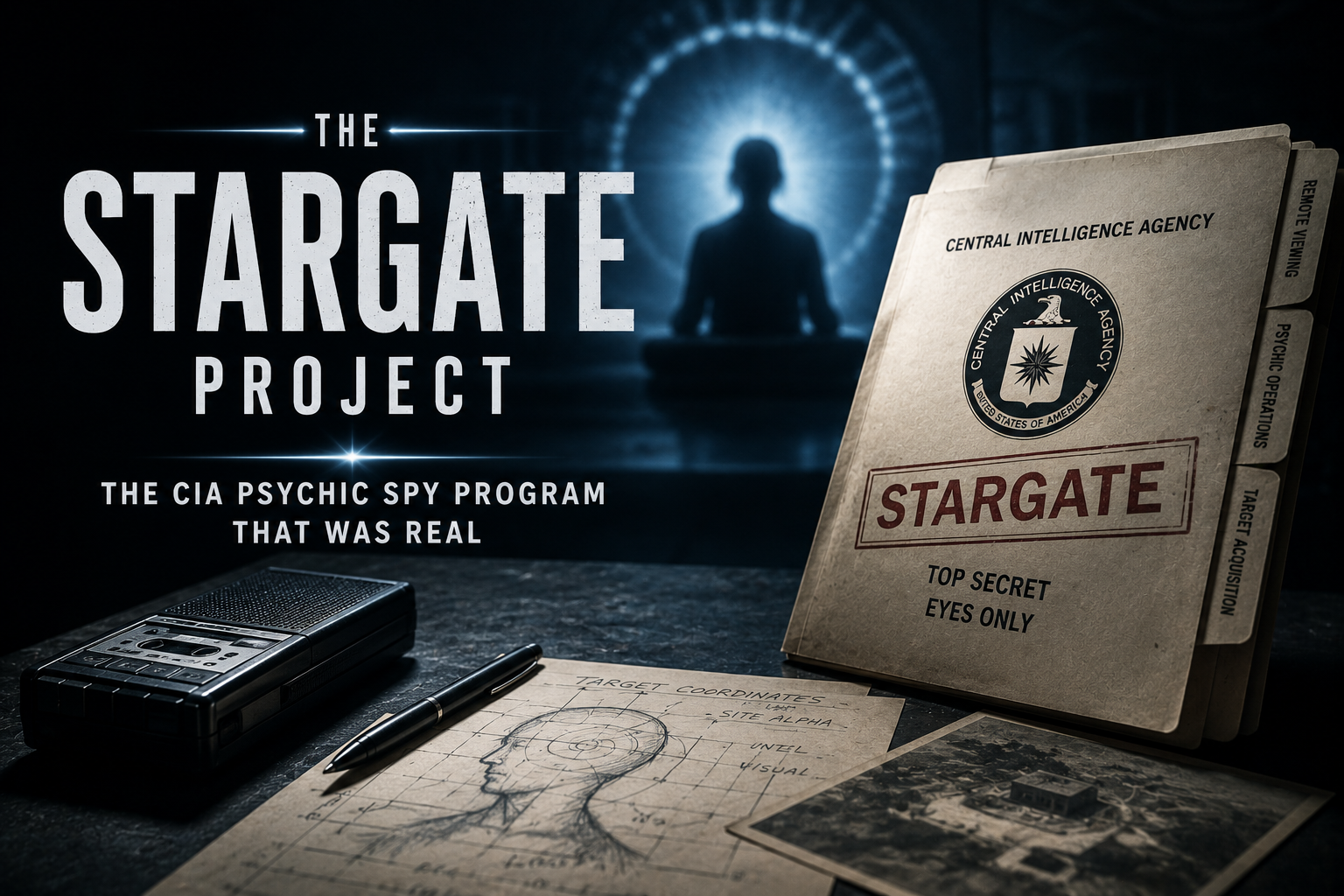
Reports deftly catalog claim after claim of psychic accuracies, like the successful mental location of a Soviet bomber crash site. Such declassified files match oral histories from key participants, attesting to both extraordinary successes and inevitable skepticism. Indeed, while a 1983 internal report showcased a 60% success rate — above statistical chance — peer reviews chastised the lax experimental controls that muddled these figures.
FOIA releases have revealed a trove of experimental records, diligent in their scope. Participants' sessions were documented meticulously, with results cross-referenced against known datasets to strive for objectivity. Financial support listed in budgetary memos further underscores operational seriousness within the intelligence community.

Notably, meetings documented in briefing notes to high-ranking officials like Stansfield Turner appoint a clear strategic objective: extrapolate viable intelligence from these esoteric practices. Though swathed in the sheen of speculative exploration, the project expanded and persisted, buoyed by institutional interest in its tantalizing prospects.
What Has Been Alleged
Various allegations have shrouded Project Stargate in a veil of mystery, fueling intrigue and conspiracy alike. Leading figure Joseph McMoneagle has remarked publicly on the untapped potential of certain sessions, insinuating that politically sensitive intelligence achievements remain cloaked under the guise of national security.
Other assertions posit that Stargate's operations banked more heavily on validating the fantastical than cultivating scientific credence. Critics like Stanley Krippner have highlighted how the emphasis on success stories may have skewed reports, suggesting that broad directives were influenced more by the allure of results than strict methodological adherence.
Rumors also abound concerning the scope of investigated phenomena. Allegedly, alongside remote viewing, forays into telekinesis, psychokinesis, and even time perception were conducted. While direct evidence remains elusive, these claims highlight the program's flirtation with the fringe science, tracing a line between the real and surreal.

Moreover, some postulate the program served as a gateway for other psychological experiments, unconstrained by formal ethical guidelines. Skirting consent and intentional obfuscation, such tales propose violations of a degree that remain officially uncorroborated.
Adding to this mire, anecdotes suggest influence peddling within CIA circles, where allegedly some leaders exploited remote viewing results for recondite personal and political agendas — a practice that, if substantiated, paints the cloak-and-dagger world of intelligence in ethically ambiguous hues.
What Remains Disputed
Contention surrounding Project Stargate is as deeply ingrained in its narrative as the results it purported to capture. Official documentation from the CIA eventually concluded that remote viewing offered little in the way of reliable, tangible intelligence beyond the captivating — yet often coincidental — successes claimed.
In contrast, advocates like Russell Targ and Harold E. Puthoff continue to champion their findings, often citing peer-reviewed documentation of experiments that they argue delivered statistically significant results, despite accusations of bias and methodological flaws.
The debate extends to whether such practices were truly implemented in live operations. Skeptics assert that the reliance on psychic intel was, at best, auxiliary to more concrete technologies that leaned on traditional reconnaissance and espionage techniques.
Further disputed are testimonies that claimed remarkable psychic feats translated into real-world gains. Critics suggest narratives, complete with extraordinary descriptions, often lacked the accountability and corroboration found elsewhere in conventional intelligence work.
In many ways, the dispute centers around the apparent chasm between scientific skepticism and intelligence ambition — a space where suggested confirmations often confronted scientifically unsubstantiated premises, leading to rifts between the program's advocates and detractors.
What Was Later Confirmed
Despite early denials and skepticism, several key elements of Project Stargate eventually stepped into the light of day through extensive declassification processes. First and foremost, the very existence of the program, long derided as speculative nonsense, was confirmed through FOIA requests, lending credence to those who alleged governmental investment in such unconventional studies.
Initially, official records sought to obfuscate or downplay involvement, portraying psychic research as anecdotal sidebars. However, by 2009, the release of comprehensive documents led to an inevitable confession of Stargate’s scope, revealing the depths of institutional participation.
Most compelling are accounts independently verified by third-parties indirectly involved or observing peripheral operations, whose testimonies brought authenticity to disputed claims, echoing the findings documented in declassified records. These confirmations crystallized tales languishing in rumor into documented truths acknowledged by the intelligence apparatus.
For example, the curious case of locating a Soviet facility during peacetime espionage became an emblematic story first smugly dismissed, but later validated as part of an acknowledged outcome investigated by intelligence historians. This acknowledgment bridged the gap from legend to historical fact, reaffirming the program’s undertakings and the legitimacy of claims long deemed improbable.
Common Myths & Exaggerations
Any examination of Project Stargate faces a deluge of myths, sweeping as they are misleading. A persistent belief is that participants possessed unequivocal psychic powers rivaling fictional characters, an exaggeration far detached from the scientifically ambiguous — yet statistically curious — results recorded.
Further erroneous narratives suggest Stargate operated as a smokescreen for covert agendas, theories often paraded by conspiracists touting diversion as its primary motive. This dismisses documented intentions as mundane exploration of potential intelligence advancements.
A popular fallacy is that remote viewers were co-opted into secret life-long roles within intelligence sectors. While some members remained within governmental circles, most resumed civilian lives, contributing to broader academic pursuits, challenging the notion of forced clandestine allegiance.
Another extravagant misrepresentation claims definitive psychic ability proof lay within Stargate’s vaults, shuttered from scrutiny at its close. However, critical reviews, supported by FOIA documents, emphasize the project’s closure stemmed from logistical inefficiencies and methodological constraints rather than a desire to protect earth-shattering revelations from public knowledge.
Why It Matters
The significance of Project Stargate reverberates through the corridors of Cold War history and beyond, serving as a testament to the lengths national security bodies will pursue in the uncharted territories of intelligence-winning battles. Far from mere anecdote, it underscores an era where understanding the unknown became an intellectual and geopolitical necessity.
In modern discourse, Stargate provides an exemplary case study in government transparency, accountability, and the complex moral landscape of intelligence operations. It demands reflection on how intelligence agencies operate within the boundaries of ethics and legality, lessons pertinent as contemporary analogous operations encounter pressing moral scrutiny.
The endeavor anticipates modern intersectional research domains, like neuroscience and A.I., urging exploration of humanity’s mental, digital, and informational landscapes. It muses on the veracity of perceived limitations and where future potential lies without contravening ethical frameworks.
In reflecting on its premise, Project Stargate advances the narrative that science and statecraft, when intertwined, impose on society a vital discourse on privacy, consciousness potentials, and the responsible dissemination of power, insight and technological prowess. In many respects, it echoes relevant psychological discussions and contemporary diplomatic stratagems as actors across domains capitalize on cognitive and emotional landscapes in digital arenas.
Connections to Other Archive Entries
Project Stargate finds thematic resonance with numerous classified operations exposed within the Hidden History Archive. Comparisons to MK-Ultra expose shared subterfuges — both programs delved into exploring human faculties beyond the ethical fathom.
Moreover, parallels can be drawn to Operation Paperclip’s wartime scientific leverage and even the strategic defense undertakings of the Cold War's latter years, like the Strategic Defense Initiative’s ('Star Wars') explorations of theoretically insurmountable military technologies.
These connections illuminate the multitudinal approaches nations have taken in psychological and technology-montages to secure perceived global dominance, significantly affecting both contemporary and transitional historical understanding, marking these precedents as landmarks for continued research and classification exploration.
Sources & References
PRIMARY SOURCES
SECONDARY SOURCES
The Hidden History Archive is part of The Beacon Wire entertainment and informational platform. All archive articles are based on public sources, declassified documents, court records, and reputable journalism. Facts are clearly separated from allegations, disputed claims, and unsupported speculation. Nothing in this archive should be interpreted as legal advice or as incitement to harm. Readers are encouraged to consult primary sources directly.
We use cookies to improve your experience and analyze site usage. See our Cookie Policy for details.