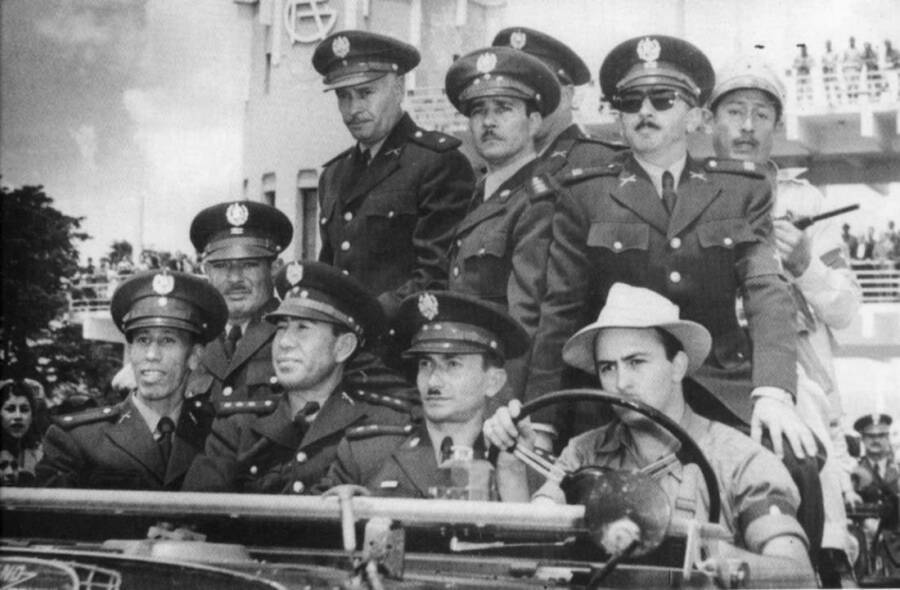
Civilians gather in Guatemala City as tension mounts during the 1954 coup orchestrated by the CIA, an operation that changed Guatemala's trajectory forever.
Hidden Uprisings: The CIA's Role in Guatemala's 1954 Turmoil
The 1954 coup in Guatemala, a covert operation known as PBSUCCESS, orchestrated by the CIA, dismantled a democratically elected government. This exposé unravels the web of Cold War politics, propaganda, and power plays that reshaped the nation's destiny and set a precedent for American interventions abroad.
What Happened
In the dim glow of a Guatemalan dawn on June 18, 1954, the shadows of a revolution loomed large. This was no ordinary uprising. At its helm was Operation PBSUCCESS, a clandestine effort spearheaded by the CIA, aiming not just to topple a government but to recalibrate Latin America's political landscape against the backdrop of Cold War anxiety.
Guatemala under President Jacobo Árbenz embodied a fresh beacon of reform and hope. This small nation, oppressed and impoverished for generations, was finally on the brink of radical change. Árbenz, elected in 1951, embarked on an ambitious path of agrarian reform which redistributed over 1.5 million acres of idle farmland to dispossessed peasants. His policy, a bold attack on land inequality, threatened the United Fruit Company – a massive U.S. agricultural corporation whose interests were deeply entangled with American policymakers.

The fear of communism was ripe. Allen Dulles, then Director of the CIA, viewed Árbenz’s measures as a creeping Soviet influence too close for comfort. Approvals for covert operations were swift, and by August 1953, PBSUCCESS was operational with substantial funds allocated towards psychological warfare and political action.
Carlos Castillo Armas, a former military officer residing in exile, became the face of the manufactured opposition. With 480 men at his command, he was tactically poised to destabilize Árbenz's government through a series of orchestrated skirmishes. The U.S.-backed force was meticulously trained and armed to incite chaos, crafting a facade of widespread civilian unrest.

Nights were filled with orchestrated propaganda broadcasts – the eerie voice of 'Voice of Liberation' radio – articulating targeted lies of dissension within Guatemala, broadcasted far and loud, leading many Guatemalans to believe their country was indeed collapsing from the inside. These psychological tactics gnawed at the support Árbenz had enjoyed, subtly pulling apart the seams of his government.
By June 27, 1954, the pressure grew unbearable. Fearing greater bloodshed from a potential U.S. invasion, Árbenz resigned, seeking asylum in the Mexican embassy. Guatemala’s brief democratic experiment crumbled as Castillo Armas emerged the victorous puppet leader. This coup wasn't the end but the beginning of decades of bloodshed – a brutal civil war that claimed over 200,000 lives, leaving scars that remain etched into the national psyche.

Timeline of Key Events

1951 — Jacobo Árbenz takes the presidency in Guatemala, marking a new era of reforms.
1952 — The Agrarian Reform Law is passed under Árbenz, redistributing land from large corporations to peasants.
1953 — Alarmed by Árbenz, the CIA begins planning to unseat him, birthing Operation PBSUCCESS.
August 1953 — President Eisenhower authorizes the operation with an approved $2.7 million budget.
Early 1954 — Propaganda broadcasts from 'Voice of Liberation' distort the public perception.
March 1954 — The CIA intensifies propaganda against Árbenz, seeking to destabilize his regime.
June 18, 1954 — PBSUCCESS is initiated, escalating into full military confrontation.
June 19, 1954 — Castillo Armas crosses into Guatemala, leading CIA-backed forces.
June 20, 1954 — Skirmishes erupt in the east, with the Guatemalan army in disarray.
June 23, 1954 — Key towns claim allegiance to Castillo Armas under continued misinformation.
June 27, 1954 — Árbenz resigns, ceding power amidst mounting pressure.
July 7, 1954 — Carlos Castillo Armas officially assumes presidential control, rescinding reforms.
1955 — The U.S. cements relations with Castillo Armas, rooting out perceived communist threats.
1956 — Resistance to the new regime culminates in pockets of insurgency.
1960 — Full-scale civil war ensues, stemming from deep societal divides initiated in the coup.
1974 — CIA memos credit PBSUCCESS as foundational to counter-insurgency tactics globally.
1982 — The civil war reaches peak brutality under military rule, contributing to a massacre.
1994 — The CIA declassifies documents, exposing integral operation details.
1996 — A peace agreement officially ends the Guatemalan Civil War.
2020 — Renewed examination into coup's implications as part of broader historical reckoning.
What Is Documented
The cold, undeniable reality of the 1954 Guatemalan coup comes to life through pages of declassified CIA documents and confirmed historical records. In August 1953, President Eisenhower's administration sanctioned Operation PBSUCCESS, with a staggering $2.7 million earmarked for weaponizing psychological warfare and orchestrating political upheaval. The goal was clear: dismantle the administration of Jacobo Árbenz.
The CIA, under Director Allen Dulles, executed a comprehensive strategy involving propaganda, economic sabotage, and military intervention. They weaponized radio broadcasts under the guise of 'Voice of Liberation', detailing fictitious uprisings and military defections to fracture internal confidence in Árbenz’s government. This manipulation is corroborated by declassified recordings and communication logs.
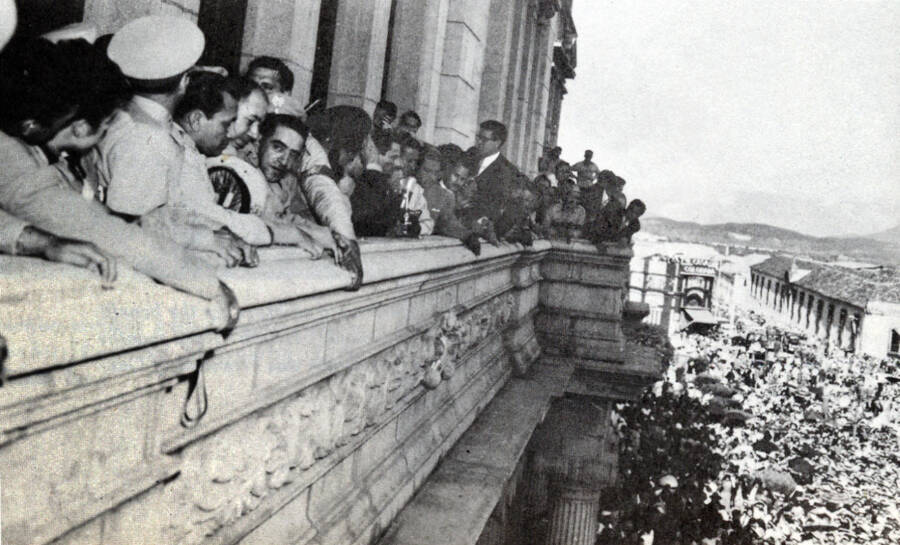
Documents from the U.S. State Department reveal calculated efforts to suffocate Guatemala's economy by curbing international aid and pressuring allied nations in Latin America to isolate Árbenz diplomatically. This coordinated siege deepened economic distress, indirectly coercing the military to reconsider its loyalties.
Central to PBSUCCESS was the recruitment and arming of approximately 480 insurgents led by Carlos Castillo Armas. Plotted through clandestine meetings in the U.S., these strategies included intricate plans for Armas and his forces to infiltrate Guatemala and incite armed conflict. Logistics and operational outlines unearthed in archives indicate meticulous orchestration, down to troop movements and supply chains.

The aftermath of the coup left a paper trail of amendment tasks, mainly embargoes that suppressed Guatemalan economic progression. The Foreign Relations of the United States collections further highlight the CIA’s advisory role to Guatemala’s military during the post-coup transitions. These documents collectively expose each phase of transactional and military engagements, creating a timeline of interference rooted deeply in Cold War paranoia.
What Has Been Alleged
The covert nature of Operation PBSUCCESS has birthed numerous allegations that blur the lines between reality and conspiracy. Historian Piero Gleijeses claims in interviews that the CIA's influence extended beyond its documented scope. Allegedly, monetary bribes and intimidatory tactics were used to secure the compliance of critical military figures stationed within Guatemala.
These unverified anecdotes suggest that CIA operatives engaged directly with figures who wielded significant influence, ensuring any loyalty they swayed could effectively neutralize Árbenz’s forces during pivotal moments of the coup. Crucial to this narrative are confidential testimonials from individuals within the military's senior ranks, escaping full verification due to the secretive ethos enveloping such operations.
Journalist Stephen Schlesinger purports that the coup extended to manipulating the Guatemalan economy clandestinely. According to his assertions, specific CIA-affiliated entities exerted control over financial networks, orchestrating delays in credit and leveraging corporate enterprises to trigger an economic exodus affecting national stability.

Meanwhile, political analyst John Prados presents alleged evidence of an assassination initiative embedded within PBSUCCESS, aiming to incapacitate key political figures and competitors. While lacking direct oversight, these accusations arise from pieced-together document fragments and indirect references in CIA communications, pointing towards ethically questionable potentialities.
Perhaps the most chilling, albeit speculative, claim involves supposed behind-the-scenes negotiations with Soviet operatives. According to some historians, a clandestine detente was mooted to placate emergent Communist sympathizers post-coup, a contentious and largely unsubstantiated assertion reflective of the era's diplomatic complexities.
What Remains Disputed
The intricacies of Operation PBSUCCESS foster numerous scholarly disputes, particularly surrounding the CIA’s level of direct military involvement. Official accounts provided by the CIA assert minimal intrusion beyond strategic planning and advisory roles. However, many local narratives from eyewitnesses and contemporary historians contend that covert U.S. forces played a hands-on role, suggesting greater engagement through unrecorded support and logistics.
Another contested aspect is the nature of President Árbenz’s resignation. Official documents and statements from the U.S. government maintain that his stepping down was voluntary. Yet, insiders and independent researchers argue coercive pressures amounted to duress, with a foreboding presence of foreign-backed threats crippling Árbenz’s capacity to act autonomously.
Differing interpretations also catch the framing of the coup itself. Whereas Washington described it as a defensive measure against communism, critical historical perspectives argue it was an offshoot of American business interests – primarily the United Fruit Company. Official discourse negates undue influence, while alternative investigations cite evidentiary links reflecting commercial motivations over ideological ones.

The infamous title of 'banana republic', often associated with Guatemala post-coup due to United Fruit's grip, is another point of contention. Corporate correspondences refute narratives of manipulation, painting a picture of defensiveness rather than offense – a significant clash with Árbenz’s memoirs and U.S. intervention documentation.
What Was Later Confirmed
In a groundbreaking acknowledgment in 1997, the CIA revealed further depths of its involvement in Operation PBSUCCESS, unraveling the narrative spun for decades. This admission, spurred by the efforts of journalists and academic pressure, marked a watershed moment in the transparency of U.S. foreign interventions.
A treasure trove of declassified documents surfaced, filled with specifics detailing financial transactions, military strategies, and psychological tactics utilized throughout the coup. These revelations confirmed suspicions of United Fruit Company’s financial conduits, proving its instrumental role in facilitating and funding anti-Árbenz factions.
Legislative movements from 2003 brought more truths to the fore, unveiling systemic economic sanctions masqueraded as political diplomacy. Detailed in congressional discs, the interplay between U.S. economic maneuvers and Guatemalan political destabilization illustrated a deliberate international conspiracy to non-militarily break Árbenz’s authority.
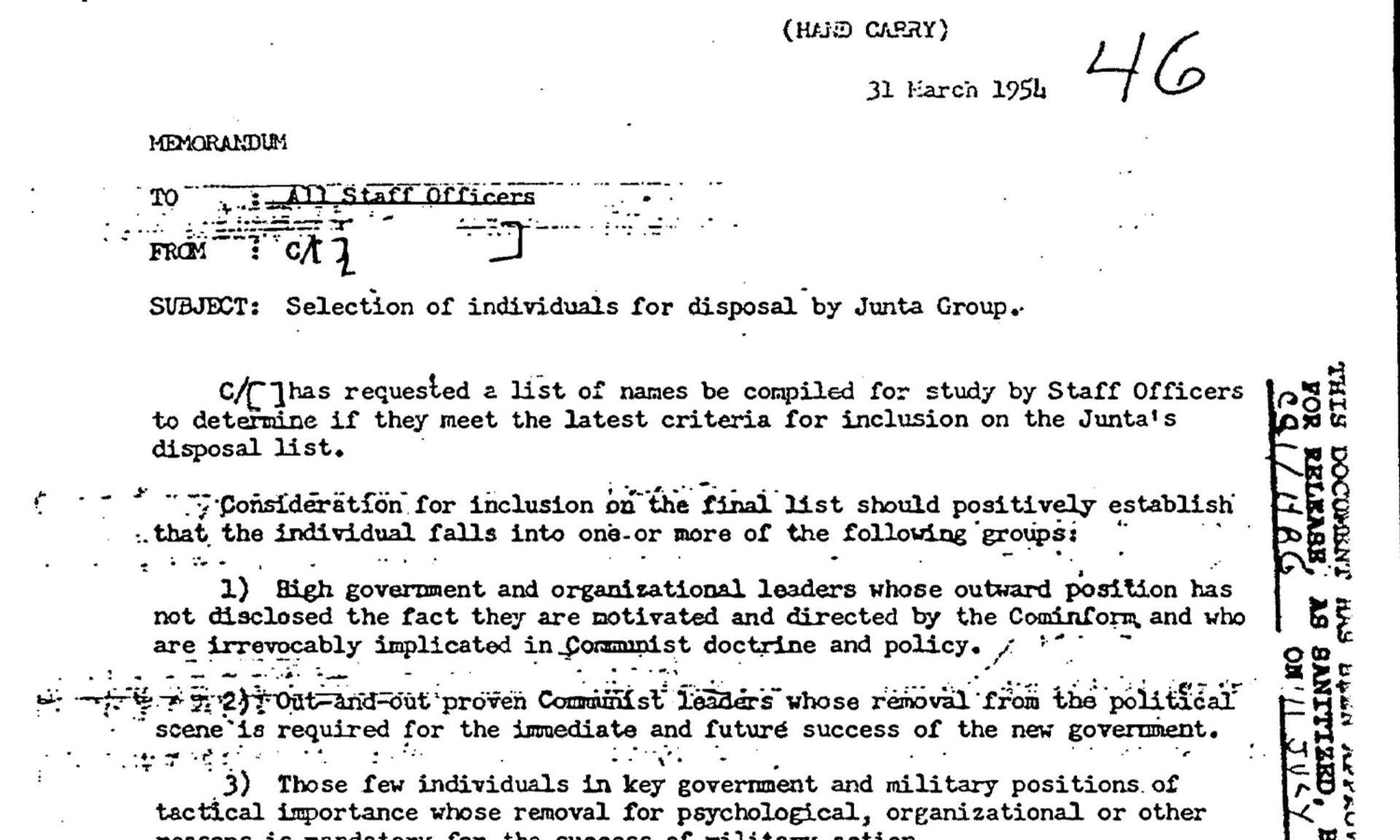
Further scrutiny of declassified intelligence showed that assassination proposals, once dismissed as conjecture, held merit. FOIA releases later revealed detailed planning stages revolving around the potential elimination of pivotal political figures – a previously shrouded aspect of PBSUCCESS, both opening avenues in Cold War narratives and retracing ethical lines in intelligence practices.
Common Myths & Exaggerations
The narrative surrounding Operation PBSUCCESS is riddled with myths, fueled by a mix of propaganda and time. A widely held misconception is that the coup was chiefly a localized effort. Yet, extensive documentation available today unfolds the operation as a cog in the broader, expansive Cold War machine, embedding deep strategies and multinational impacts.
A persistent myth suggests President Árbenz was an unyielding authoritarian, but historical records and scholarly evaluations illustrate a different narrative. His administration actively pursued democratic reforms and aimed for social justice, qualities often mischaracterized by contemporaneous U.S. rhetoric.
Misrepresentations extend to the perception of the coup as primarily non-violent. On the contrary, declassified military documents expose a tapestry of psychological terror and strategic intimidation – operations crafted to instill fear while minimizing overt bloodshed.
One longstanding myth debunked by Soviet-era communiqués is the pressing communist threat claim that PBSUCCESS supposedly averted. Analytical reviews indicate communist risks were inflated beyond credible threat levels, suggesting that American economic interests were real rather than ideological underpinnings in Guatemala.
Why It Matters
The reverberations of Operation PBSUCCESS echo louder than ever through the annals of foreign policy and international relations. The 1954 coup entrenched a U.S. strategic archetype in Cold War operations, setting a template for indirect intervention in sovereign states perceived as threats.
Central to the coup’s legacy is its blending of geopolitical ambition with corporate interests. Such amalgamations altered diplomatic directions, demonstrating how sovereignty could be annulled under the pretext of ideological adversarial protection—reshaping Central American political futures dramatically.
PBSUCCESS paved a torn path to military dictatorships, instilling regimes conducive to U.S. interests but often at the severe cost of human rights abuses. This fostered a critical analysis of foreign policy practices, openly challenging the consequences of replacing democracy with compliant authoritarianism.
In our era of global interconnectivity and geopolitical complexities, the lessons from PBSUCCESS remain palpable. As nations discern interfering tendencies, reflections on Guatemalan history govern discussions on ethics, agency oversight, and the equilibrium between necessary action and international respect.
Furthermore, modern digital developments echo lessons of international surveillance and covert news manipulation seen in PBSUCCESS. These remaining threads serve as poignant reminders against unchecked governance, underscoring transparency and accountability in foreign policy as pivotal today as it was over seventy years ago.
Connections to Other Archive Entries
Operation PBSUCCESS marks a critical juncture in U.S. foreign interventions, mirroring tactics used in Operation Ajax in Iran a year prior. Both coups reflected a nuanced approach to thwarting non-aligned governments, perceived in proximity to communist sympathies.
The coup’s methodology has echoes in the later infamous Operation Condor across South America, where intelligence syndicates shared resources and tactics to suppress leftist uprisings through covert repression—a chain of Cold War-era operations leaving significant moral and legal footprints.
Interweaving the ideological thrust of the Monroe Doctrine recalibrated during the mid-20th century is apparent in PBSUCCESS. Its influence extended visibly into foreign operations in El Salvador and Nicaragua, showcasing the continuous narrative of U.S. stance in Western hemisphere political affairs.
Within The Hidden History Archive, Operation PBSUCCESS aligns with inquiries into Government Secrecy and Covert Operations, offering insights into systematic patterns of interventionist policies reshaping the global democratic landscape.
Sources & References
PRIMARY SOURCES
SECONDARY SOURCES
The Hidden History Archive is part of The Beacon Wire entertainment and informational platform. All archive articles are based on public sources, declassified documents, court records, and reputable journalism. Facts are clearly separated from allegations, disputed claims, and unsupported speculation. Nothing in this archive should be interpreted as legal advice or as incitement to harm. Readers are encouraged to consult primary sources directly.
We use cookies to improve your experience and analyze site usage. See our Cookie Policy for details.