
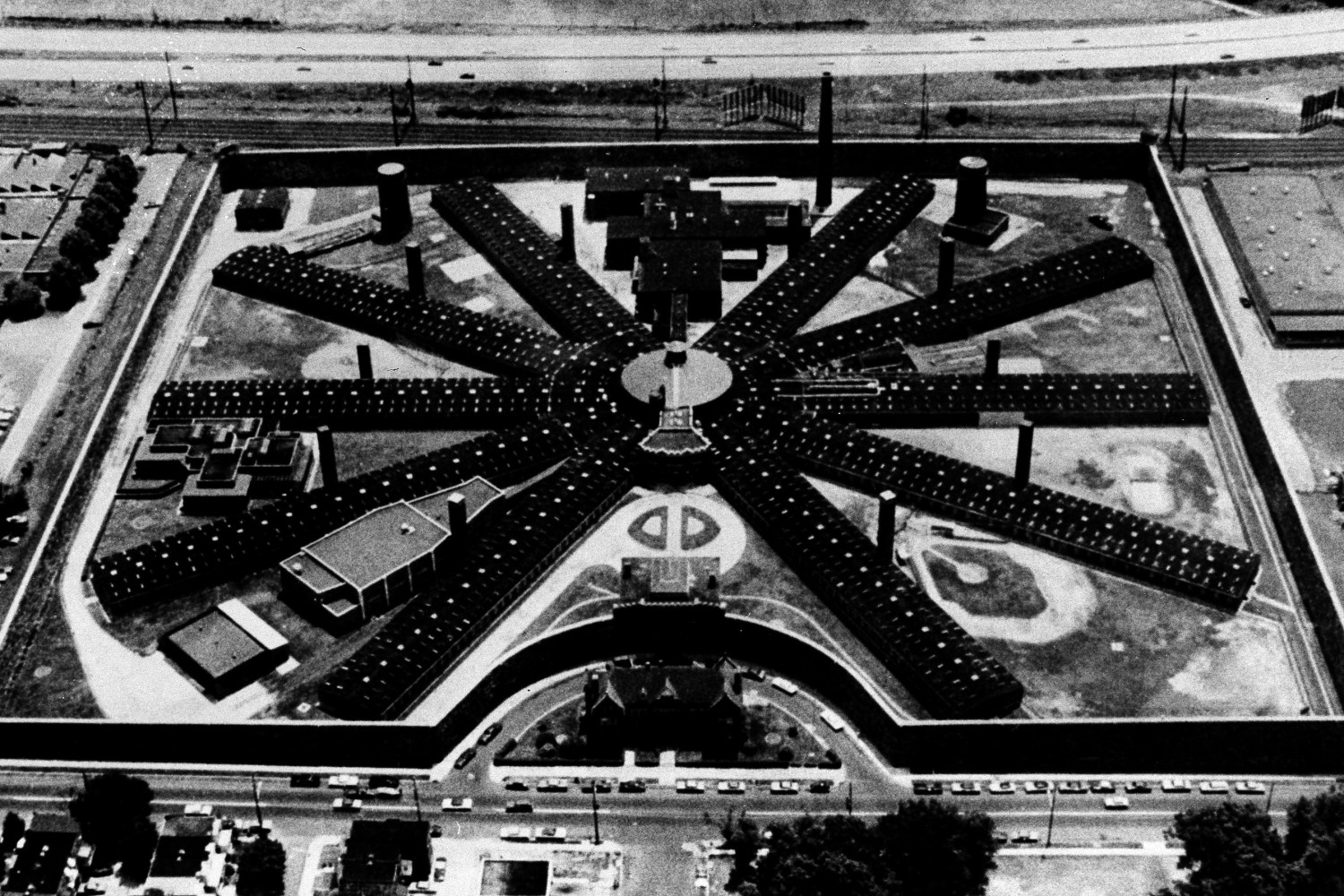
Aerial view of Holmesburg Prison, 1960s — a symbol of controversial human experimentation.
Holmesburg Prison Experiments: A Hidden History of Human Experimentation
Step into the haunting corridors of Holmesburg Prison, where between 1951 and 1974, dermatologist Albert Kligman spearheaded unethical medical experiments on inmates. Supported by government agencies and pharmaceutical giants, these experiments revealed disturbing truths about ethics and power dynamics in scientific research, sparking ongoing discussions about human rights and consent.
What Happened
The story begins one unremarkable day in September 1951, within the imposing walls of Holmesburg Prison, located in Northeast Philadelphia. This prison, composed of twisted corridors and iron-barred cells, became the unlikely theatre of one of the most profound and chilling episodes of medical transgressions in 20th-century American history. Here, a young dermatologist from the University of Pennsylvania named Albert Kligman saw opportunities that others would consider morally reprehensible.
Kligman arrived at Holmesburg not just with a backpack full of dermatological equipment but with ambition and a vision. Proposed as the future of skin research, Kligman's trial was covertly aimed at exploring various pharmaceuticals' applications on human subjects, the prisoners serving as unwitting canvases. The motivation was as clear as the lines on a balance sheet around which his and other pharmaceutical companies' fortunes rested.

Over the span of 23 years, a multitude of experiments floored the prison's inmates. From seemingly benign applications of skin creams purported to treat dermatological issues, test subjects were progressively exposed to increasingly harmful chemicals, including dioxin—a core ingredient later recognized after the Vietnam War in the defoliant, Agent Orange. The experiments were conducted systematically, Kligman reportedly curious and unfazed, with scant regard for the ethical implications rising ominously in the shadows.
The prison system provided what seemed an endless supply of test subjects. Desperate for small monetary gains or 'luxuries' otherwise unattainable in cells, prisoners consented to risks they weren't fully informed of. Kligman, along with complicit authorities, capitalized on such vulnerabilities under the pretext of scientific progress.
But all stories stray from the control of their authors, and rumors began to drift beyond the prison’s fortified barriers. Former inmates spoke out, and sordid tales of skin blisters, severe burns, and chronic pain seeped into public consciousness. It was too late, though, by the time true public outrage stirred in the 1970s, directly challenging the perceived sanctity and progress associated with medical science.
Ultimately shutting down in 1974 under a tide of mounting legal repercussions and ethical reconsiderations, the Holmesburg medical trials cast a lasting shadow over medical testing policies. These dark undertakings scream a silent story—a warning in the face of unmonitored science, ethical breach, and the segment of humanity most marginalized and vulnerable yet undeniably human.

Timeline of Key Events

1951 — Dermatologist Albert Kligman begins conducting medical experiments on inmates at Holmesburg Prison.
1952 — Researchers start testing chemicals that are later used in commercial products for consumer safety assurances.
1953 — Experiments broaden to include exposure to dangerous compounds like dioxin.
1954 — Pharmaceutical companies increasingly fund trials, fostering deeper partnerships with Kligman.
1955 — Reports of physical distress from inmates suggest tests are taking a heavy toll.
1957 — Experiments expand ambitiously, including studies related to chemical exposure effects.
1959 — New skin creams and fungicides are tested under closed conditions with minimal documentation.
1960 — U.S. Army involvement hinted at through funding for specific biological studies.
1962 — CIA-funding suspicions surface; national security implications are masked under civilian health research.
1964 — Inmates file initial complaints about severe reactions, drawing minor media interest.
1965 — Allegations of chemical warfare agent testing at the facility lead to growing unrest.
1966 — LSD testing speculated upon in connection with broader U.S. intelligence initiatives (MKUltra).
1968 — Increasing internal dissent among prison staff regarding the ethicality of experiments.
1970 — Formal allegations regarding substance testing for violations of human consent norms.
1971 — National newspapers pick up stories, focusing public attention and resulting in protests.
1973 — Congressional inquiries expose trial details, further fueling public outrage.
1974 — All testing officially ceases as a result of mounting ethical and legal pressures.
1980 — Survivors seek reparations, filing initial lawsuits for non consensual experimentation.
1998 — Publication of 'Acres of Skin' deepens public understanding and scrutiny.
2002 — With settlement regimes, some former inmates receive compensation for harm suffered.
What Is Documented
Holmesburg Prison, infamous for its harsh environment, became a research ground for unsanctioned medical trials from 1951 until 1974, orchestrated chiefly by Dr. Albert Kligman. Drawing resources from major pharmaceutical companies and indirectly from U.S. governmental agencies such as the Department of Defense and the CIA, Holmesburg represented a confluence of scientific endeavor masked by profound ethical negligence.
Documented in multiple judicial proceedings, these trials reportedly lacked transparent consent mechanisms, with many inmates unaware of the experimental nature and inherent risks involved. In 1973, testimony before a congressional panel revealed that substantial segments of inmate participation constituted an outright violation of personal autonomy.

In 1965, a critical affidavit filed with Philadelphia courts illustrated consent discrepancies, exposing how inmates were deceived through misleading consent forms. The questionable methodologies drew official scrutiny following allegations of exposure to substances like dioxin. Documents declassified in the early 2000s confirm this association, revealing parallels with concurrent chemical warfare research efforts.
Official records from legislative hearings in 1999 presented corroborating evidence of inmates being deliberately infected with pathogens, such as herpes simplex, under false pretenses. Disclosures under the Freedom of Information Act subsequently untangled governmental layers complicating Holmesburg’s experiments, painting a grim picture of intentional complicity cloaked as defense and pharmacological benefit during Cold War adversities.

Despite the dismantling of many documents following the trials' cessation, a 2002 declassified government document cited that dioxins were tested knowingly under Kligman's directives, officially tying Holmesburg's historical narrative to broader implications about bioethical overreach on American soil.
What Has Been Alleged
A cloud of allegations envelops the history of Holmesburg Prison's experiments, with varied claims pointing to systemic abuse exacerbated by institutional indifference. Former inmates have consistently alleged coercion and psychological manipulation as mechanisms that lured them into clinical study participation.
In interviews, as chronicled in Allen M. Hornblum’s 'Acres of Skin', numerous participants recalled instances of pharmaceutical companies allegedly augmenting pressure on researchers to meet testing quotas, disregarding resource disparities between prisoners' access to legal recourse and the corporations' formidable defenses. These claims of corporate-imposed duress remain unsettlingly resonant, evidenced by internal communications exposed by journalistic investigations.
Allegations extend to secretly approved psychiatric medication trials, purportedly linking loosely to the CIA’s notorious MKUltra program. Inmates claimed these experiments included hallucinogenic substances, leading to severe psychological episodes similar to documented MKUltra findings seen later. However, definitive connections between Holmesburg and the CIA remain partly speculative, impeded by destroyed records or uncooperative institutional witnesses.

Advocacy groups have repeatedly demanded redress and an expanded investigation into potential human rights violations during the trial period. Their consistent pressure has led to multiple inquiries lining repairs into similar state-run programs, though conclusive government acknowledgment of any deeply entrenched conspiracies remains evasive under the public, judicial, and academic perception, prolonging the painful shadows cast over Holmesburg’s legacy.
What Remains Disputed
The Holmesburg Prison experiments remain a contentious topic of disputation, principally between institutional defenses and activist claims. The University of Pennsylvania, to which Kligman was affiliated, maintains that standards followed during his work aligned with norms of the time, arguing that details reflect a misinterpretation of 1950s and 60s ethical frameworks.
Governmental records from the CIA and the Department of Defense exhibit inconsistencies, often portraying a limited engagement scope concerning Holmesburg, thereby diffusing culpability. However, documents declassified in the late 1990s reveal tangential financial links and desired experimental outcomes, challenging the overt minimal response historically broadcasted by these agencies.
Pharmaceutical giants, implicated in fostering inhumane test environments, consistently refute wrongful participation allegations. Legal defenses commonly prioritize the purported informed consent agreements held with inmates, casting aspersions on the reliability of prisoners’ testimonials. This ongoing dispute also clips potential reconciliation pathways, conjuring uncertainties that composite institutions continue exploiting for self-preservation purposes, leading to a perpetually strained discourse.

What Was Later Confirmed
While initial responses refuted culpability, multiple key elements regarding the Holmesburg experiments were later confirmed via investigative reporting and legal challenges. The publicity spawned by lawsuits in the late 1990s crystallized claims of non-consensual methodologies, culminating in several settlements throughout early 2000s stints.
Acknowledgements by pharmaceutical participants arose subsequently under scrutiny, illustrating partial involvement or oversight in benefit distribution to inmates. The ensuing public relations quandaries compelled corporate entities to stifle litigation through financial reparations to select affected individuals, confirming suspicions of impropriety long held by investigative journalists.
Further cementing these revelations, declassified federal communications in 2003 explicitly noted experimental intravenous administrations at Holmesburg linked directly to broader classified research agendas facilitated amidst prevailing Cold War hostilities. This confirmed deception assuaged the broader collective understanding and recorded Holmesburg’s dark episodes as a narrative of arising ethical enlightenment, marking a necessary evolution in human research protocol comprehension.

Common Myths & Exaggerations
Myths about Holmesburg experiments often weave complex narratives, occasionally embellishing or distorting key truths. One significant misconception positions all inmate participants as willing volunteers simply pursuing trivial benefits, which fails miserably against documented coercion reports pressuring decisions under ulterior constraints.
Another myth suggests Albert Kligman orchestrated procedures as part of a grand universal conspiracy, while realistically, operational failings reflect broader systemic inadequacies within medical and institutional oversight of the era rather than a singular plot. These portrayals diminish responsibility spread across regulatory frameworks that permitted ethical deviations.
The notion that Holmesburg uniquely instigated profound regulatory policy shifts simplifies global human research ethical resection, neglecting influences like the Nuremberg Code or evolving American contexts enhancing post-WWII critical perspectives.
Lastly, exaggerated descriptions wrongly frame Holmesburg as a dystopian outlier amongst humane contemporaries, minimizing how systemic negligence widely permeates similar hidden U.S. gray areas. Misinterpretations dilute wider-ranging discourses necessitating transparency and drive support misconceptions obscuring factual comprehensions.
Why It Matters
The resonance of Holmesburg experiments transcends mere historical infamy, instead resuming life amid ongoing battles for ethical scientific research. It signifies an epoch of unchecked power imbalances where institutional mistakes repeatedly wore victimized humanity's face, allowing uncomfortable verities about research methodologies predicated on exploitation to surface indelibly.
Holmesburg’s narrative cautions characteristics presently fermenting society’s regulatory discourse, maintaining pivotal relevance amidst technologically expanding sectors. Resultantly, the rights enshrined in oversight systems embracing medical durability partly stem from denounced transformations born from Holmesburg’s darker days.
Transitions into digital domains further amplify Holmesburg’s importance, illuminating parallel ethical concerns encountered within burgeoning artificial intelligence applications debating consent, privacy, and bias amidst increasingly autonomous applications. Hence, the lurking story frames an emblematic analogy urging studious regulatory vigilance and ethical circumspection amidst evolving civil constituent protectors globally overseeing innovation betwixt best and worst potentials interlocked inexorably.
Statistically accounts perpetually spotlighting related legacies and echoed public trust assaults—reverberating alarm bells entering today’s scientific explorance corridors safeguarded consciously from Holmesburg’s haunted visitations entering facadistic pretentiousness parading imminent relevancies disregarded unto damning reflective paradigms
Connections to Other Archive Entries
Holmesburg’s unnerving legacy threads broader American human experimentation continuums, reminiscent of the infamous Tuskegee Syphilis Study’s ethical tragedies articulating systemic failures in industrialized context. Both episodes underline a broader narrative indebting contemporized governance to historical disclosures catalyzing legislative renewals encompassing renewed human subject protections.
Historically poignant connections intrigue MKUltra program discussions, collaboratively illustrating centralizations enabling clandestine operations circumventing ethical constructs, fortifying demands for forthright government accountability assimilated amidst prior abuses within institutional underscore.
Moreover, thematic consistencies manifested amid international condemnations binding myriad unethical research nodes jointly forward represent ongoing investigative Archive considerations, invoking acts reflective enough introspective engagements harbor original ruminations fostering transparency, bridging torn divides enriching coexistential fairness under collective equitable realizations.
Sources & References
PRIMARY SOURCES
SECONDARY SOURCES
The Hidden History Archive is part of The Beacon Wire entertainment and informational platform. All archive articles are based on public sources, declassified documents, court records, and reputable journalism. Facts are clearly separated from allegations, disputed claims, and unsupported speculation. Nothing in this archive should be interpreted as legal advice or as incitement to harm. Readers are encouraged to consult primary sources directly.
We use cookies to improve your experience and analyze site usage. See our Cookie Policy for details.