
The entrance to Holmesburg Prison, infamous for its mid-20th century medical experiments, captured circa 1960.
Holmesburg Prison: The Untold Story of Medical Experiments
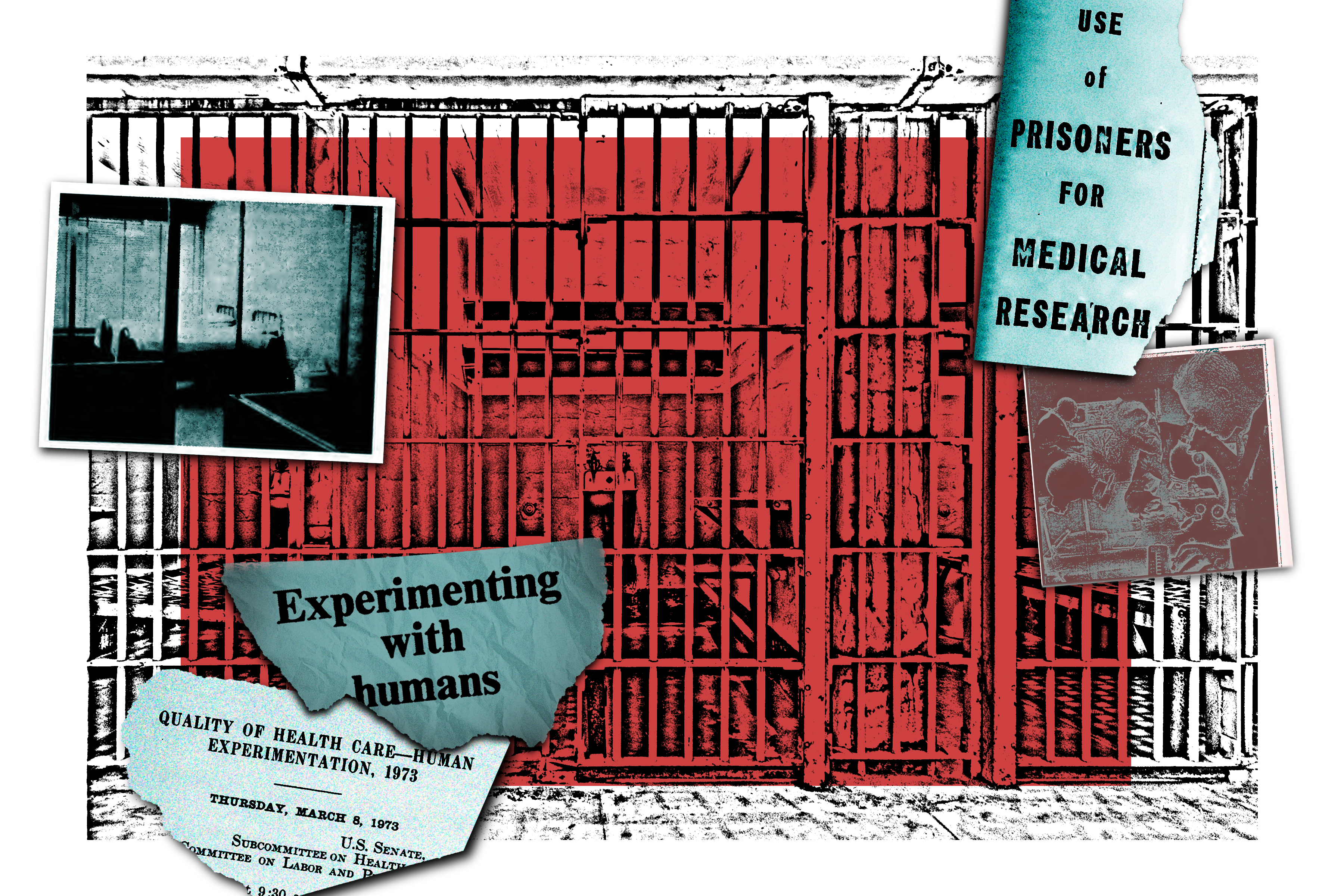
From the 1950s to the 1970s, Holmesburg Prison in Philadelphia witnessed a series of unethical medical experiments on inmates, predominantly targeting Black men. This shocking chapter in U.S. history reveals how race, power, and a misinformation-motivated scientific community combined to exploit human lives under the guise of research, leaving behind a legacy of injustice and ethical debates.
What Happened
In the annals of American history, Holmesburg Prison holds a dark chapter that lays bare unsettling truths about medical ethics. It was the early 1950s, and the world was cloaked in the tensions of the Cold War when Dr. Albert Kligman, an ambitious dermatologist from the University of Pennsylvania, walked through the gates of Holmesburg Prison in Philadelphia. To him, the facility did not represent confinement; it represented opportunity – a vast, untapped 'acres of skin' ripe for experimental research.
Kligman saw the overcrowded cells, not as a societal failing, but as an experimental goldmine. He began with dermatological studies, ostensibly to address skin ailments. But the agenda extended beyond mere academic curiosity. It spiraled into a complex web of corporate interests, involving pharmaceutical companies eager for results they could transfigure into profits.

Under the guise of scientific progress, inmates—primarily African American men—became unwitting test subjects. Deftly navigating regulations of the time, Kligman secured approvals by positioning the trials as voluntary. Inmates, offered nominal compensation of a few dollars, often lacked any real understanding of the experiments' dangers.
What started as simple skin tests morphed into experiments with dangerous chemical agents, including dioxin, a toxin linked to severe health problems and a key ingredient in the notorious Agent Orange. The ethical boundaries were not just pushed—they were obliterated. The repercussions were long-lasting: rashes, scars, chronic illnesses, and psychological trauma.

By the 1960s, murmurs of discontent began to seep beyond prison walls. Adverse reactions and ethical concerns positioned the experiments under the public and governmental microscope. However, the machinery behind these trials was immense, backed by a network of academia, corporations, and even government entities interested in the chemical outcomes of such warfare agents.
The culmination of growing pressure and shifting ethical standards in the 1970s eventually led to the cessation of the experiments. Yet the scars—both literal and societal—carved a lasting impression. Holmesburg’s dark history serves as a chilling reminder of the catastrophic potential when ethics are sacrificed at the altar of scientific and corporate ambition.
Timeline of Key Events

1951 — Dr. Albert Kligman enters Holmesburg Prison with the intent to conduct dermatological studies.
1953 — Initial recruitments of inmates for dermatological experiments begin.
1955 — Kligman expands studies to include trials sponsored by pharmaceutical companies.
1958 — Intensification of experiments with harsher chemicals begins.
1961 — Inmates report widespread adverse reactions, raising serious ethical questions.
1963 — Expansion of studies to include biowarfare agents due to government interest.
1965 — Significant health issues reported amongst participant inmates, including severe skin conditions.
1967 — A contract with the U.S. Army introduces dioxin tests, igniting controversy.
1969 — Internal prison reports detail ethical concerns and mismanagement.
1971 — Ethical scrutiny prompts regulatory reviews though experiments continue unabated.
1973 — Official end of experiments due to mounting public and regulatory pressure.
1975 — Discontentment among former inmate participants begins reaching media outlets.
1978 — Legal challenges arise with allegations of forced participation and unethical behavior.
1980 — Court proceedings uncover horrific details within the experimentation.
1984 — University of Pennsylvania issues statements distancing its current research protocols from those at Holmesburg.
1998 — Publication of 'Acres of Skin' brings national attention to Holmesburg's experiments.
2000 — A documentary recounts the grim events, leading to societal outcry.
2005 — Survivors form advocacy groups seeking recognition and reparations.
2012 — Increased media attention renews calls for institutional accountability.
2022 — Philadelphia issues an official apology recognizing the experiments' racial injustice.
2023 — Professional medical bodies begin issuing formal apologies for their historical silence.
2026 — Ethical reflections and reforms in prison-based medical research continue to evolve.
What Is Documented
The Holmesburg Prison experiments, carried out primarily by Dr. Albert Kligman, are well-documented in university archives, declassified government documents, and later legal testimonies. Dr. Kligman, with backing from the University of Pennsylvania, conducted hundreds of tests at the prison from the early 1950s through the early 1970s. These activities were corroborated by internal university records, consent forms, payment receipts to inmates, and communication logs with pharmaceutical companies.
Primary among the substances tested were products intended for the consumer market, such as Retin-A, a derivative of Vitamin A used for treating acne. These tests paved the way for commercial success, yet, within Holmesburg specifically, they resulted in numerous adverse skin conditions among inmates, as detailed in lawsuits and journal articles authored by Kligman himself.

In addition to commercial products, documented evidence shows tests on military-grade compounds such as dioxin, a component notoriously used in Agent Orange defoliant. Documents released under the Freedom of Information Act revealed Kligman’s collaborative efforts with the U.S. military to study chemical warfare agents. This intersection of corporate interest, governmental curiosity, and academic ambition underlines the breadth and depth of experimentation conducted within the prison.
Reports from prison administrators and medical officers, cataloged in congressional inquiries, detailed the physical harm experienced by participants, ranging from chemical burns to systemic illnesses which they faced following exposure. Court testimonies and legal documents further explored how these trials extended beyond ethical limits, resulting in long-term health consequences for many who unwittingly participated.

The public exposure of these experiments sparked considerable outrage and prompted subsequent reflections on medical ethics, particularly concerning race and consent forces driving these initiatives.
What Has Been Alleged
The allegations surrounding Holmesburg extend beyond the grim documented facts, raising broader questions about racial targeting and informed consent. Surviving inmates allege that their involvement often lacked true voluntariness. These claims are supported by the minimal rudimentary 'consent' forms which omitted detailed explanations about potential risks involved. Interviews claim that these so-called 'volunteers' were, in reality, victims of coercion.
Many former inmates described a systemic manipulation where their socio-economic vulnerabilities were exploited. Prison officials allegedly misled participants about the nature, duration, and health impacts of the experiments. Promises of additional privileges or early parole were sometimes reportedly hinted at, further clouding true voluntariness with coercive incentives.
Racially, the experiments are said to have disproportionately targeted African American inmates. Critics using statistical analyses pointed to demographic imbalances in experimentally assigned groups, aligning uncomfortably with broader institutional patterns of racial injustice. These allegations continue to strike a chord, pointing towards deliberately obscure racial undertones underlying scientific explorations of the era.

Central to these allegations is Dr. Kligman’s minimization of risks and potential side effects that participants faced, as documented by academic and documentary sources. Former prison employees, speaking under anonymity to investigatory journalists, hinted at internal cover-ups and destruction of documents that would’ve potentially implicated high-profile institutions in these abuses.
Though proving all these claims is challenging due to the passage of time and destruction of records, the systemic picture painted by these allegations adds a deeply troubling dimension to the confirmed accounts, suggesting a blend of medical hubris and racial exploitation broadly ignored during the experiments.
What Remains Disputed
The ethical compliance of Holmesburg experiments is significantly disputed. Dr. Kligman, staunch in his defense, frequently asserted that all procedures adhered to the contemporary ethical frameworks. However, modern ethicists and historians point out that the benchmarks of the 1950s and 60s were rife with inherent biases and general inadequacy, especially in matters of informed consent and racial consideration.
Another point of contention is the character of scientific advancements purported from these experiments. While Kligman maintained that research from Holmesburg led to breakthroughs, critics argue that ethical violations overshadowed any potential scientific merits. They highlight that the research could have been conducted without resorting to such exploitative practices.
Disagreements also persist on the degree of governmental involvement. While some documents suggest military interest and sponsorship, comprehensive official endorsements or directives remain elusive, sparking debates about the depth of intervention or oversight by federal agencies like the U.S. Army.
Furthermore, some research defenders claim public narratives have been sensationalized, casting Kligman as a monster and not acknowledging the period's broader scientific culture. This viewpoint, however, confronts extensive documentation of racial exploitation, creating a schism between historical interpretation and modern moral frameworks.
What Was Later Confirmed
Initially, entities like the University of Pennsylvania and Dr. Kligman himself denied any misconduct in the experiments at Holmesburg Prison. The narrative held that the research was legitimate, cutting-edge science divorced from ulterior motives. However, later revelations painted a starkly different picture.
Documents declassified in the 1980s and 1990s contradicted these initial claims, confirming financial connections between Kligman’s research group and various pharmaceutical giants. These revelations verified that monetary incentives played a significant role in shaping the scale and nature of the studies conducted within prison walls.
A pivotal moment in unveiling truths came with the city of Philadelphia's official apology in 2022. This act of acknowledgment underscored the racial injustices embedded in the prison experiments, highlighting systemic failures previously denied by officials.
Additionally, documents uncovered through FOIA requests correlated U.S. Military interest in chemical warfare studies with some trials at Holmesburg. Despite prior denials, these revelations confirmed direct links to broader Cold War era interests, framing the experiments within a national rather than strictly local context.
Common Myths & Exaggerations
One prevalent myth is that Holmesburg's experiments were an unprecedented outlier in medical history. While uniquely extensive, they were part of a broader pattern of unethical trials globally during the mid-20th century, reflecting systemic oversight failures in regulating human trials rather than singular pathology of particular actors like Kligman.
Another exaggerated claim wrongly purports that every individual affected by the experiments suffered grave health consequences. Although many did experience significant harm, subsequent studies and testimonies suggest that not all participants were subjected to the most extreme tests or suffered identical outcomes.
There's also a myth that Kligman operated entirely independently with no oversight or financial accountability, creating a narrative of rogue operations. However, investigation shows that his work had tacit approvals and financial incentives, albeit insufficient ethical oversight, from various collaborating institutions.
Finally, it's often misstated that no scientific progress arose from these unethical practices. While nothing justifies the ethical failures, certain dermatological advancements, specifically related to acne treatment innovations, did stem from Kligman's work, highlighting the moral complexity in assessing scientific outcomes born from ethical transgressions.
Why It Matters
The Holmesburg Prison experiments underscore the enduring importance of ethical vigilance in scientific research. They represent a historical low in human rights protection under scientific auspices, highlighting how institutional power dynamics can prioritize profit over people.
The scandal became a significant influence in the evolution of ethical frameworks governing scientific research, impacting both international and domestic guidelines. It served as a critical reference point for codes like the Belmont Report, which delineates ethical principles in human research, ensuring participants' protection against coercion and exploitation.
Moreover, the racial dimensions of the Holmesburg experiments hold deep relevance in contemporary discussions on systemic racism within institutional practices. As a grim reminder of past injustices, the experiments advocate for transparent, equitable justice systems worldwide, urging vigilance against similar exploitations hidden under modern facades.
Legally and socially, the experiments prompted dialogues about prisoner's rights, where advocacy continues pushing against moral breaches similar to Holmesburg. Today, with cries of institutional accountability echoing globally, the Holmesburg Prison experiments serve as a vital historical lesson that progress must never lose its conscience.
In today's interconnected world, past ethical oversights underscore the need for renewed efforts towards informed and consensual participation in trials, reinforcing a legacy of lessons learned far beyond Philadelphia. They stand as a somber reminder that the pursuit of knowledge, unsupervised by empathy and respect for human dignity, erodes the very essence of scientific progress.
Connections to Other Archive Entries
Holmesburg connects with other notorious experiments like the Tuskegee Syphilis Study, highlighting systemic racial exploitation in the guise of research. The racial discrimination echoed through both Holmesburg and Tuskegee signifies a period in healthcare where race dictated ethical boundaries.
These experiments also intersect with the infamous CIA MK-Ultra Project, part of a broader narrative of the U.S. conducting clandestine, unethical human experimentation during the Cold War under espionage and scientific progress pretexts.
Holmesburg’s legacy further relates to the Milgram Experiment, emphasizing authority’s power to manipulate individuals beyond societal norms. Together, these cases illuminate the dark potential of institutional overreach and the perennial importance of ethical checks in research.
Sources & References
PRIMARY SOURCES
SECONDARY SOURCES
The Hidden History Archive is part of The Beacon Wire entertainment and informational platform. All archive articles are based on public sources, declassified documents, court records, and reputable journalism. Facts are clearly separated from allegations, disputed claims, and unsupported speculation. Nothing in this archive should be interpreted as legal advice or as incitement to harm. Readers are encouraged to consult primary sources directly.
We use cookies to improve your experience and analyze site usage. See our Cookie Policy for details.