
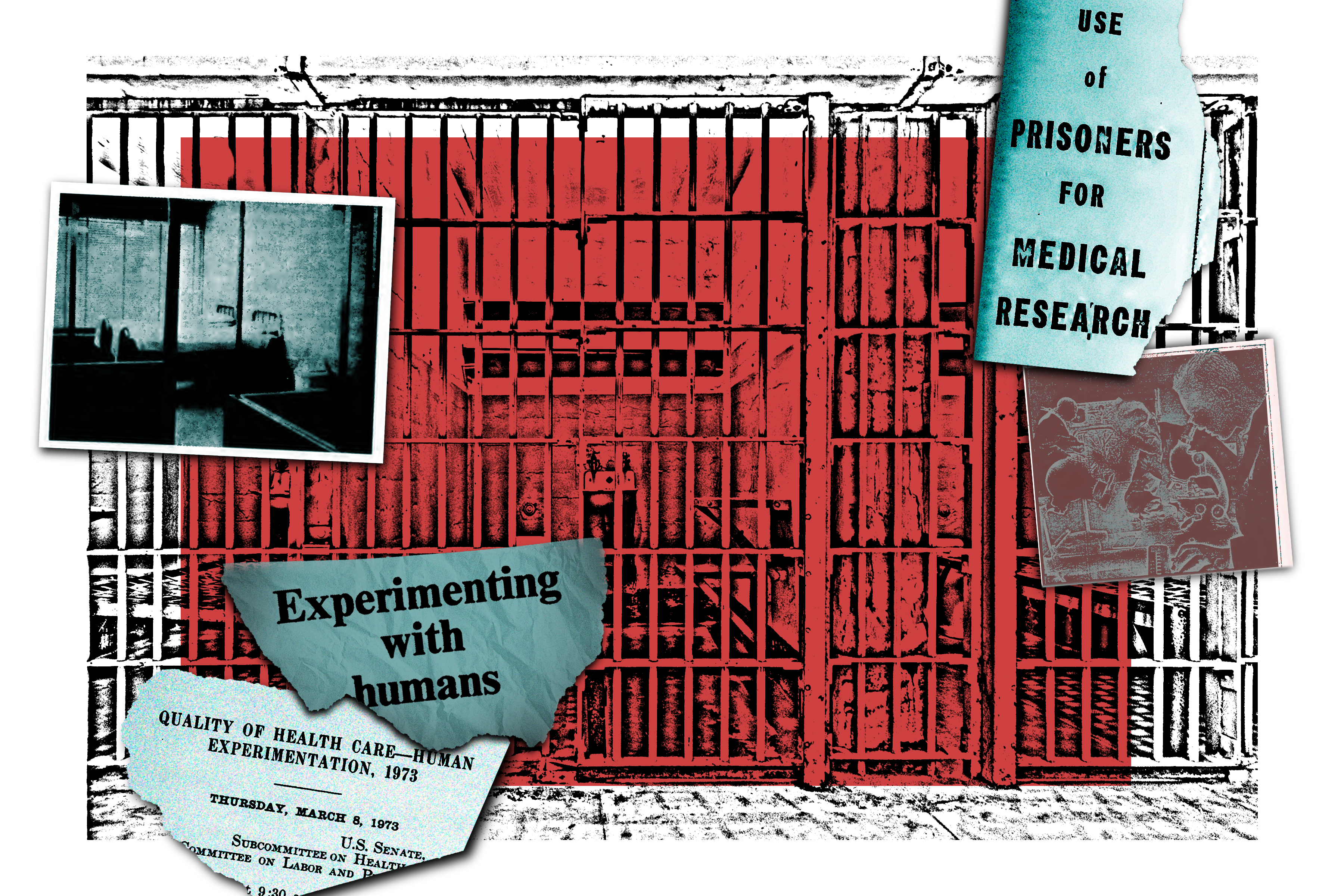
Holmesburg Prison surveillance footage, circa 1968, showing the blocks where medical experiments took place.
Acres of Skin: Unmasking the Holmesburg Prison Experiments
For decades, Holmesburg Prison was the site of unethical medical experiments on inmates, primarily Black men. Under the guise of research, they were exposed to toxic substances and harmful testing. This long-buried chapter raises deep questions about ethics and consent, echoing dark themes in U.S. history.
What Happened
From 1951 through the early 1970s, Holmesburg Prison, a facility tucked away in the Philadelphia hinterlands, became a notorious site for medical and dermatological research. These weren't your ordinary scientific endeavors. Instead, they bore the grim mark of exploitation and neglect. Many inmates, lured by the promise of financial compensation, unknowingly volunteered for tests that left them with scars both physical and psychological. Imagine an inmate, arms outstretched, as chemical sunscreens, mind-altering drugs, and even radioactive isotopes are applied to his skin.
The mastermind behind these unsettling trials was Dr. Albert Kligman, a dermatology professor at the University of Pennsylvania. Kligman, along with several pharmaceutical companies, sought to study the effects of various substances on human skin. Following his initial survey of the prison population, he reportedly stated, "I saw acres of skin." For Kligman, the prison presented an unending supply of test subjects and, tragically, he exploited it without remorse.

During this period, the inmates at Holmesburg—most of whom were Black and from impoverished backgrounds—found themselves part of an unethical chapter in medical history. They were subjected to tests that included exposure to dioxin, a toxic compound found in Agent Orange, which left them suffering from long-lasting skin damage. Other inmates received noxious injections to probe their reactions to pathogens and viruses under controlled conditions.
The lack of adequate informed consent marked these experiments as not just controversial but arbitrary infringements on individual rights. Inmates often signed consent forms without understanding the risks involved, as these documents offered little explanation beyond bureaucratic jargon. Payment was meager, merely a few dollars for participating in studies that could—and often did—debilitate them for life.

Reports eventually reached the outside world, attracting criticism from medical ethicists and human rights activists. The series of investigations and public outcry culminated in a 1973 congressional hearing that dismantled this foul network of human testing. The scandalous revelations at Holmesburg Prison spurred regulatory changes in the oversight of human experimentation, dramatically impacting how future studies were designed and implemented.
But the scars remained, both in the memories of those who lived through it and in the legal annals of American history. Survivors described the experience as one marked by humiliation, anger, and betrayal. Their stories echo as warnings from a past where scientific curiosity overshadowed compassion, and prisoner rights were neglected under the weight of medical advancement.

Timeline of Key Events

1951 — Dr. Albert Kligman begins dermatological experiments at Holmesburg Prison, viewing inmates as 'acres of skin.'
1953 — Initial public acknowledgment of medical testing on prisoners surfaces.
1955 — Kligman tests Retin-A, a drug still in use today for acne, under constrained conditions.
1960 — Studies conducted on the effects of psychoactive drugs on inmates, raising ethical concerns.
1966 — Inmates are exposed to dioxin, a primary component of Agent Orange.
1968 — Widespread testing of mind-altering substances raises concerns in medical ethics circles.
1970 — Reports of long-term skin damage among tested inmates begin to appear.
1973 — Congressional hearings officially launch to investigate unethical testing practices.
1973 — Experiments at Holmesburg formally end due to public and regulatory pressure.
1981 — A class-action lawsuit is filed by former inmates against the University of Pennsylvania and the city.
1982 — The court dismisses the case due to statute limitations.
1999 — Allen M. Hornblum publishes "Acres of Skin," drawing more public attention.
2000 — Historians and journalists uncover further details and testimonies.
2013 — Survivors hold a press conference, demanding official apologies and reparations.
2018 — Further investigations reveal deeper entanglements between researchers and pharmaceutical companies.
2020 — The Pennsylvania Historical and Museum Commission erects a plaque acknowledging the scandals.
2022 — Philadelphia issues a formal apology for the unethical experiments.
2023 — The College of Physicians of Philadelphia publicly apologizes for inaction.
2024 — Renewed discussions in academic circles about informed consent and prison experiments.
2025 — A documentary series revisits the events, interviewing participants and historians.
2026 — Survivors and activists call for continued awareness and education on historical medical ethics violations.
What Is Documented
The documented history of the experiments at Holmesburg Prison is both extensive and incriminating. Declassified records and congressional hearings have provided a bleak window into the practices that took place. In 1973, congressional hearings revealed that experiments at Holmesburg were conducted without adequate attention to ethical standards, often bypassing necessary informed consent protocols. According to these hearings, inmates were not fully aware of the potential risks they were undertaking.
Court records, particularly from the attempts at reparation lawsuits, outline the specific companies involved, including Johnson & Johnson and Dow Chemical, who financed the research in search of profitable dermatological breakthroughs. Confidential memos from those companies, which have since been uncovered, spoke to a deliberate intention to minimize risks to public image while maximizing scientific output and potential profits.

Testimonies during these hearings, including those from prisoners and research assistants, told of conditions that more resembled clandestine operations than structured scientific studies. The prevailing sentiment among researchers was one of clinical detachment, as if divorced from the human suffering accompanying their trials. James McHaney, who helped bring the Nuremberg prosecutions, provided a damning comparison of these tests to Nazi war crimes.
More importantly, several university-affiliated documents confirmed the University of Pennsylvania's involvement. The studies and data accumulated became part of academic papers published in reputable scientific journals of the time, albeit under a shroud of ethical ambiguity.

Subsequent leaks, including those handled by journalists and freedom of information advocates, have revealed the breadth of the chemical testing programs, pointing to an alarmingly close relationship between academia, the corporate world, and medical research on vulnerable populations.
What Has Been Alleged
Allegations surrounding the Holmesburg Prison experiments fly thick and fast, with many centering on gross violations of human rights. According to former inmate Edward Anthony, many participants were unaware that the substances being tested were cancer-causing or otherwise harmful. He noted that the paperwork was dense with scientific jargon that few inmates could comprehend.
These allegations received further scrutiny when journalist and researcher Allen M. Hornblum titled his exposé, 'Acres of Skin,' to reflect the dehumanization inherent in the experimental practices. He claimed that Dr. Kligman made no attempts to conceal the negligible regard he held for prisoners, a stance corroborated by whistleblowing medical staff who worked under him.
Other victim accounts, such as that of Darryl Huff, accused researchers of racial bias, alleging that Black inmates were predominantly chosen for the most dangerous tests. According to Huff, there was an implicit understanding within the prison walls that being Black made one an ideal subject for these risky experiments. Such claims painted a troubling picture of systemic racial injustice underpinning the selection process.

Moreover, prison guards, as per former wardens speaking decades later, reportedly allowed pharmaceutical representatives unfiltered access to inmates, raising severe privacy and ethical concerns. While these statements remain difficult to verify, they underscore the alleged complicity and tangential involvement of prison officials.
This narrative of exploitation taps into a broader allegation of institutional neglect: that the prison system, driven by financial incentives, thrived by violating inmate rights with impunity. The ongoing struggle to reconcile such allegations with documented evidence keeps the story of Holmesburg alive in contemporary discourse, as victims continue to seek acknowledgment and justice.
What Remains Disputed
While much surrounding the Holmesburg Prison experiments is well-documented, disputes remain, particularly regarding the extent of governmental involvement. Some researchers have claimed CIA backing in the psychoactive drug trials, which raises serious questions about the covert operations during that era, yet no concrete evidence has wholly substantiated these claims.
Dr. Albert Kligman and university representatives have vigorously denied awareness of any physical harm their trials might cause, despite conflicting testimonies from participating inmates. Kligman, until his passing, maintained that he never violated ethical standards, arguing that informed consent was appropriately obtained, a point later heavily contested.
Suspicions linger about the depth of racial motivation in subject selection. Officials from the city of Philadelphia, past and present, have consistently denied systemic racial bias, suggesting instead that socioeconomic factors dictated participation rates in the studies. However, critics assert that the predominance of Black subjects points to deliberate partiality.

The disputed facts and interpretation of these grim chapters reflect broader splits in American society regarding historical accountability, scientific oversight, and institutional transparency. Some call for further declassification and independent review to clarify disputed elements, unresolved narratives that continue to muddy the waters of public understanding.
What Was Later Confirmed
In the years following the investigations into Holmesburg, several aspects once shrouded in denial have emerged into the light of understanding. Initially, both the University of Pennsylvania and the drug companies involved denied any unethical behavior, decrying claims that their tests were harmful. Yet as more documents were released through the Freedom of Information Act, it became evident just how misleading those denials were.
One significant confirmation was the role that pharmaceutical giants had in directing specific trials, as corporate correspondence illustrated deliberate attempts to push profitable outcomes over ethical concerns. Internal memos from 1965 highlight how some top-tier officials were warned about potential backlash should the public discover their methodologies.
Perhaps most strikingly, a 2002 investigation uncovered accurate dosage records and consent forms that were deliberately misleading. Prisoners’ signatures had often been obtained through coercive means or under the guise of harmless trials. The failure to disclose harmful effects of tested agents, such as dioxin and radioactive elements, has since been verified in a string of legal adjudications.
Ultimately, these confirmations painted a damning picture of systemic exploitation and deceit that persisted for decades. The fallout from such revelations engendered stricter regulations regarding bioethics and prisoner rights in scientific research, attempting to prevent history from repeating itself, albeit after irreversible damage had been done.
Common Myths & Exaggerations
Myth: The experiments at Holmesburg successfully contributed to major medical breakthroughs without any harmful consequences. This is false. While some drugs tested did later prove useful, like Retin-A, the detrimental effects and ethical violations heavily overshadowed any benefits.
Myth: Holmesburg prisoners were fully informed and voluntarily participated to earn extra money. Unsupported. Though prisoners were paid, the majority were not made aware of the severe health risks; deceptive consent practices were commonplace.
Myth: Dr. Kligman acted alone and without any institutional backing. Exaggerated. Documentation shows that Kligman's work was part of a broader network involving academic circles and pharmaceutical companies seeking risk-free test populations.
Myth: Similar practices stopped immediately after Holmesburg’s public exposure. Incorrect. Although Holmesburg’s operations ceased in the '70s, similar unethical experiments on prisoners continued at other institutions under different guises until regulations caught up.
These myths often stem from attempts to sanitize a disturbing history or deflect from systemic failures. It’s essential to clarify these misconceptions to ensure that such ethical breaches are neither forgotten nor repeated.
Why It Matters
The Holmesburg Prison experiments matter deeply not just as a cautionary tale of overzealous scientific pursuit but as a lasting reminder of the potential abuses within systems of power when not ethically checked. This historical scandal underscores the critical balance between research advancement and human rights, echoing a dark theme recurrent in the corridors of medical and governmental institutions.
Legally and socially, the exposure of Holmesburg's unethical practices catalyzed stricter regulatory frameworks for clinical studies involving human subjects. These pioneering regulatory reforms morphed into a protective barrier designed to ensure the safeguarding of participant health and rights, shifting the paradigm towards consensual transparency in research methodologies.
However, the reverberations go beyond procedural adjustments. They delve into ongoing conversations about race, power, and exploitation within a historical context that includes other disquieting events like the Tuskegee Syphilis Experiment and MK-Ultra. By weaving Holmesburg into this broader tapestry, contemporary society confronts uncomfortable truths about how segments of its population have been unfairly scapegoated and manipulated.
Understanding what transpired at Holmesburg is crucial, especially today when biomedical advancements surge forward, tempting some with shortcuts. It challenges researchers, policymakers, and the public to remain vigilant, to engage critically with emerging technologies and methodologies, and to prioritize an ethical foundation over expedient gains. It’s this specter — of past abuses reflected in the potential present — that makes Holmesburg not merely a footnote but a foundational lesson on the perilous edge of scientific exploration.
Connections to Other Archive Entries
The Holmesburg experiments draw direct parallels to the Tuskegee Syphilis Study, underpinning a historical narrative of medical exploitation, particularly of African American communities. Both incidents highlight systemic abuses conducted under scientific guises that disregarded informed consent and civic duty.
Additionally, echoes of Holmesburg resonate in examinations of secretive Cold War programs like MK-Ultra, where ethical boundaries were frequently traversed. These historical cross-sections question the ethical landscape of mid-20th-century research projects, which often prioritized national and scientific interests over individual rights.
The legacy of Holmesburg serves as a precursor for the stringent bioethical frameworks that govern current human experimentation protocols, underlining how past failures have been instrumental in shaping regulatory evolutions. Whether connecting to federal oversight expansions post-Nuremberg Trials or the Civil Rights Movement's strides into integrating ethical perspectives within law and policy, Holmesburg's footprints traverse significant sociopolitical epochs.
Sources & References
PRIMARY SOURCES
SECONDARY SOURCES
The Hidden History Archive is part of The Beacon Wire entertainment and informational platform. All archive articles are based on public sources, declassified documents, court records, and reputable journalism. Facts are clearly separated from allegations, disputed claims, and unsupported speculation. Nothing in this archive should be interpreted as legal advice or as incitement to harm. Readers are encouraged to consult primary sources directly.
We use cookies to improve your experience and analyze site usage. See our Cookie Policy for details.