
Declassified document from the Iran-Contra hearings at the United States Congress, 1987.
Unraveling the Iran-Contra Affair: A Web of Arms, Drugs, and Deception
The Iran-Contra Affair unraveled across the 1980s, exposing a labyrinth of arms sales to Iran and covert support for Nicaraguan rebels, shaking the Reagan administration and the core of the U.S. political system. Explore how this historical scandal unfolded and the far-reaching implications it still holds today.
What Happened
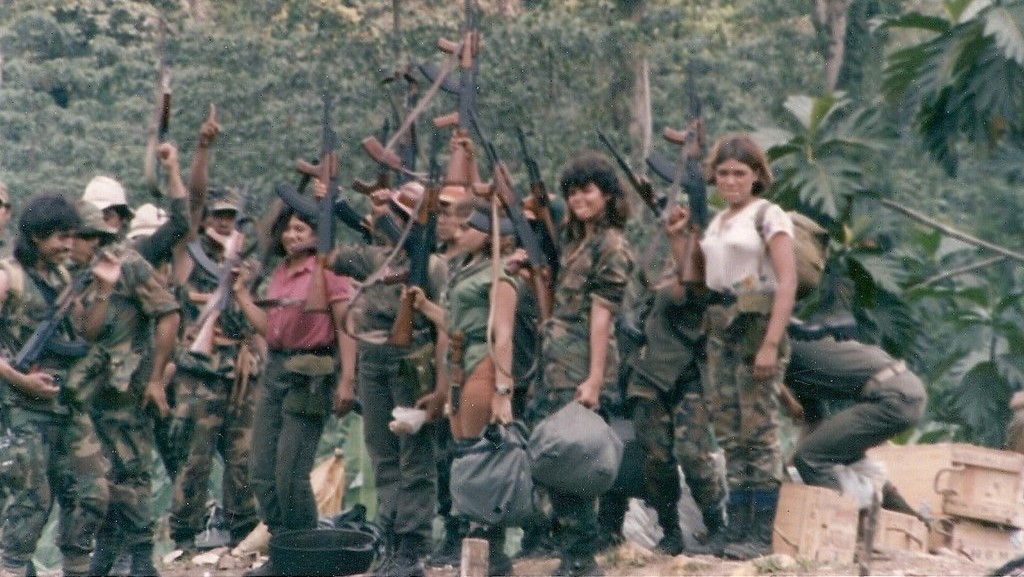
On November 3, 1986, the walls of secrecy surrounding one of the most substantial political scandals in American history began to crumble. It was on this fateful day that a Lebanese magazine, Ash-Shiraa, published the first public reports of arms deals between the United States and Iran — a country with which the U.S. had sworn enemies status due to its vehement anti-American stance. The scandal, which would come to be known as the Iran-Contra Affair, exposed a tangled web of covert operations that involved not only illegal arms sales but also drug money laundering to fund Nicaraguan Contra rebels opposing the leftist Sandinista government.
At the heart of the Iran-Contra Affair was the ideological warfare that defined the Reagan era: a staunch anti-communist foreign policy that placed political expediency above legal and ethical considerations. Despite the passage of the Boland Amendment, which banned U.S. military aid to the Contras, the Reagan administration devised a legal workaround. Weapons would be secretly sold to the Iranian government, which was believed to hold influence over Hezbollah, a group responsible for the hostage-taking of several American citizens in Lebanon. The funds from those sales were then stealthily diverted to support the Contra rebels.

Central to this covert scheme were two key figures: National Security Advisor Robert McFarlane and Marine Corps Lieutenant Colonel Oliver North. North was instrumental in orchestrating the logistics of the arms sales, ensuring that proceeds found their way to the Nicaraguan rebels. McFarlane, alongside CIA operatives and other senior officials, actively engaged in strategizing the complex deals, often conducting business through backchannels to avoid detection.
The clandestine operations were steeped in a veil of secrecy, unknown to Congress and most members of the Reagan administration itself. This lack of transparency violated not only the U.S. Constitution, which mandates congressional oversight over foreign policy, but also eroded public trust in its government. As details emerged, the scandal spiraled into a political maelstrom, leading to congressional investigations, televised hearings, and major media coverage that gripped the nation and the world.

The unraveling of the Iran-Contra Affair brought down several high-ranking officials. Oliver North became a household name, a central figure in the subsequent court trials, culminating in charges like obstructing Congress and destroying documents. While initial convictions were eventually vacated due to a legal technicality, the trials illuminated the extent of covert operations conducted under governmental auspices.
As President Reagan's administration stumbled through the revelations, his image as a robust Cold Warrior was severely tarnished. Although he claimed ignorance of the operations' details, the scandal's implications reached far beyond individual culpability, exposing a systemic willingness to sidestep democratic processes for perceived national gain. The legacy of the Iran-Contra Affair, a deep scar in American political history, serves as a stark reminder of the potential perils in unchecked executive power.

Timeline of Key Events
1981 — Ronald Reagan assumes the presidency, marking the start of aggressive anti-communist policies.
1982 — First reports emerge of U.S. interest in supporting Contra rebels in Nicaragua.
1983 — Officials begin conceptualizing arms sales to Iran as a method to secure hostage releases.
1984 — Congress enacts the Boland Amendment, prohibiting military aid to the Contras.
August 1985 — First shipment of U.S. weapons routed to Iran through Israel.
November 1985 — Confidential discussions within the NSC about arms-for-hostages strategy.
January 1986 — Covert operations behind the scenes at the Reagan administration grow in momentum.
March 1986 — Second sale of arms to Iran further exacerbates tensions.
November 1986 — Lebanese weekly Ash-Shiraa exposes the covert arms dealings.
December 1986 — The Reagan administration faces backlash; investigations launched.
1987 — Tower Commission formed, tasked with investigating Iran-Contra.
February 1987 — Tower Commission report highlights mismanagement but absolves Reagan.
1988 — Some officials, including Oliver North, are prosecuted; legal battles commence.
1989 — President Bush pardons figures involved in the Iran-Contra Affair.
1990 — Public and political discourse fueled by gradual declassification of documents.
1991 — Final report by Iran-Contra Special Prosecutor Lawrence Walsh released.
1992 — Further revelations of CIA involvement from declassified intelligence documents.
1994 — Additional hearings reconvened as new information emerges.
2001 — Declassification of further documents incite renewed interest.
2006 — Fresh analyses in academic circles foster reinvestigation of the scandal.
2019 — Major publications reassess Reagan's presidency through new lenses provided by Iran-Contra declassifications.
What Is Documented
The documentation of the Iran-Contra Affair, solidified through various declassified governments records, congressional hearings, and court testimonies, depicts a narrative of deliberate legal circumvention. The crucial backbone of the scandal was the complex transaction chain and misappropriation of funds, as confirmed through extensive declassified NSA documents and internal memos.
On December 14, 1986, President Ronald Reagan admitted to transactions with Iran during a nationally televised address. The Tower Commission, an independent presidential inquiry, served as a primary source, publicly confirming the unauthorized appropriation of funds from arms sales to the Contras, thus violating the Boland Amendment.

The task of uncovering procedural improprieties fell to key figures from Congress and investigative bodies like the Walsh Report, overseen by the independent counsel tasked with reviewing the affair. Through exhaustive cross-examinations and document analyses, essential pieces of the puzzle were pieced together, revealing significant departures from legal mandates.
The 'diversion memo' compiled by Oliver North and subpoenas of his personal notes provided solidified evidence conveyed in court proceedings, solidifying acknowledgment of the operation's breadth. Financial records laid bare the intricate schemes employed by administration officials to obscure fund diversion paths.

The testimonial pivotal came from Reagans top aides, including the then-presidential Chief of Staff, providing on-the-record affirmations of unauthorized actions conducted in the name of U.S. foreign policy. These findings indicated systemic lapses not only within the implemented logistical frameworks but also highlighted institutional overreach that consciously bypassed legislative checks.
Finally, the culmination of these documented facts in the judicial trials of implicated individuals illustrated concerted failures in adherence to established governance protocols, offering a cautionary glimpse into the often invisible machinations of consolidated executive power.
What Has Been Alleged
The Iran-Contra Affair has never fully escaped the realm of conspiracy and allegation, as certain aspects linger amidst confirmations. Foremost among these is the alleged comprehensive oversight or tacit approval by President Reagan himself. Despite formal investigations clearing Reagan of direct complicity, dissenters, including public figures and journalists, posited that the president had more extensive knowledge than was publicly admitted.
In notable testimonies during the hearings and after, figures like former National Security Council officials relayed anecdotes suggesting Reagan's possible cognizance of logistical arrangements, although no direct orders were linked. Bob Woodward and other investigative reporters frequently cited unofficial communications, including meetings that purported to involve the President's input or implicit sanctioning of continued operations.
Additional allegations implicated broader networks, stretching across international actors. Richard Secord, among others, proposed that financial diversions were larger than publicly acknowledged, hinting at extensive secret accounts managed by intermediaries outside the oversight of recognized U.S. agencies. Some arms deals are said to have spiraled into black market territories, coupling with allegations of drug trafficking links, though official inquiry into these aspects remains inconclusive.

The Israeli government's role in the transactions also remained subject to conjecture; while publicly confined to logistics, off-the-record narratives accused Israeli agents of extensive operational engagements, lending support to subversive U.S. efforts beyond diplomatic channels.
Lastly, the moral challenge posed by willingness to negotiate with hostage-taking entities was not only a matter of policy contention but symbolized alleged violations of international norms against state-endorsed terrorism. Although no definitive proof established authorized complicity, these accusations have left enduring marks on ethical discourses surrounding international governance and U.S. imperialist interests.
What Remains Disputed
Among the principal disputes in the Iran-Contra Affair remains the extent of President Reagan's involvement. Official reports from the Tower Commission and later the Walsh Report did not conclusively link Reagan to the operative decisions, yet an element of skepticism persists among historians and political analysts. Internal NSA memos and testimonies, although inconclusive, sparked allegations of Reagan's passive complicity.
Another area of contention revolves around the role of the CIA and its former director, William Casey. While the official story aligns Casey's involvement with sanctioned directives, former operatives and internal whistleblowers suggested that Casey oversaw additional unauthorized facets of the operation that bypassed the intelligence briefings given to Congress.
The efficacy and impartiality of the judicial response also face scrutiny. Despite convictions, critics argue that the eventual pardons issued by President Bush constituted political interference, raising questions about the legal system's ability to administer unbiased justice within politically sensitive contexts.

Legal theorists continue to debate whether the executive leverage demonstrated during the Iran-Contra Affair reflects deeper systemic flaws in governance, with implications for checks and balances in post-Cold War intelligence activities.
What Was Later Confirmed
Over time, many portions of the Iran-Contra Affair's narrative, initially dismissed or downplayed, were later verified as concrete facts through unintended admissions and systematic exposure. Notably, the CIA's orchestrated involvement in the diversion of funds became indisputable following the congressional declassification of primary source documents beginning in the early 1990s.
Prominent among these revelations were tapes and transcripts documenting the discussions between North and other operatives within intelligence circuits. National Security Council deliberations, painstakingly documented within Walsh's final report, provided a framework for understanding the operational legality—or lack thereof—preserving the scandal's legacy in official record.
Public access to additional declassified material, released under the Freedom of Information Act and meticulously curated by archival projects, shed light on diary entries and communications once deemed confidential, transforming speculation into matters of factual record affirming misdirected foreign policy pursuits.

Later analyses drew on these findings to integrate the Iran-Contra Affair into broader Cold War narratives, affirming the clandestine confluence of arms dealing strategy and profit-making motivations, recognized by political scientists as a confirmation of Reagan-era executive overreach.
Common Myths & Exaggerations
The Iran-Contra Affair's complexity has engendered several myths, often proliferated in popular discourse. One persistent myth suggests that the scandal was solely about arms-for-hostage negotiations, when in fact, it encompassed an expansive series of geopolitical maneuvers involving clandestine funding and political manipulation.
Another myth posits that Congress was entirely unaware of the dealings. While it's true that detailed disclosures were scant, selective pockets of Congress had inklings of the operations, albeit without a full grasp of the affair's magnitude.
A third myth relates to the portrayal of the NSC as working completely independently. although there was internal dissension about the proper course, documents affirm that a segment of Reagan's administrative executive retained awareness and control, thus disproving the notion of rogue behavior.
Lastly, it is often assumed that international disapproval of the operations was universal. This oversimplifies the reactions; covert diplomatic correspondence reveals an assortment of strategic collaborations and disagreements, as allies sought to navigate the complex realities of Cold War politics within their respective domains.
Why It Matters
The Iran-Contra Affair stands as a pivotal chapter in the historical examination of U.S. governance, marking a critical junction in the balance between executive autonomy and legislative oversight. Its revelations underscored the latent vulnerabilities at the intersection of national security imperatives and constitutional safeguards.
Understanding this affair's historical ramifications is crucial for contemporary policy analysts, offering circumspect insights into the delicate tensions in global governance dynamics today. The affair typified the precariousness of arms negotiations and foreign interference, facets recurrent in diplomatic and military engagements.
Additionally, the ethical challenges and precedential dilemmas highlighted in this case mirror modern debates about governmental transparency, accountability, and the ethical constraints on intelligence operations deemed necessary for security.
The scandal's persistent implications reiterate salient cautionary tales regarding unchecked authority, mobilizing contemporary conversations about boosting transparency mechanisms and institutional trust. In a rapidly transforming global stage, where similar operational paradigms are observed, the Iran-Contra Affair's cautionary lessons continue to echo across the corridors of power.
Moreover, the affair's legacy punctuates today's reflections on U.S. relations with the Middle East, offering historical signposts that illustrate the complexities interwoven into diplomatic interactions and the potential consequences of clandestine engagements conducted under the cloak of national interest.
Connections to Other Archive Entries
The United States' actions during the Iran-Contra Affair are intimately connected to its broader Cold War doctrine of containment, showcasing tactical consistencies with earlier interventions in Latin America, such as in Chile and Guatemala.
This operation's mosaic forms part of a broader narrative of U.S. intelligence experiences that includes parallel revelations of covert strategies elsewhere, such as Operation CHAOS and the assassination attempts during the Kennedy administration, showcasing the era's clandestineness.
The aftermath of the Iran-Contra Affair served as an institutional prelude to subsequent legal reforms aimed at curbing executive overreach, echoing in the legislative checks proposed in contexts like the aftermath of the 9/11 intelligence reviews, symbolizing lasting alterations to national strategy philosophies.
Sources & References
PRIMARY SOURCES
SECONDARY SOURCES
The Hidden History Archive is part of The Beacon Wire entertainment and informational platform. All archive articles are based on public sources, declassified documents, court records, and reputable journalism. Facts are clearly separated from allegations, disputed claims, and unsupported speculation. Nothing in this archive should be interpreted as legal advice or as incitement to harm. Readers are encouraged to consult primary sources directly.
We use cookies to improve your experience and analyze site usage. See our Cookie Policy for details.