
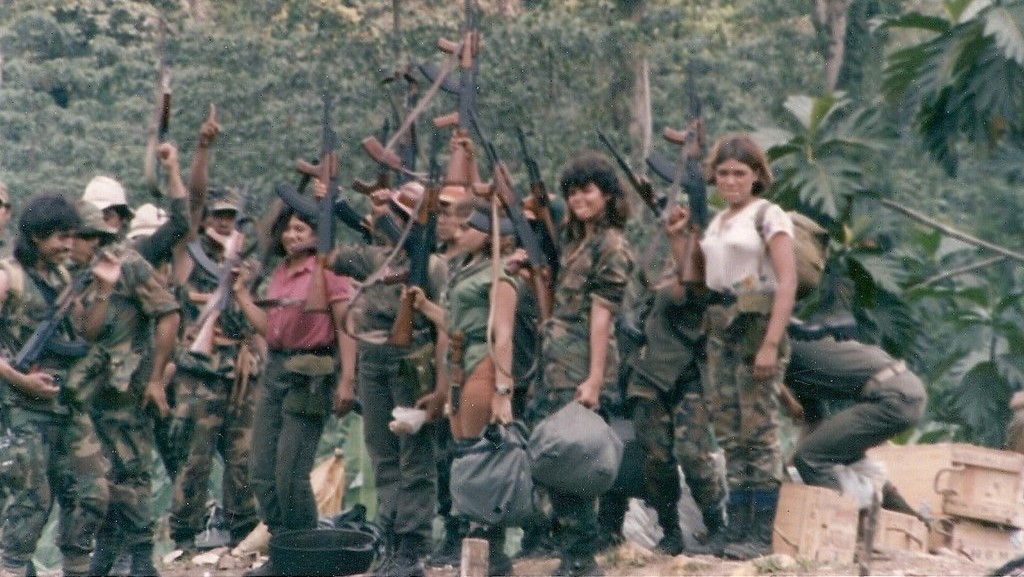
Confiscated weapons from the Iran-Contra affair, 1986, evidencing the covert conflict.
The Iran-Contra Scandal: A Tangled Web of Arms, Drugs, and Deception
In the shadows of Cold War tensions, the Iran-Contra scandal erupted, unveiling a secret network of arms deals and illegal funding. The scandal involved corrupt dealings that defied Congress and manipulated global politics, exposing vulnerabilities within the Reagan administration.
What Happened
On a crisp fall day, November 25, 1986, the United States was rocked by a revelation that seemed straight out of a spy novel: the Reagan administration had covertly sold arms to Iran, a nation publicly deemed a pariah by the U.S., and had diverted the profits from these sales to the Contras in Nicaragua, despite congressional prohibitions against such actions. This explosive disclosure, known as the Iran-Contra scandal, unraveled a complex web of political deceit and geopolitical ambition that sent shockwaves through the White House and around the world.
In the 1980s, the United States was engrossed in the Cold War, a geopolitical chess game with the Soviet Union. The Reagan administration, staunchly anti-communist, was deeply troubled by the rise of the Sandinista government in Nicaragua, which had Marxist leanings. Fearing that the Soviet influence could gain a foothold in Central America, the administration was determined to bolster the Nicaraguan Contras—a group of right-wing rebels fighting to overthrow the government.

However, a major obstacle arose when Congress passed the Boland Amendment, which effectively cut off U.S. aid to the Contras, citing human rights abuses and the need for legislative control over foreign policy engagements. Faced with legislative roadblocks, a small group within the Reagan administration, led by individuals from the National Security Council, orchestrated an alternative strategy to sustain the Contras.
At the center of this scheme was Lieutenant Colonel Oliver North, a zealous Marine and staff member of the National Security Council, who became the operational heart of the Iran-Contra affair. North and his associates concocted a plan that involved selling arms to Iran, ostensibly to secure the release of American hostages held by Hezbollah in Lebanon, and funneling the proceeds to the Contras. This plan was carried out with little to no oversight, relying on a secret network of intermediaries and unsanctioned financial transactions.

The complexity of the scandal lay not only in its geopolitical audacity but in its ethical and legal implications. Selling arms to Iran violated an embargo and flouted Reagan's public stance against negotiating with terrorists. Additionally, redirecting funds to the Contras in violation of congressional intent raised serious constitutional questions about executive power and accountability.
As the scandal came to light, it was met with public outrage and a media frenzy. The resulting investigations exposed a breach in trust at the highest levels of government. Congressional hearings were convened, inquiries were launched, and eventually, indictments were issued. It was a moment that laid bare the tension between national security interests and democratic accountability, reshaping public discourse and leaving a legacy of scrutiny on secret government operations.

Timeline of Key Events

1981 — CIA begins covertly supporting the Nicaraguan Contras.
1982 — Congress passes first Boland Amendment, prohibiting assistance to Contras.
1984 — Boland Amendment expanded to further restrict Contra funding.
1985 — The first arms shipments to Iran are finalized through third-party channels.
1985 — President Reagan signs a secret directive to authorize the arms sales to Iran.
1986 — Oliver North executes plan to use arms profits for Contra funding.
November 1986 — Scandal breaks as the operation is exposed in the media.
1987 — Congress holds joint hearings to investigate Iran-Contra activities.
1987 — The Tower Commission issues a critical report highlighting operational failures.
1988 — Oliver North and John Poindexter are indicted on multiple charges.
1991 — Presidential pardons are granted for several key figures linked to the scandal.
1992 — Court clears Oliver North's convictions citing coerced testimony.
1993 — Lawrence Walsh's final independent counsel report is published.
1994 — Declassification of critical documents sheds new light on operations.
1998 — The Iran-Contra documents are digitized for public access.
2000 — New FOIA requests reveal further insight into administration actions.
2006 — Renewed public interest sparks a reevaluation of the affair.
2012 — The National Security Archive releases additional declassified records.
2015 — Digital archives expand, making more documents widely accessible.
2023 — Analysts reassess the long-term impacts as political debates continue.
What Is Documented
The Iran-Contra scandal is documented through a wealth of official reports, testimonies, and declassified records that chronicle a complex narrative of deception and executive overreach. At the core lies the intricate orchestration by the National Security Council, particularly involving figures like Oliver North and National Security Advisor John Poindexter.
Several declassified CIA documents solidify the framework of the operation. The 'Summaries and Chronology' files released under the auspices of the Freedom of Information Act illustrate detailed instructions on arms transactions to Iran. These transactions were conducted through intermediaries—including Israeli contacts—highlighting a shadowy supply chain designed to mask U.S. involvement.
President Reagan's tacit involvement is underscored by the Tower Commission's findings, which reveal that he authorized these covert operations, though perhaps with limited comprehension of their full implications. The commission's report denounced the operational failures and lapses in oversight that facilitated the scandal.
Congressional hearings, such as those conducted by the joint congressional committee, revealed North's central role and his actions to sidestep legislative prohibitions. Evidence from these hearings showed systematic document destruction, with North spurring staff to shred sensitive memos detailing the hidden agenda.

Furthermore, records show that funds from the arms sales were channeled effectively into separate accounts—redirections designed to finance Contra operations. Key figures outside of government, such as Adolfo Calero, a leader among the Contras, were instrumental in coordinating this unauthorized flow of money.
Natural and judicial outcomes followed as figures like North faced indictments of perjury and conspiracy. Notably, his convictions, later voided due to what was decided to be coerced testimony, underscored the intertwined ethical and legal failings shaded throughout the saga. The documents recovered post-trial unveiled a complex dance between secrecy and transparency that reshaped views on U.S. governance.
What Has Been Alleged
The Iran-Contra scandal, while clearly documented in some facets, was also shrouded in a cloud of allegations that extended beyond the surface-level facts. Left in the realm of the alleged were claims tied deeply to the scandal’s more sinister undertones, particularly concerning America’s war on drugs and the controversial involvement of the CIA in narcotics trafficking.
Notably, allegations emerged from investigative work by journalists such as Gary Webb, who posited in his 'Dark Alliance' series that the CIA was aware of Contra-affiliated cocaine smuggling into the United States, which funded efforts against the Sandinistas. These claims, while provocative and supported by some investigative discoveries, remain largely unproven within formal government reports.
The Christic Institute, a public interest law firm, filed a RICO (Racketeer Influenced and Corrupt Organizations Act) lawsuit in 1986, alleging a vast network of covert conspirators—including CIA operatives and arms dealers—allied in illicit drug trade funding armed conflicts. However, due to lack of conclusive evidence linking senior officials directly to drug operations, the charges were dismissed as speculative.

Moreover, questions arose concerning figures such as Manuel Noriega, the deposed Panamanian dictator convicted of drug trafficking, with claims positioning him as more deeply interwoven with U.S. intelligence than admitted publicly. These hypothetical interconnections, while narratively compelling, lack definitive corroboration within the formal historical record.
Persistent uncertainties over President Reagan's exact testimony remain. Critics and some former government insiders have raised doubts about the completeness of Reagan’s self-reported knowledge of the operations. Despite exhaustive investigations, this remains an area interpreted through a lens skewed by political allegiances and imprecise recollections—a perplexity that continues to fuel speculation around American executive transparency during this era.
What Remains Disputed
The Iran-Contra scandal has been subject to numerous disputes, particularly regarding the extent of President Ronald Reagan's involvement and awareness. On one hand, the Tower Commission's report largely exonerated Reagan by suggesting that he was not fully apprised of the details, implicating lower officials in failing to accurately brief him. However, alternative accounts, including testimony from Col. Oliver North and other aides, suggest Reagan had a hand in key decisions.
In the realm of intelligence oversight, the role of the CIA is another focal point of contention. While formal investigations delineated certain actions, such as arms negotiations with Iran, CIA critics allege that the agency was far more deeply involved in facilitating illegal paramilitary activities and possibly drug trafficking. These contentions are partly based on documents not fully appreciated during the initial trials, enhanced by investigative journalism.
There are also disputes regarding the extent to which funds were used exclusively for Contra support versus potential personal profiteering by involved parties. Oliver North, for example, was cleared of outright theft charges, but lingering doubts about financial transparency remain due to fragmented records and destroyed documents.

Overall, these rival narratives paint a picture of complex, often contradictory, interpretations of key events and decisions. Despite extensive judicial examinations, the debates persist—a testament to the elusive nature of total clarity when government actions veer into clandestine realms.
What Was Later Confirmed
Contrary to earlier denials, developments in the years following the Iran-Contra unraveling gradually brought truths to light that amended the public record. During initial reports, the full scope of President Ronald Reagan's knowledge remained contended; however, documents declassified finally confirmed Reagan authorized operations to some degree, though arguably without a comprehensive grasp of repercussions.
Moreover, the 'North Diaries,' a set of documents shredded during the scandal and later reconstructed, confirmed suspicions surrounding the financial diversions—the detailed records in the Friar Report, recovered by contemporaneous technology, underscored prior verbal descriptions of funds funneled into Contra support.
In addition to these crucial revelations, with strides in transparency like FOIA requests, public understanding of covert space widened considerably from earlier restricted insights. Reagan’s ostensibly removed dictation stance or hands-off claim was eventually shown to amount to a strategy of plausible deniability amongst inner Cabinet discussions, supported by documented inter-staff memos exposed much later.

Confirming suspicions around systematic operatic concealment, restored communications and inter-departmental dialogues within the government finally sealed what many policymakers publicly detangled—highlighting the lingering reality of complex lines of oversight breaches under the guise of national security.
Common Myths & Exaggerations
Over time, the Iran-Contra affair has accrued a mythology, shaped as much by speculation as by known facts. One myth posits that Ronald Reagan was completely unaware of the operations. However, although operatives may have downplayed specifics, evidence shows he was briefed on arms dealings, undermining claims of total ignorance.
Another common exaggeration is the depiction of Oliver North as the solitary engineer of the scandal. In truth, while North played a demonstrable role, the operation's scale and complexity were beyond what a single person could manage, heavily implicating a network of aides, advisors, and military strategists.
It is often incorrectly believed that the entire operation aimed only at hostages' release. While publicized as a humanitarian aim, the clandestine goal evidently intertwined with countering Soviet penetration in the Americas through direct matériel aid to the Contra forces, using purportedly illegal means outside of congressional approval.
Lastly, it is sometimes falsely assumed that the Iran-Contra was an isolated incident in U.S foreign policy; however, at its heart, it mirrored broader strategic defense tactics characteristic of Cold War realpolitik subtleties, enhanced through secretive state operations that tied into other geopolitical maneuvers such as supporting Mujahideen in Afghanistan or similar engagements throughout the hemisphere.
Why It Matters
The Iran-Contra scandal remains a seminal chapter in the annals of American political history, etched deeply into the narrative of governmental operations and foreign policy ethics. Its significances stretch well beyond the 1980s, serving as a stark reminder of the dangers posed when executive ambition overloads legislative oversights and lawful accountability.
This scandal dramatically underscored the precarious balance between national security ambitions and democratic checks and balances. It laid bare the mechanisms by which executive power could be maneuvered, often too easily, towards ends that challenge constitutional norms and legislative capacities, implicating future governance design and evaluation regarding U.S. military involvements.
Furthermore, the affair prompted the inauguration of procedural reforms intended to empower congressional probes into executive actions—a necessary advancement for a truly participatory democracy. The scandal’s exposure reinforced the essentiality of transparent government operations, helping to shape domestic and federal policies, which safeguard civil liberties against executive overreach.
Modern parallels seen in contemporary issues, such as debates over surveillance by government agencies, the War on Terror, and executive military action approvals underline Iran-Contra’s resonance. The historical precedent fuels dialogue over protecting public oversight and institutional processes essential to mitigating unchecked governance power, a vital issue in ongoing political evolution, reflecting a lesson painfully learned but ever-relevant.
Importantly, the scandal still influences modern perceptions of U.S. foreign policy strategy, with constant reevaluation of the ethics within international engagements, propagated critically through defense and foreign aid, accentuating echoes of Cold War engagements and their implicit moral quandaries.
Connections to Other Archive Entries
The Iran-Contra affair is intrinsically connected to other significant Cold War conflicts and operations. It is reminiscent of the 1954 CIA coup in Guatemala, where U.S. interventionism was shaped by stark anti-communist objectives. Furthermore, it bears similarity to U.S. support for Mujahideen fighters in Afghanistan, with covert operations featuring prominently in foreign policy tactics of the period.
The affair draws parallels with the precedents of executive overreach seen in the Watergate scandal, having also emphasized gross abuses of power and disregard for checks and balances. This persistent theme of upending congressional directives suggests a pattern of governance across decades shaped by similar ideological impetuses, foundationally akin to the secretive operations like MK-Ultra.
Through such connections, the Iran-Contra scandal enriches our understanding of historical U.S. covert action strategies, aiding analysis of more recent interventions by underlining thematic parallels in murky geopolitical dialogues and the continual battle between secrecy and accountability among the world’s democratic societies.
Sources & References
PRIMARY SOURCES
SECONDARY SOURCES
The Hidden History Archive is part of The Beacon Wire entertainment and informational platform. All archive articles are based on public sources, declassified documents, court records, and reputable journalism. Facts are clearly separated from allegations, disputed claims, and unsupported speculation. Nothing in this archive should be interpreted as legal advice or as incitement to harm. Readers are encouraged to consult primary sources directly.
We use cookies to improve your experience and analyze site usage. See our Cookie Policy for details.