
Oliver North, a National Security Council staff member, delivering a historic testimony during the Iran-Contra hearings in 1987.
Iran-Contra: Decoding the Cold War’s Darkest Secret
The Iran-Contra Affair remains one of the most controversial and clandestine episodes in U.S. history, exposing covert arms sales to Iran and illegal funding of Nicaraguan rebels. A tale of shadowy dealings unraveled the Reagan administration, drawing a thin line between national security interests and illicit operations during the turbulent Cold War era.
What Happened
In November 1986, America woke up to a nightmare of political intrigue and deceit that outshone any fictional drama. The Iran-Contra affair burst into the public spotlight as details began to emerge about a covert operation that had dynamics straight out of a spy novel. It began with secretive arms sales to Iran, a nation engaged in a fierce war with Iraq, amidst a U.S. embargo explicitly prohibiting such transactions. The Reagan administration, eager to secure the release of American hostages held by Hezbollah in Lebanon, determined that selling arms to Iran could serve as a bargaining chip.
But there was more. Profits from these clandestine sales were secretly funneled to support the Contras, a rebel group fighting the socialist Sandinista regime in Nicaragua. This diversion of funds was not merely a clandestine operation; it was a direct violation of the Boland Amendment, legislation that barred U.S. federal funds from being used to aid the Contras. Yet the plan, brewed amid the confusing fumes of Cold War politics, was justified by the administration under the Reagan doctrine, which prioritized the rollback of Soviet influence in Latin America.

At the heart of this operation lay figures such as National Security Advisor Robert McFarlane and his successor, John Poindexter, along with Oliver North, a staff member of the National Security Council. These men orchestrated the intricate web of covert payments and military support, establishing front companies and complex financial arrangements involving Swiss bank accounts.
The scandal was unearthed by the Lebanese magazine Al Shiraa, which exposed the sale of U.S. arms to Iran. Attorney General Edwin Meese’s subsequent inquiry unraveled the scheme, leading to the creation of the Tower Commission. Televised hearings captivated the nation, revealing startling truths about the lengths to which the administration went in trying to sidestep Congress and foreign policy norms.

Despite vigorous denials and claims of ignorance by President Reagan, the affair stained his presidency and tested the limits of how far the executive branch could exert autonomy in the name of national security. Real-life dramas unfolded with Oliver North testifying defiantly before Congress, the nation transfixed as political and personal destinies hung in the balance. The consequences reached beyond legal repercussions, reshaping the landscape of U.S. foreign policy oversight and executive power, thus marking the Iran-Contra affair as a pivotal moment in American history.
Timeline of Key Events

1981 — President Reagan inaugurates policies to support anti-communist forces in Latin America.
1982 — The first Boland Amendment passes, restricting U.S. aid to the Contras.
1983 — U.S. interests in Lebanon spark increased focus on hostage situations.
1984 — Congress enacts the second Boland Amendment, tightening restrictions.
1985 — Initial secret meetings between U.S. officials and Iranian representatives occur.
August 1985 — Robert McFarlane seeks President Reagan’s approval to sell arms to Iran.
September 1985 — First U.S. arms shipment reaches Iran.
1986 — Further arms deals are executed with Iran, political stakes escalate.
March 1986 — NSA data points to handling of funds directed to the Contras.
November 1986 — Al Shiraa reveals U.S. arms deals with Iran, sparking a scandal.
November 1986 — Investigation ordered by Attorney General Edwin Meese.
1987 — Establishment of the Tower Commission to examine the affair.
January 1987 — President Reagan delivers nationwide address on Iran-Contra.
May 1987 — Congressional hearings commence, broadcast live for public viewing.
July 1987 — Oliver North’s televised testimony captures public attention.
March 1988 — Indictments against key figures, including Oliver North, are issued.
1989 — North’s convictions; later reversed on appeal.
December 1988 — Poindexter and others face charges, some pardoned later.
1991 — Independent Counsel Lawrence Walsh concludes investigation, critical of administration.
1992 — President Bush pardons six individuals implicated in the scandal.
2003 — Declassification of documents reveals further internal details of the operation.
2014 — New documents expose deeper intricacies of Iran-Contra activities.
What Is Documented
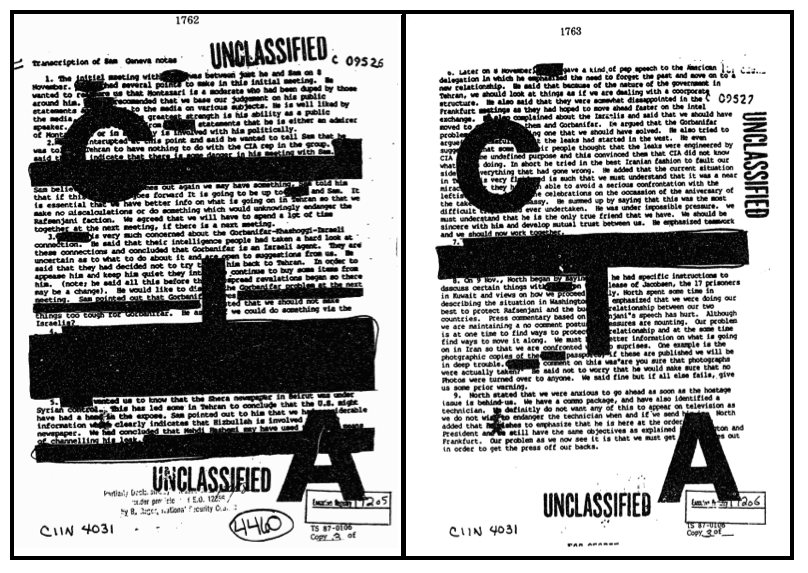
The Iran-Contra affair’s documentation reveals a complex tale of covert machinations that defied domestic and international law. Central to this scandal was the undeniable sale of arms to Iran, despite an active embargo, as documented in the findings of the Tower Commission and corroborated by declassified minutes from National Security Council meetings. These records reveal high-level discussions led by figures like Robert McFarlane and military operative Oliver North to orchestrate these illicit transactions.
Official documents show funds from these arms sales — meticulously routed through financial networks that included off-shore accounts — were used to support the Contras in Nicaragua, in stark breach of the Boland Amendment. This legislative barrier, intended to prevent U.S. aid to Nicaraguan rebels, was systematically bypassed through sophisticated legal and financial acrobatics as outlined in subsequent hearings.

Among the most compelling evidence are memorandums and presidential findings, signed by President Reagan, that endorsed clandestine arms deals. These documents were leveraged in Congressional investigations that laid bare the involvement of both the National Security Council and the CIA, highlighting extensive government participation in actions deemed illegal by both U.S. and international standards.
The Iran-Contra hearings, catalogued in voluminous congressional records, paint a detailed picture of how structured communication systems, internal memos, and subverted legal mechanisms were utilized to perpetrate this covert operation. Sworn testimonies, now public, from key players like Oliver North and John Poindexter, provide transparent insights into the decision-making processes that led to this affair being one of the most debated political scandals of the 20th century.

What Has Been Alleged
Several allegations linger around the Iran-Contra affair that illuminate its emotive complexity. One particularly stark allegation is that President Reagan was actively involved in orchestrating the entire operation. Critics suggest that his keen investment in Cold War dynamics, particularly in Central America, implies a deeper level of engagement than admitted. Detractors point to declassified communications indicating Reagan’s awareness and queries, though no conclusive proof underscores direct operational command.
Further suspicions focus on drug trafficking as a supplemental funding source. Investigative pieces, notably Gary Webb's controversial dark revelations in “Dark Alliance,” published by The San Jose Mercury News, hinted at U.S. officials knowingly facilitating cocaine imports into the United States to bolster Contra financing. While these allegations remain heavily disputed, elements within various Nicaraguan factions are alleged, based on testimonies, to have exploited drug routes ostensibly overlooked by U.S. operatives.
Another realm of speculation revolves around purported 'shadow cabinet' influences, with figures like then-CIA Director William Casey allegedly running covert interference to shield broader operational intentions. Allegations suggest clandestine communication channels used to maintain operational secrecy, though the full extent of such operations remains clouded by a lack of concrete evidence and Casey’s untimely death preventing much-needed testimony.
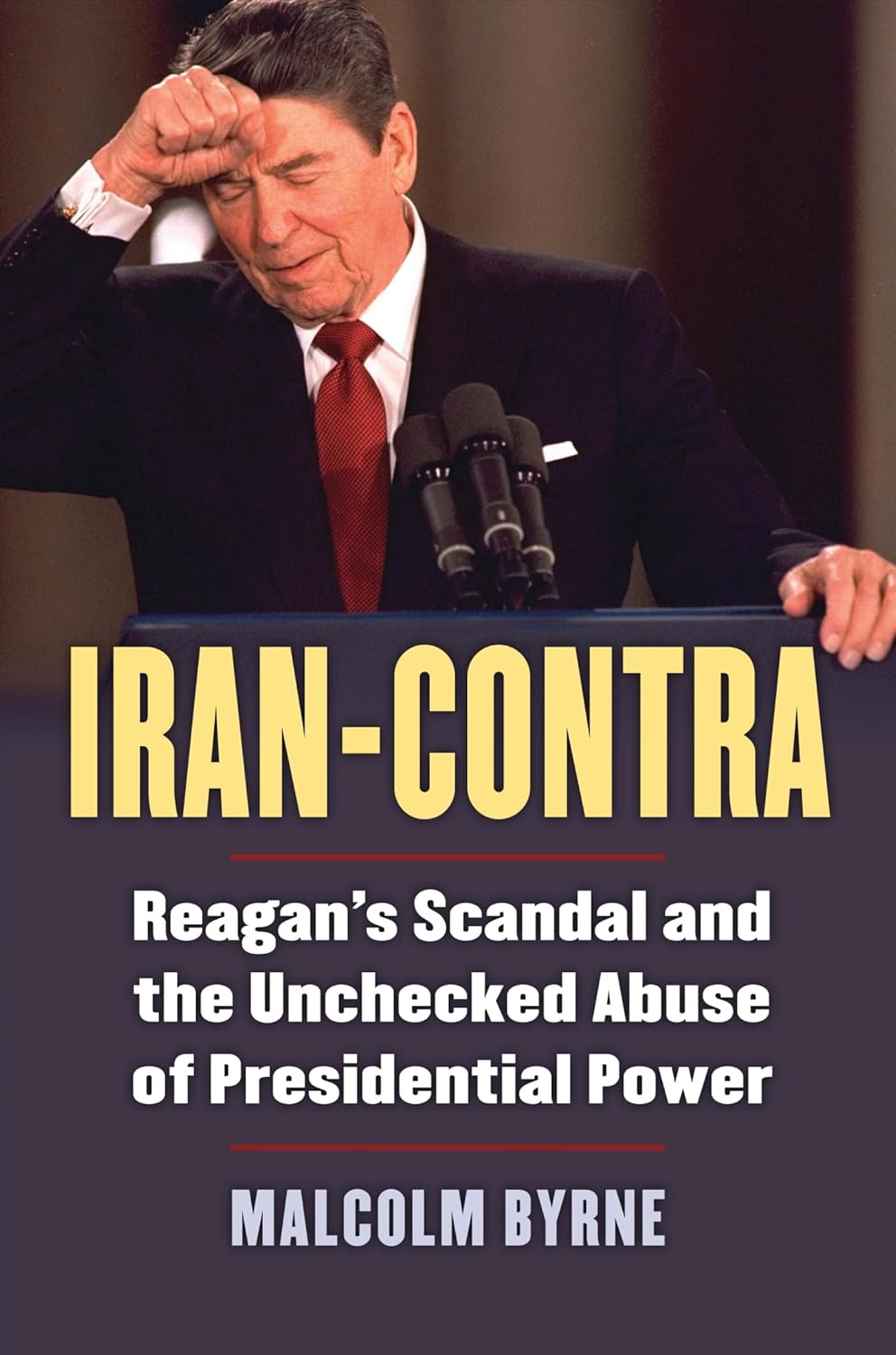
These allegations, while captivating, rest more on circumstantial evidence and the testimony of involved intermediaries rather than incontrovertible proof, often complicating definitive narratives about the full scope of Iran-Contra’s reach and implications.
What Remains Disputed
The Iran-Contra affair’s entrenched disputes reflect deep divides in both political and historical assessments of the scandal. A particularly contentious discourse centers on President Reagan's awareness of the operations' illegal elements. Officially, Reagan insisted he was uninformed of the operations' dubious legal standing, yet memos and testimonies hint at his knowledge of their broader strategic intent.
Moreover, the claimed drug trafficking connections stir heated debate. Although investigative assertions tie Contra forces to cocaine smuggling, official inquiries, such as those led by the CIA's Inspector General, have generally concluded that there was negligible direct involvement by major U.S. government operatives, though rooms of shadows leave certain allegations unresolved.
Ethical disputes are equally volatile, with accusations flying over the administration's attempts to circumvent Congressional authority. Both sides of the political spectrum argue about whether these actions strayed into executive overreach or were necessitated by Cold War pressures. The public legacy of these decisions continues to be fought in academic spheres, government, and media, with interpretations diverging sharply over whether the affair signifies strategic ingenuity or an abuse of power.
What Was Later Confirmed
The evolution of the Iran-Contra discourse from denial to admission marks a critical learning curve in political accountability. Initially, the administration rebuffed claims of funds from Iranian weapons sales reaching Nicaraguan Contras. However, investigative diligence, as pursued by the Tower Commission and relentless journalists, corroborated this financial link, compelling admissions from high-profile agents like Oliver North.
John Poindexter and Oliver North played central roles, with their involvement initially categorized by themselves and colleagues as marginal. But as more declassified records surfaced and felonies were issued, these figures were confirmed as instrumental to the orchestration and execution of the Iran-Contra transactions, unraveling a web of financial dissections previously obscured.
These confirmations unfolded through pressing legal inquiries, such as those by Independent Counsel Lawrence Walsh, who systematically exposed layers of official deceits and operational layers intentionally hidden from scrutiny. The subsequent pardons, notably by President George H.W. Bush, reignited debates over political clemency and the bending of justice in the aftermath of confirmed misconduct, emphasising the political undercurrents that shaped response pathways to the affair.

Common Myths & Exaggerations
In the public imagination, the Iran-Contra affair often morphs into a saga of complete presidential orchestration. While Reagan’s policies heavily influenced the affair, operational specifics were largely executed by deputies who, according to investigations, took significant initiative in shaping the operational landscape independently, despite Reagan’s overarching support for anti-communism.
Another myth is that the entire U.S. military-intelligence apparatus was complicit in bypassing Congress. In reality, the scandal’s enacted conspiracies were confined mainly to specific NSC personnel and elements of the CIA. The broader intelligence community, including many senior figures, remained relatively uninvolved in the day-to-day machinations controversially associated with Iran-Contra.
The assumption that Iran-Contra was solely a cynical strategy for power manipulation is also exaggerated. While errors and exploitations are evident, some policymakers, however misguidedly, genuinely believed they were implementing necessary strategic counter-Bolshevik measures, albeit with alarming ethical and legal missteps, which emphasizes dramatized storytelling often neglects.
Why It Matters
The Iran-Contra affair is a watershed moment in the annals of American political oversight, delineating the seriousness of unchecked executive ambitions. Its revelations prompted a re-evaluation of Congress’s oversight capacity, leading to reformation in intelligence operation scrutiny and legislative oversight adoption to reinforce checks and balances. This push for accountability echoes in today’s political climate as debates rage over executive authority in international theaters, surveillance practices, and military interventions.
Continued discourse on Iran-Contra’s implications informs understanding of current foreign policy challenges, reflecting the perilous tightrope walked when balancing covert operations with public diplomacy and legal frameworks. Today, its lessons underpin critical dialogues about transparency, ethics, and accountability within U.S. government operations, unraveling civil-military relations' complex dynamics.
In the international arena, CIA activities and partnered foreign military engagements are continually haunted by these historical precedents, drawing lines of caution around prospects resembling the moral ambiguities inherent in clandestine interventions. As the U.S. continues to engage globally, the cautionary echoes of Iran-Contra loom large, shaping both policy decisions and public perceptions with a haunting resonance that urges remembrance less history repeat its more shadowy corners.
Connections to Other Archive Entries
The Iran-Contra affair is deeply entwined with other Cold War policy initiatives, especially under the Reagan Doctrine, aimed at undermining Soviet influence via proxy battles. It parallels the covert operations experienced historically in Southeast Asia, where similar strategies of circumventing Congress gained brief traction before fading into scandal.
Furthermore, it intersects with notorious U.S. intelligence endeavors like COINTELPRO and Operation CHAOS, which similarly emphasize unapproved overreach as official operations.
Understanding these connections enhances insight into recurring patterns within U.S. governmental conduct, emphasizing a historical cycle of ambition, challenge, and the pursuit of global influence through methods ultimately deemed precarious by political and ethical analysts.
Sources & References
PRIMARY SOURCES
SECONDARY SOURCES
The Hidden History Archive is part of The Beacon Wire entertainment and informational platform. All archive articles are based on public sources, declassified documents, court records, and reputable journalism. Facts are clearly separated from allegations, disputed claims, and unsupported speculation. Nothing in this archive should be interpreted as legal advice or as incitement to harm. Readers are encouraged to consult primary sources directly.
We use cookies to improve your experience and analyze site usage. See our Cookie Policy for details.