
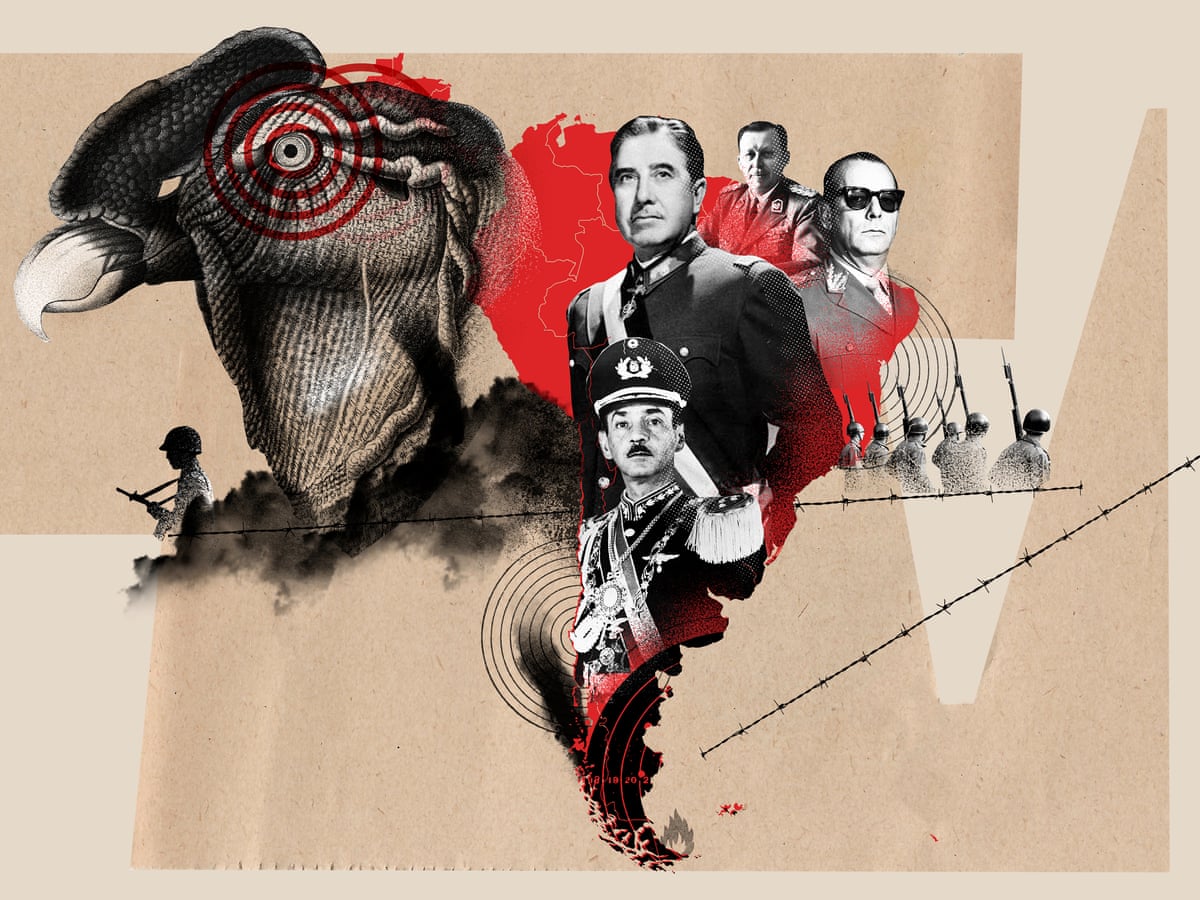
A declassified photo showing key figures from Operation Condor's meeting in Santiago, 1975.
Operation Condor: The Transnational Web of Repression
Operation Condor remains one of the most chilling episodes of political repression and human rights violations in Latin America. A covert operation designed to eliminate political dissent, it left countless victims in its wake. The brutality and clandestine nature of this campaign, involving dictatorial regimes and complex international alliances, demand a deeper understanding of its historical and modern relevance.
What Happened
It was a crime of coordination and cold calculation—Operation Condor—a name that sends shivers down the spines of those who know its roots. November 25, 1975, was a day marked by a sinister gathering in Santiago, Chile, on what was General Augusto Pinochet's 60th birthday. Under the guise of celebration, delegates from the secret police forces of various South American countries convened to formalize an unholy alliance. This meeting aimed to eradicate opponents of the brutal regimes dotting the continent—specifically targeting political activists, trade-unionists, students, and any individuals seen as antagonistic to their authoritarian rule.
The operation was ostensibly a necessity in the eyes of these right-wing dictatorships—an imposition of societal cleansing under the mask of national security. It was more than just a shared intention; it was a transnational network of terror. Argentina, Chile, Uruguay, Paraguay, Bolivia, and Brazil stood at its core, each harboring a regime unwilling to tolerate dissent. Spearheaded by the intelligence and security services, these countries engaged in a covert crackdown. The conspirators shared intelligence, launched joint operations, and even conducted kidnappings and assassinations beyond their borders.
One of the most notorious events attributed to this dark alliance was the 1976 assassination of exiled Chilean diplomat Orlando Letelier in Washington, D.C. His death was a resounding statement of the operation’s reach, a chilling reminder that exile did not mean escape. Letelier, alongside his U.S. assistant, was killed by a car bomb—a method of execution pointing to both audacity and ruthlessness in sending a message to dissidents.
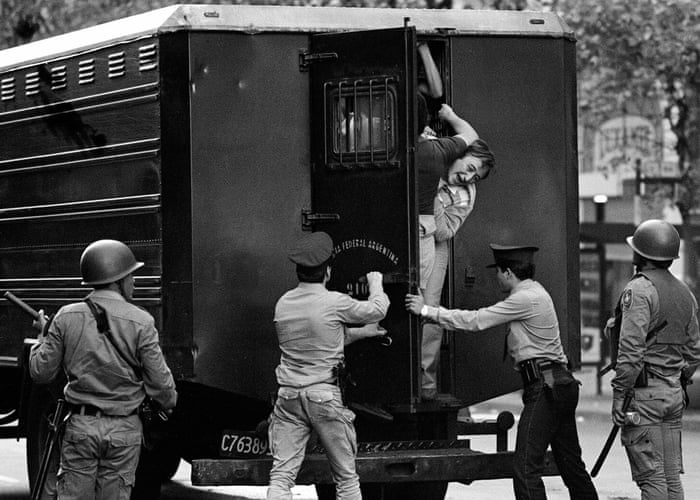
Within the Southern Cone, terror was lived daily. Estimated numbers suggest that thousands disappeared during this time, many of whom were young people who became victims of state terrorism without trial or public reckoning. The very fabric of societies was stitched with threads of fear as family members vanished, newspapers shut down, and whisper networks consumed the streets where public discussions had once provided hope. Understanding the mechanics of this operation requires peeling back layers of deception, intrigue, and collaboration.
What remains unsettling is how the United States factored into this tragedy. Documents uncovered in later years show that insofar as tacit support went, Washington played a more than silent role. It was the Cold War context of 'Greater Evil' deterrence that misguidedly justified backing oppressive regimes in the Western Hemisphere against the fabled threat of Communism.
Operation Condor remains one of history’s clandestine crimes, a ghost that refuses to lay silent. As the layers continue to be dissected today, the legacies live on, serving as a cautionary tale of unchecked power and how the bonds of authoritarianism can migrate across borders. The shadow of Condor hasn’t entirely lifted, as revelations continue to ripple into the modern era...

Timeline of Key Events

1968 — Initial ideas for Operation Condor begin to form amid rising tensions in Latin America.
1973 — Pinochet's coup in Chile heightens crackdowns on political opposition.
1975 — November 25: Operation Condor is formally established at a secret meeting in Santiago, Chile.
1976 — Orlando Letelier is assassinated in Washington, D.C., marking Condor's reach.
1976 — Chilean authorities, under Condor, conduct further assassinations of dissenting voices.
1977 — Reports begin to leak about disappearances and executions under Operation Condor.
1978 — Human rights groups start documenting cases of desaparecidos—disappeared people.
1979 — Governments increase efforts to silence international outcry over human rights abuses.
1980 — Coordinated campaigns of terror continue as South American countries crack down hard on dissidents.
1983 — Argentina's dictatorship falls, revealing atrocities committed under Operation Condor.
1984 — Testimonies from survivors and families bring initial public attention in the U.S. and Europe.
1985 — U.S. congressional hearings partially investigate the CIA's role in supporting dictatorships.
1989 — Declassified documents begin to appear, offering a glimpse into the extent of the violence.
1990 — Augusto Pinochet steps down, leading to the democratic transition in Chile.
1992 — Paraguay uncovers the 'Archives of Terror,' detailing Operation Condor activities.
2000 — Legal actions begin in Argentina against former military officers involved.
2001 — Efforts to try Pinochet stall due to political and health reasons.
2005 — Further declassification of U.S. documents reveals more about the operation’s inner workings.
2013 — Courts in Argentina convict former military officials of crimes against humanity.
2023 — Research continues, revealing the enduring effects of Operation Condor on modern governance.
What Is Documented
The sinister design of Operation Condor was unequivocally real. Declassified documents bear testimony to a network of state terror pivoted around cold-blooded aspirations of control and suppression. These documents, originating from the National Security Archive, deftly illustrate phone transcripts, cryptic messages, and communiques within the military juntas of South America, aligning for common purpose.
Among the most pivotal revelations were those nestled in the so-called 'Archives of Terror.' Discovered in Paraguay in 1992, these archives are 45 years of meticulous official documentation detailing the inner workings of Operation Condor. They reveal collaborative efforts between military and intelligence agencies from the involved countries, highlighting the mechanical precision of their shared efforts to eliminate dissidence. The word 'cross-border,' often found in these documents, is a euphemism for abductions and extrajudicial killings that were commonplace.
Congressional hearings in the United States, albeit delayed, confirmed the complicity of certain U.S. officials in fostering environments conducive to these acts via military aid and intelligence sharing. Declassified memos from the CIA and the State Department insinuate more than just awareness of these operations—they hint at a level of tacit approval.
The court systems have seen remnants of these atrocities play out as noted figures like Jorge Rafael Videla of Argentina faced prosecution. Convicted of human rights violations, Videla’s trials relied heavily on documented evidence collected from both the known archives and testimonies of survivors and families.

These facts stand immutable, painting a stark image of coordinated cruelty. They underscore a shadow network thriving in the depths of bureaucracy and ideology—a tapestry of hidden messages and unrecorded confessions that still astonishes historians and human rights advocates today.
What Has Been Alleged
While several aspects of Operation Condor have been irrefutably documented, other elements exist in a realm of speculation and allegation. According to claims by various human rights organizations like Amnesty International and the Human Rights Watch, the CIA not only provided support but orchestrated some of the operations’ more covert aspects, though this remains largely unproven due to the absence of declassified evidence directly indicating such orders.
Former military personnel have alleged deeper, more extensive collaborations through underground networks, while family members of victims insist that their disappeared relatives were taken with the explicit backing of foreign entities, prominently the U.S. In particular, the controversial figure of Manuel Contreras, chief of the Chilean secret police DINA, allegedly cited American assurances during strategic decisions, a claim he could never substantiate before his death.
Another allegation involves the breadth of the operation itself. Some researchers assert that Operation Condor extended into Europe, targeting exiles who had fled further afield under false senses of security. In a notable claim, investigative journalist John Dinges, in his 2004 book 'The Condor Years,' highlights several disappearances in Paris and Madrid that follow the operational patterns typical of Condor’s style.
These allegations remain just that—allegations. The shroud of secrecy enveloping international intelligence activities during the Cold War forms an impermeable barrier to full transparency. Scholars and activists continue piecing together the puzzle, their work shaped by whispers of covert dialogues and absent decrees.
What Remains Disputed
The role of the United States in Operation Condor is one of the most heavily disputed aspects. While declassified documents show a U.S. understanding of the operations, the extent of direct involvement remains contested. U.S. State Department officials have regularly dismissed allegations of orchestrating activities, claiming that their involvement was solely based on a broad Cold War strategy rather than detailed operational management.
On the other hand, critics argue that documented funds and equipment provided under the guise of military aid effectively enabled Operation Condor’s mission. Several leaked memoranda suggest high-level briefings where the implications of these support structures were discussed in depth among Washington insiders.
Moreover, the moral and ethical implications of this suspected involvement have generated backlash among activists and political analysts, who consistently call into question the accountability of states in international affairs. The clandestine nature of Condor serves as a stark reminder of the potential costs of geopolitical strategies overshadowing human rights principles.
These disputes echo in halls of academic debate and political discourse, with each side drawing wider implications for regional histories and legacy confrontations elsewhere in global politics.
What Was Later Confirmed
In recent decades, the narrative surrounding Operation Condor has been illuminated by a flow of confirmations. Initially, many of the operation's details were shrouded in secrecy, spoken only in hushed whispers and later denied by officials.
However, as waves of documents became declassified, particularly from the U.S., the reality of Condor's reach became irrefutably clear. The 1992 discovery of the 'Archives of Terror' in Paraguay acted as a linchpin, containing reams of documents that directly implicated numerous military leaders in crimes once scoffed at as speculative.
International trials that were initially postponed on grounds of insufficient evidence gained steam with these emerging revelations. In Argentina, former leaders faced courtroom reckonings where judges read aloud documents such as Operation FOIA requests that tied military orders to local disappearances.
These legal confirmations, buttressed by meticulous documentation, helped transform whispered accusations into recognized historical truths, forging a more comprehensive understanding of Condor's impacts across Latin America’s scarred history.
Common Myths & Exaggerations
Operation Condor, like many complex historical events, is enshrouded in myths. One of the most pervasive is the exaggerated belief that every political disappearance in South America during the 1970s can be attributed to Condor. While Condor was extensive, various independent regime actions also occurred.
Another common myth perpetuates the role of the CIA as the mastermind behind every detail of Condor operations, a claim that oversimplifies the multi-faceted interplay of nationalistic motivations and regional collaborations.
Some think Condor’s strategies were solely about assassinations; however, the operation was also deeply involved in psychological warfare, misinformation, and controlling societal narratives—a fact often minimized in public perceptions.
These myths often arise from the shadowy nature of intelligence operations and the public’s desire for clear, villainous forces at work. The truth, while gruesome, is more nuanced and layered, involving a vast web of interconnected motivations and actions.
Why It Matters
Understanding Operation Condor is crucial not only in grasping the past but in safeguarding the future. This dark chapter serves as a chilling reminder of where unchecked power and transnational conspiracies can lead if allowed to operate under the radar.
The operation’s legacy has set pressing legal and ethical precedents. It has affected international policies on asylum, state accountability, and the notification of human rights abuses. Key legislation artifacts, such as Interpol's Red Notices regarding human rights violators, have roots in recognizing everyone’s duty to stop such tragedies.
Moreover, the historical significance of Condor infiltrates the core of civil rights discussions today. Topics such as state surveillance, privacy, and the balance between national security and individual freedoms echo with the lessons informed by Condor’s abuses. Latin American societies remain haunted by these events, striving to ensure justice prevails over fear.
For a modern audience, Operation Condor offers a powerful narrative on the consequences of global inaction and the costs of authoritarian governance, forming a crucial memory hardwired into our understanding of international diplomacy and human rights.
Connections to Other Archive Entries
Operation Condor is often compared to the infamous MK-Ultra program in the U.S. due to its clandestine nature and widespread abuse of human rights. While MK-Ultra focused on mind control experiments in the U.S., Condor exemplified international coordination in repression tactics.
The operation's systematic approach bears similarities to intelligence operations such as COINTELPRO by the FBI, illustrating the global reach and uniformity of methodologies intended for quelling political dissent.
The unfolding narratives of both these operations reveal shared strategies across national borders, suggesting a wider-scale acceptance and practice of repression masked under political justifications, strengthening the understanding of intersectionality in covert state actions.
Sources & References
PRIMARY SOURCES
SECONDARY SOURCES
The Hidden History Archive is part of The Beacon Wire entertainment and informational platform. All archive articles are based on public sources, declassified documents, court records, and reputable journalism. Facts are clearly separated from allegations, disputed claims, and unsupported speculation. Nothing in this archive should be interpreted as legal advice or as incitement to harm. Readers are encouraged to consult primary sources directly.
We use cookies to improve your experience and analyze site usage. See our Cookie Policy for details.