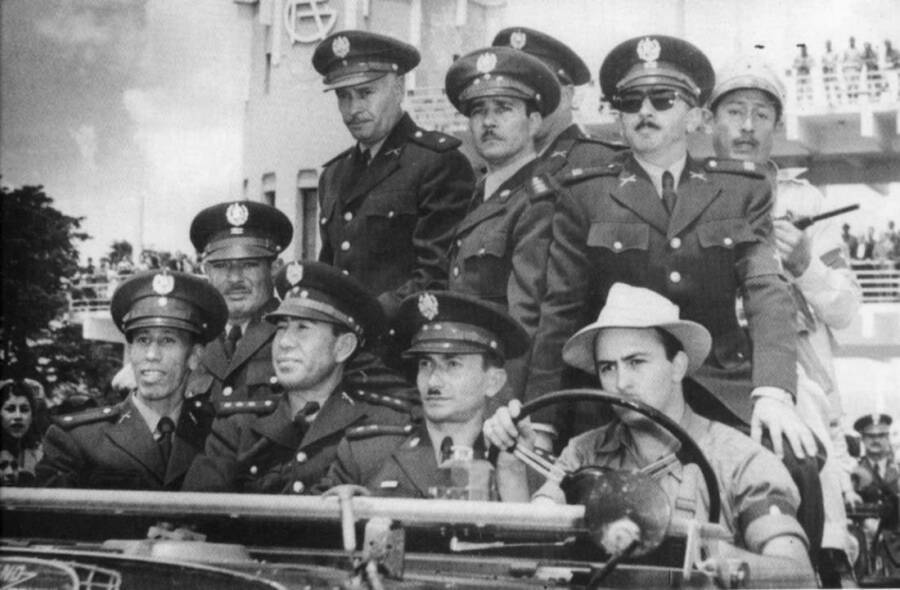
CIA operatives during a training session for Operation PBSUCCESS in 1954.
Unmasking PBSUCCESS: The CIA's Covert Operation in Guatemala
In 1954, the CIA orchestrated Operation PBSUCCESS to topple Guatemala's democratically elected leader Jacobo Árbenz. This shocking covert action reshaped Central American history and ignited debates over U.S. foreign intervention that resonate to this day.
What Happened
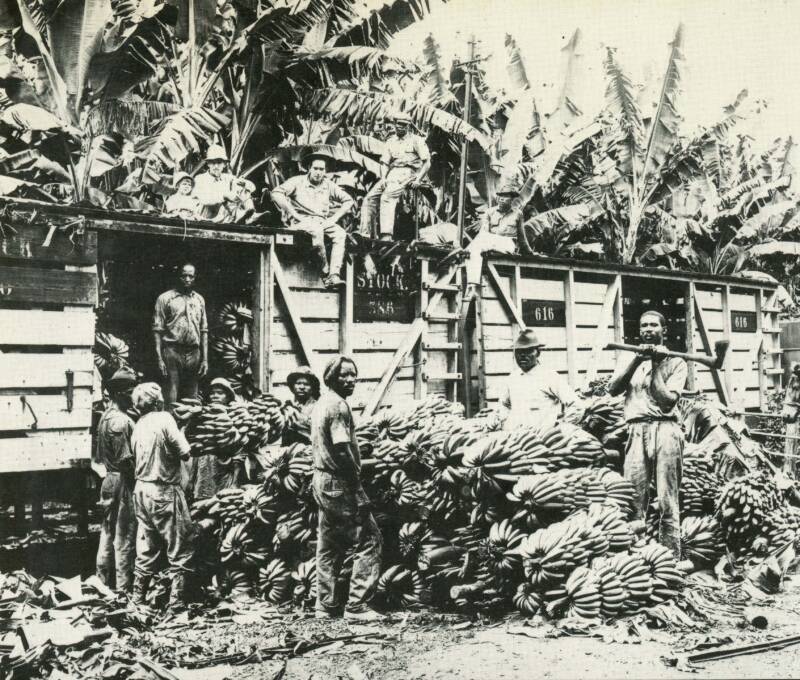
On June 18, 1954, a new dawn broke over Guatemala, casting shadows of an impending coup. This was the day Operation PBSUCCESS was set in motion by the United States Central Intelligence Agency, aiming to dethrone the country's democratically elected President, Jacobo Árbenz. Hindered by his progressive policies, which threatened U.S. commercial interests, namely the United Fruit Company, the CIA painted Árbenz as a communist menace at the height of Cold War paranoia. The roots of this clandestine operation stretched back into the corridors of power in Washington D.C., where President Dwight D. Eisenhower’s administration, rattled by fears of Soviet influence in Latin America, gave the green light to a covert plan in August 1953.
As the operation unfolded, Carlos Castillo Armas, a military officer and staunch anti-communist, was chosen by the CIA to lead a small insurrectionary army. Armed, funded, and trained under the cloak of secrecy, Castillo Armas and his 480 men entered Guatemala. Their assault wasn't merely physical; it resonated through psychological warfare intended to instill fear and destabilize Árbenz’s government by creating an illusion of unstoppable insurgency. Beyond the breaches in geography, radio broadcasts engineered by the CIA blasted propaganda, exaggerating the insurrection’s strength, sowing chaos and desertion in Árbenz’s ranks.

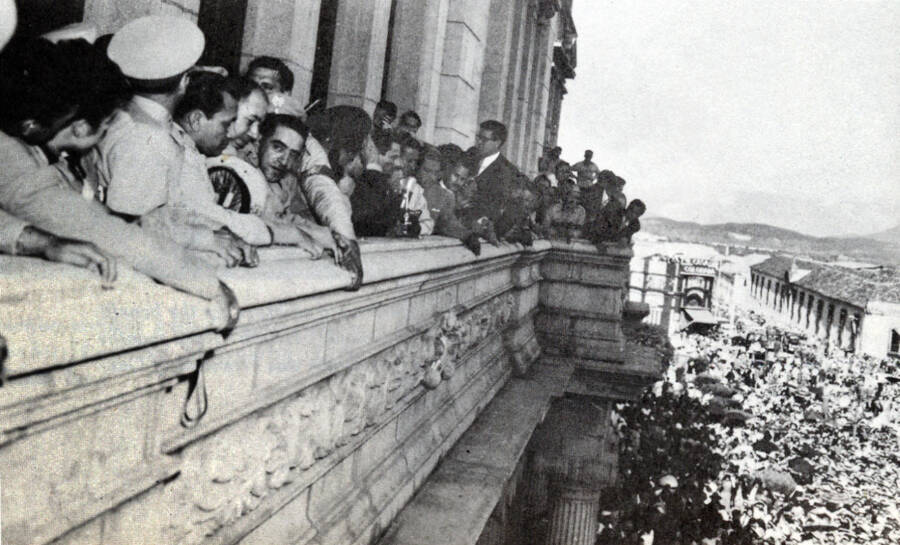
On June 27, after days of escalated tension and threats of a U.S. invasion, Jacobo Árbenz resigned and sought asylum, marking a dramatic climax to a meticulously planned coup. The void he left quickly filled by Castillo Armas, instated as Guatemala’s new leader with American blessings. The aftermath signaled more than a change in leadership; it heralded an era of increased American intervention in Latin America, justified by stopping perceived communist expansion.
The consequences of Operation PBSUCCESS rippled through history, as the United States’ interventionist policies found new vigor, often at the expense of Latin American autonomy. The dramatic overthrow of Árbenz set a grim precedent, questioning the ethical bounds of superpower influence. The narrative of Guatemala in 1954 offers a chilling chapter in the annals of the Cold War and serves as a sobering reminder of the lengths nations might go to secure their interests under veils of ideological warfare.

Timeline of Key Events
1952 — Jacobo Árbenz intensifies land reform efforts, targeting unused lands held by American corporations.
1953 — President Eisenhower approves Operation PBSUCCESS, authorizing $2.7 million for covert operations.
March 1954 — CIA kicks off overt propaganda campaigns to destabilize Árbenz's government.
June 18, 1954 — Operation PBSUCCESS officially launches with trained forces led by Castillo Armas entering Guatemala.
June 20, 1954 — CIA-backed rebel forces launch radio propaganda, creating fear of widespread rebellion.
June 21, 1954 — Skirmishes between government and rebel forces escalate, fueled by misdirection from CIA.
June 25, 1954 — U.S. ambassador to Guatemala warns Árbenz of possible military intervention by the U.S.
June 27, 1954 — Jacobo Árbenz resigns, seeking asylum after mounting pressure and fear of U.S. invasion.
July 1954 — Carlos Castillo Armas assumes power, backed by CIA and U.S. support.
August 1954 — The new government reverses Árbenz's progressive policies, signifying American victory.
1955 — Guatemalan political environment increasingly repressive under Castillo Armas's regime.
1957 — Castillo Armas is assassinated, highlighting instability post-U.S. intervention.
1960 — Guerrilla groups form in opposition to the military government, leading to a civil war.
1970s — Successive U.S.-backed regimes continue oppressive measures against perceived communism.
1980s — Disclosure of details about Operation PBSUCCESS sparks controversy and debate.
1994 — Declassified CIA report further exposes details of the operation.
1999 — U.S. President Bill Clinton acknowledges U.S. involvement, expressing regret.
2003 — Additional documents declassified, providing insights into the strategic depths of the coup.
2011 — Guatemalan government opens inquiry into foreign interventions during the 20th century.
2023 — Continued reflections on PBSUCCESS influence modern American interventions discussions.
What Is Documented
Primary sources, now declassified, paint an unambiguous picture of the lengths to which the Eisenhower administration went to unseat Jacobo Árbenz. The CIA devoted a significant budget of $2.7 million to Operation PBSUCCESS, as documented in the declassified CIA files (Source 1). These funds facilitated both psychological warfare and direct actions, including the training of over 400 paramilitary fighters at bases in Nicaragua and Honduras — a strategic move to mask American fingerprints on the coup.
A crucial element of the operation, according to the State Department records (Source 4), was a psychological campaign aimed at paralyzing the Guatemalan government. This involved setting up clandestine radio stations, such as La Voz de la Liberacion, which broadcasted demoralizing propaganda meant to amplify the fear of a looming communist takeover.
Furthermore, declassified telegrams and communications between CIA operatives and Washington reveal the extensive coordination involved in persuading neighboring countries to assist or at least turn a blind eye to the passage of arms and personnel (Source 7). Each step meticulously documented, illustrating the operational precision characteristic of the CIA’s early covert actions.
The actual military confrontation during the coup was minimal but strategically exaggerated, as described in a Congressional hearing report that delved into CIA activities during the Cold War era. Despite over three weeks of engagement, the psychological impact superseded physical confrontation, causing parts of the Guatemalan military to defect or remain neutral, effectively isolating Árbenz.

The final significant push toward Árbenz's resignation was choreographed through diplomatic channels, where threats of American military intervention were used as leverage, a fact noted in Eisenhower administration archives. This intervention also indirectly facilitated the rise of Carlos Castillo Armas, whose alignment with American interests positioned him as a favorable alternative in the geopolitical chess game (Source 8).
What Has Been Alleged
Allegations regarding the coercion and manipulation underlying Operation PBSUCCESS extend beyond what the documents officially confirm. Critics, such as Stephen Kinzer, author of books on American coups, claim that the operation leveraged not just military might and psychological warfare but also included economic strategies, such as blockades, to suffocate Guatemala’s already fragile economy. Kinzer mentions in interviews how the intent was not only to install a friendly regime but to serve as a warning to other states considering similar social reforms.
Further allegations surface in the human rights sector, where investigative reports suggest that the inception of U.S.-backed death squads in Guatemala may trace their roots back to the post-coup environment, although this remains a contested point. NGOs alleging these claims, including witness testimonies from Guatemalan nationals during truth commission hearings, remain speculative but highlight the shadows cast by U.S. interventions.
There is also contention surrounding the extent of propaganda deployed internationally to justify the intervention. Independent researchers like Nick Cullather's analyses, which scrutinize CIA archives, allege that fabricated reportage was disseminated to frame Árbenz as a Soviet puppet — a narrative increasingly challenged by contemporary historians parsing through CIA internal communications. However, much of the purported documentation remains circumstantial, not fulfilling the rigorous standard necessary for historical verification.

Additionally, it is alleged that CIA operatives actively bribed several military officials within Guatemala to stand down or deflect support away from Árbenz, although such actions are difficult to substantiate due to the clandestine nature of the deals. The lack of concrete financial paper trails keeps this in the realm of plausible, yet unproven, accusations.
The truth may never be fully uncovered, but the allegations themselves underscore the broader ethical questions surrounding foreign intervention and the historical narratives constructed post-intervention.
What Remains Disputed
Disputes surrounding the events of 1954 often revolve around the justification and ethical implications of U.S. intervention. The U.S. government officially contends that Operation PBSUCCESS was necessary to curb the spread of communism in the Western Hemisphere, a claim chronicled in State Department publications. Meanwhile, scholars and historians argue that economic motives, particularly those linked to the United Fruit Company, played a significant role—a premise the government historically downplayed.
Another point of contention is whether Árbenz posed a genuine threat of aligning Guatemala with the Soviet bloc or whether his policies were independently nationalist, focusing on internal agrarian reforms. The declassification of documents through the CIA's Freedom of Information Act augments this debate, with both sides citing different sections of correspondences and strategic assessments (Source 6). This debate remains vibrant in academic circles, reflecting the multilayered complexity of Cold War geopolitics.
Moreover, the extent of civilian casualties and human rights abuses directly attributable to the coup's instigation remains disputed. Some historians argue that the aftermath, particularly under Castillo Armas, saw an uptick in political repression that was indirectly rooted in U.S. encouragement of anti-leftist policies. Conversely, official U.S. reports at the time heralded the coup as a largely bloodless affair, focusing on the success of strategic propaganda over brute force. This dichotomy in narratives signifies the discretion used by each side to frame the event in alignment with larger ideological battles.

What Was Later Confirmed
Several aspects of Operation PBSUCCESS that were once governmental secrets have since been illuminated through the release of formal documentation. For example, the long-denied extent of direct U.S. involvement was substantially confirmed in 1994 when the larger portion of operational files was declassified by the CIA, as recorded in Nicholas Cullather's comprehensive report on the operation.
It was later confirmed that the CIA had indeed orchestrated not just military aspects but also a sophisticated psychological warfare component, documented in declassified cables and internal memos. This included detailed instruction on the dissemination of propaganda, from meticulously crafted radio broadcasts to the infiltration of Central American media networks intended to destabilize public confidence in Árbenz's government.
In 1999, U.S. President Bill Clinton visited Guatemala and acknowledged America's significant role in the political turmoil that followed the coup. This public admission, rooted in findings from declassified documents and subsequent government acknowledgments, was a pivotal moment in fostering a deeper understanding of past American foreign interventions.

Further corroborations emerged from the unseałing of financial records and training logs that documented support provided to rebel groups, clear indicators of the elaborate logistical network supporting the insurgency. These confirmations have been critical in re-framing historical assessments of the coup, emphasizing its orchestration by external forces rather than an internal uprising, providing clarity on the extent of foreign influence in mid-20th-century Latin American politics.
Common Myths & Exaggerations
A persistent myth is the exaggerated size and impact of the military confrontation during the coup. Historical reviews confirm that while skirmishes occurred, they were not the predominant factor in Árbenz's resignation. The most impactful element was psychological warfare, not direct combat.
Another common misconception is the role of international communist support for Árbenz. Although his policies were labeled as communist by opponents, there remains scant evidence supporting direct involvement or influence from the Soviet Union, contrary to initial narratives propagated by the U.S. government during the Cold War to justify the coup.
It is also often misunderstood that the operation was a spontaneous response to an imminent threat. Documentation reveals that Operation PBSUCCESS was a meticulously planned operation, initiated well before significant evidence of communist activities in Guatemala.
Finally, the perception that the coup led to long-term peace and stability is fundamentally flawed. While it momentarily arrested the influence of indigenous and popular political movements, it paved the way for intensified state repression and, indirectly, decades of civil unrest in Guatemala, challenging the myth of the coup as a democratic rescue operation.
Why It Matters
The seeds planted in the fertile ground of Cold War geopolitics with Operation PBSUCCESS continue to bear fruit in contemporary discourse on international policy and ethical foreign intervention standards. This operation stands as a stark reminder of the delicate balance between national security interests and sovereign disruption.
The legal and political precedents set by the manipulation of internal affairs in Guatemala echo profoundly in modern contexts, as global superpowers navigate the complex web of geopolitical influence. The enduring narrative of American interventionism, underscored by this coup, reverberates amid current debates on national sovereignty and international meddling, exemplifying a timeless dilemma each new administration confronts.
In terms of civil liberties, the case of Árbenz and the subsequent regimes in Guatemala illustrate how quickly such liberties can be compromised under the guise of anti-communism, a point that bears relevance in today's climate of increasing nationalism and security-based policymaking.
Operation PBSUCCESS serves as an instructional focal point for understanding the power and perils of covert operations in realpolitik, a necessary perspective to appreciate as we assess emerging power dynamics and the role of intelligence agencies in shaping world politics. As modern democracies grapple with external influence in domestic affairs, the reflection on events of 1954 guides current pursuits for transparent international governance and historical justice.
Connections to Other Archive Entries
The threads of Operation PBSUCCESS intricately weave into the fabric of other historical events, most notably the Bay of Pigs invasion in 1961, where similar strategies of covert action and political manipulation were employed by the CIA against Fidel Castro in Cuba. These operations personify the Cold War ethos of preemption and control.
Additionally, the interventionism demonstrated during PBSUCCESS can be viewed as a precursor to policies enacted during the Vietnam War, where psychological and unconventional warfare tactics became increasingly central. Further exploration into Operation Condor, a campaign of political repression across South America, reflects similar undercurrents of ideological warfare supported by foreign powers.
Such connections enhance our understanding of mid-20th-century international relations and emphasize the recurrent theme of great powers influencing smaller nation-states, a motif that permeates discussions within The Hidden History Archive.
Sources & References
PRIMARY SOURCES
SECONDARY SOURCES
The Hidden History Archive is part of The Beacon Wire entertainment and informational platform. All archive articles are based on public sources, declassified documents, court records, and reputable journalism. Facts are clearly separated from allegations, disputed claims, and unsupported speculation. Nothing in this archive should be interpreted as legal advice or as incitement to harm. Readers are encouraged to consult primary sources directly.
We use cookies to improve your experience and analyze site usage. See our Cookie Policy for details.