Aerial view of Guatemala City, circa 1954, amidst the CIA-backed coup against President Jacobo Árbenz.
PBSUCCESS: The CIA's Hidden Coup in Guatemala, 1954
In 1954, a CIA operation overthrew Guatemala's democratically elected leader. Discover the depths of this covert operation, the figures behind it, and its lasting global impact. Uncover an era-defining scandal that reshaped international relations.
What Happened
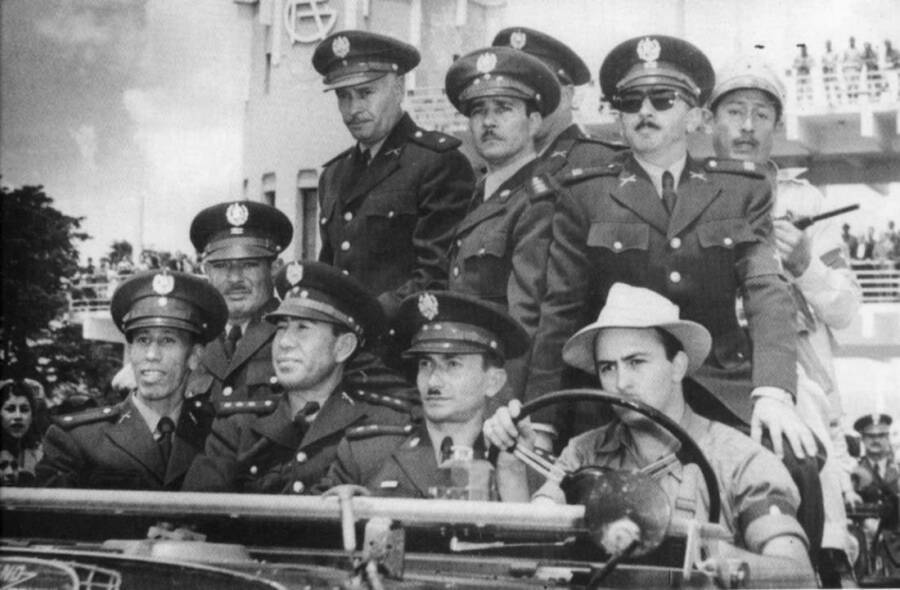
It was an ordinary morning on June 18, 1954, but for the people of Guatemala, it marked the dawn of one of the most turbulent periods in their history — a chapter that would unfold to reveal Operation PBSUCCESS. Behind a veil of secrecy, orchestrated by an elite echelon of the CIA, Guatemala was about to witness a seismic upheaval. This covert operation was immaculately constructed to depose the democratically elected President Jacobo Árbenz. The motives for his removal were veiled as a fight against communism, yet beneath the surface lay a tangled web of economic interests and Cold War anxieties.
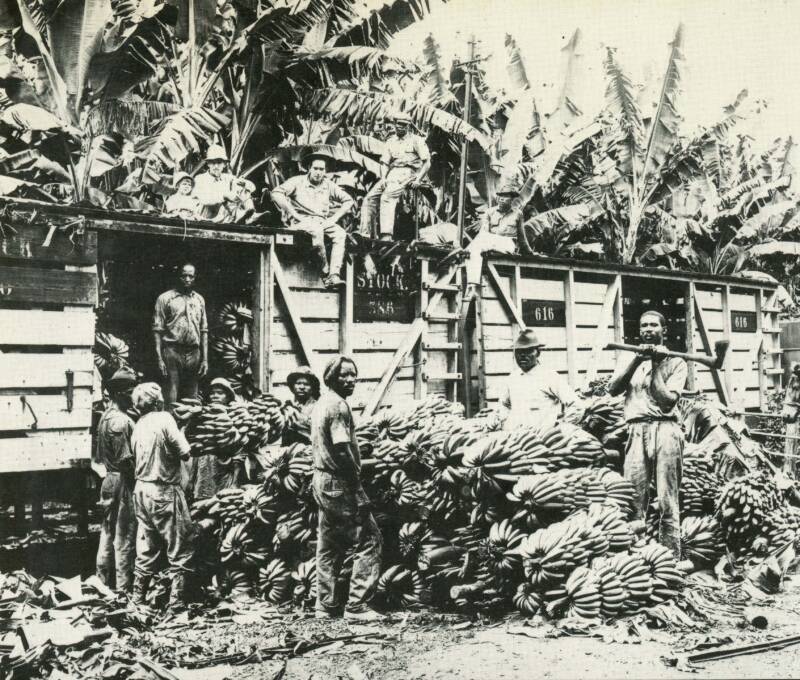
Guatemala in the early 1950s was a land caught in the grips of transformative energy. President Árbenz had initiated agrarian reforms that sought to disrupt the old oligarchic structures — a gamble that won the support of many impoverished citizens but rattled the powerful United Fruit Company. This Boston-based banana giant, wielding substantial influence both domestically and abroad, felt its vast plantations threatened by Árbenz’s policies. Thus began a sinister corporate-government alliance, a precursor to the operation that would irrevocably alter Guatemala’s political landscape.

The United States, under President Eisenhower, viewed the developments in Guatemala warily. This was an era where fears of communist expansion were palpable in every corner of the American psyche. The CIA, recently empowered following the Korean War, was keen to flex its muscles in what it perceived as a new battleground. With authorization secured in August 1953, Operation PBSUCCESS was allocated a $2.7 million budget — a price tag for regime change.
As Guatemala stirred under nascent capitalist aspirations amidst an ideological Cold War clash, the CIA set its sights on reshaping its socio-political future. The chosen instrument was Carlos Castillo Armas, a military man with strong anti-communist credentials. Under the guise of liberation, Castillo's forces, albeit small and externally supported, were trained and equipped by the CIA. The operation unfolded with psychological tactics and misinformation, painted with the broad strokes of a gleaming liberation narrative.

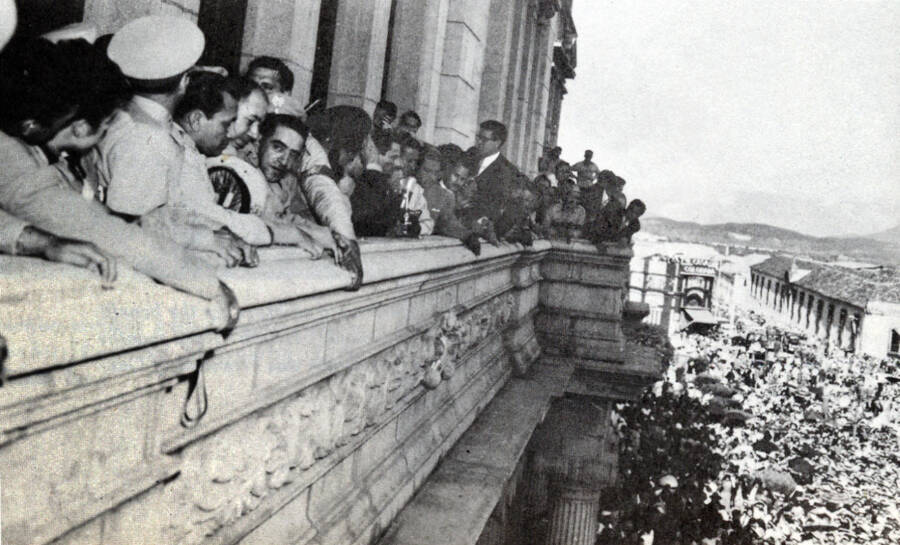
June 27, 1954, heralded the fall of Árbenz. Under immense pressure and facing escalating conflict, he resigned, setting the stage for Castillo Armas to assume leadership. What was sold as a liberation merely sowed seeds of tyranny; democracy choked under the relentless grip of authoritarianism. For Guatemala, this new rule was not a return to peace but a prelude to chaos — igniting a civil war lasting nearly four decades.
The world watched as fears disguised as facts drove an entire nation into a spiral of violence and repression. What transpired during those days of menacing ploys and deceit reflects a stark lesson in the cold realities of geopolitics, a cautionary tale of power’s potential to corrupt and control.

Timeline of Key Events
1952 — President Jacobo Árbenz initiates agrarian reforms in Guatemala.
1953, Aug — President Eisenhower authorizes Operation PBSUCCESS.
1953, Dec — CIA begins assembling support for Carlos Castillo Armas.
1954, May — Arms shipment from Czechoslovakia to Guatemala increases U.S. fears of communist influence.
1954, June 18 — Operation PBSUCCESS commences as Armas invades Guatemala with CIA support.
1954, June 19 — CIA uses psychological warfare tactics, broadcasting fabricated events to demoralize Árbenz's forces.
1954, June 21 — Árbenz's troops begin to desert; confusion spreads within the Guatemalan army.
1954, June 25 — Árbenz orders arms to civilians; U.S. silhouettes this move as communist aggression.
1954, June 27 — Árbenz resigns, marking the coup's success.
1954, July — Carlos Castillo Armas assumes presidency with backing from the CIA.
1954, Dec — Armas consolidates power, dissolving political parties and curtailing freedoms.
1955 — Discontent rises as Castillo Armas begins reversing Árbenz's reforms.
1957 — Castillo Armas is assassinated, plunging Guatemala further into turmoil.
1960s — Civil War escalates as various factions vie for power.
1970s — Guatemalan government continues use of CIA-backed intelligence operations.
1982 — Efraín Ríos Montt rises to power amidst continuing civil unrest.
1990s — Peace processes begin, culminate with a treaty in 1996.
2004 — Declassified documents reveal the extent of CIA involvement in the coup.
2006 — New analysis of Operation PBSUCCESS stirs international condemnation.
2010 — Memorials commemorate human rights violations stirred by the coup.
2013 — CIA further declassifies documents detailing psychological operations.
What Is Documented
The coup against Guatemalan President Jacobo Árbenz in 1954, orchestrated under the operation codenamed PBSUCCESS, is well-documented through numerous declassified CIA documents and historical analyses. Authorized by President Dwight D. Eisenhower, the plan covertly funneled resources to disposition forces including $2.7 million, a significant allocation during the Cold War era. This figure underlined the operation's scale and Washington's calculus of risk versus reward. As declassified documents revealed, the CIA not only armed but orchestrated a considerable psychological operation, utilizing strategic misinformation intended to dishearten and destabilize both the Guatemalan government and its military forces.
Notably, a critical moment of media manipulation exemplified the extent of these tactics. The CIA broadcasted false reports, inciting fear and promoting the belief that a large invading force was threatening Guatemala. This subterfuge succeeded in inducing defections within the Guatemalan army, as noted in memorandums from the CIA’s Western Hemisphere Division. Furthermore, official communications indicated that military aid to surrounding Central American nations was ramped up to encircle and pressure Guatemala into compliance.

The operational leadership fell to Carlos Castillo Armas, whose support and military assault was meticulously coordinated through CIA resources, as outlined in transcripts of correspondence between the U.S. Embassy and the agency. These actions were defended under the guise of preventing a perceived communist foothold, a justification embraced in several documents presented to congressional committees of the era.
Perhaps one of the most damning pieces of evidence surfaced from the National Security Archive, highlighting discussions of potential assassination tactics should early coup attempts falter. While publicly denied at the time, internal memos contained within declassified archives have illustrated the lengths to which the U.S. was willing to extend to ensure geopolitical strategy and corporate interests were uncompromised. This coup set in motion a chain of events destabilizing Guatemala for generations, underscoring the veracity and impact of documented U.S. interventionism in Latin America.
What Has Been Alleged
The alleged motivations behind the CIA's orchestration of the 1954 coup in Guatemala have stirred debate among historians and political analysts for decades. At the forefront of these allegations stands the relationship between the United Fruit Company and various U.S. officials. Critics have claimed that United Fruit, whose substantial landholdings in Guatemala were impacted by Árbenz's agrarian reforms, wielded significant influence over members of the Eisenhower administration. This assertion has often been linked to the presence of former company lawyers in key governmental positions, including John Foster Dulles, the U.S. Secretary of State, and his brother Allen Dulles, Director of the CIA.
According to investigative reports and declassified communications, several allegations suggest that financial contributions and lobbying efforts by United Fruit played a role in swaying U.S. policy towards aggressive CIA intervention. These claims often cite correspondences and meeting notes as circumstantial evidence of corporate-state collusion, though definitive conclusions have eluded researchers due to gaps in accessible documentation.
Furthermore, allegations persist regarding the extent of media manipulation. Critics argue that the CIA, by placing false stories in the press and conducting black propaganda operations, intended to create a pervasive, albeit artificial, panic over communist infiltration. Such strategies, it is claimed, involved fabricated radio reports and press releases depicting a far stronger and imminent communist threat than actually existed in Guatemala.

These allegations are compounded by testimonies from former operatives and Guatemalan sources who assert that targeted intimidation and political assassination plots were more entrenched in PBSUCCESS strategy than the U.S. government publicly acknowledged. Although CIA documents reflect considerations of insurgent elimination, the full scope and ethical breadth of such plans remain contested. While some former CIA officials have since confirmed select aspects of these allegations, they often couch recollections in the context of the geopolitical dynamics of the era, leaving the academic and policy debate as contentious as ever.
What Remains Disputed
The narrative surrounding the 1954 Guatemalan coup remains fraught with disputes, both historical and political. One principal point of contention lies in the degree to which communism truly posed a threat to U.S. interests in Guatemala, thus justifying the coup. While the U.S. government publicly posited that Árbenz’s leftist leanings could lead to a regional expansion of Soviet influence, this assertion is disputed by historians who argue that the threat was overstated and largely constructed as a pretext.
Further disputed are the exact roles and influence exerted by entities such as the United Fruit Company. While some accounts detail their purported lobbying power and sway over the Eisenhower administration, others suggest that this narrative simplifies the complex interplay of interests and fears dominating U.S. Cold War foreign policy.
Moreover, the use of force and tactics remains a subject of debate. While CIA documents support claims of planned aggression and support for military action, the extent to which local Guatemalan factions participated autonomously, as opposed to being puppeteered entirely by the CIA, is less clear. These tensions contribute to a broader dispute over the agency's narrative control and its portrayal of the coup as a popular uprising.

These points of dispute underscore the murky waters of Cold War politics where strategic actions are often obfuscated by narratives crafted to serve both immediate and long-standing political agendas.
What Was Later Confirmed
Initially shrouded in secrecy, many facets of Operation PBSUCCESS have since come to light, confirmed by the release of CIA documents and international scrutiny. A pivotal revelation came with the declassification of various communications under President Clinton's initiative, promoting transparency regarding past American interventions.
These documents confirmed several elements previously denied or downplayed by U.S. officials. Among these was the strategic orchestration of misinformation campaigns, which served as a core pillar of the covert operation. Internal memos calculatedly illustrated the psychological warfare tactics employed, including radio broadcasts and false news reports designed to destabilize the Árbenz government.
Further confirmation arrived by acknowledging the extent of planning for potential assassinations. The National Security Archive, in releasing documents from the CIA that chronicled scenarios involving the targeted removal of several communist leaders, whether by abduction or assassination, forced a reconciliatory assessment by U.S. officials regarding the use of lethal force.

Such confirmations reshaped understanding of the lengths to which Cold War covert operations might extend to achieve U.S. geopolitical aims, challenging the purer narratives once espoused by state apparatus and further solidifying Operation PBSUCCESS as a case study in the perils and pervasions of unchecked espionage.
Common Myths & Exaggerations
Numerous myths surround the 1954 Guatemalan coup, often blurring the lines between reality and sensationalism. One prevalent myth posits that the coup was purely a result of internal Guatemalan dissent, a narrative once propagated to deflect International scrutiny. This has been largely debunked by extensive CIA documentation confirming heavy-handed U.S. involvement.
Another common exaggeration is that civil unrest and societal division post-coup were immediately quelled with Carlos Castillo Armas' rise to power. The reality, starkly documented, indicates an exacerbation of violence and oppression under his regime.
There is also a flawed notion that the operation had unanimous backing within the U.S. government. While the Eisenhower administration indeed orchestrated the coup, historical analyses demonstrate significant internal resistance and debate over the ethical implications of such interventions.
Lastly, a false narrative sometimes surfaces that the coup was a long-term success for American foreign policy. The consequent instability and prolonged civil war challenge this assertion, illustrating the enduring chaos stemming from the intervention. These myths, whether perpetuated by misinterpretations or ideological motives, diminish the complex and tumultuous reality of geopolitical interventions.
Why It Matters
The 1954 coup in Guatemala embodies a critical chapter in understanding both the forceful nature of Cold War policies and the human rights implications tied to foreign intervention. Firstly, the coup set a precedent for American involvement in Latin America predicated on the skewed balance between national sovereignty and geopolitical strategies, often dismissing transparent diplomacy in favor of covert operations.
Its ramifications have echoed through subsequent U.S. foreign policy, informing both tactical approaches and ethical boundaries in dealing with perceived ideological threats. The coup's stark impact on Guatemala—a forty-year civil war, the rise of despotic regimes, and endemic human rights violations—serves as a cautionary example of the volatility of regime change.
Furthermore, in examining Operation PBSUCCESS, one discerns the emboldened role of intelligence agencies in shaping both domestic and international policy. This emboldened role sowed seeds of skepticism and distrust globally, as it illuminated the potential for abuse of power under the guise of national security.
On a broader scale, understanding this covert operation provides insights into the mechanisms of propaganda, economic exploitations, and diplomatic discourse that continue to be relevant. As modern politics increasingly grapple with issues of interventionism and war legacy revisitations, the Guatemalan coup remains a profound and potent symbol of the need for transparency and accountability within international relations.
For today's reader, with burgeoning technologies and the rise of disinformation campaigns, programs like PBSUCCESS encapsulate the dangers inherent in clandestine operations that often lead to unforeseen, far-reaching consequences, highlighting the continual need for vigilance and scrutiny in governance.
Connections to Other Archive Entries
Operation PBSUCCESS is often examined alongside other CIA-led coups of the era such as the 1953 Iranian coup against Prime Minister Mohammad Mossadegh, commonly referred to as Operation Ajax. Both coups underscore the thematic Cold War strategy of preventing the spread of communism through regime change, carried out with strategic aggression and economically motivated support.
These actions would eventually pave the way for future U.S. interventions in Latin America and other regions, such as in Chile in 1973 with the overthrow of Salvador Allende, demonstrating a consistent pattern of geopolitical maneuvering masquerading as ideological battles. Collectively, these interventions highlight a consequential chapter of U.S.-foreign relations intrinsically linked to corporate interests and expanding western influence during the mid-20th century.
Sources & References
PRIMARY SOURCES
SECONDARY SOURCES
The Hidden History Archive is part of The Beacon Wire entertainment and informational platform. All archive articles are based on public sources, declassified documents, court records, and reputable journalism. Facts are clearly separated from allegations, disputed claims, and unsupported speculation. Nothing in this archive should be interpreted as legal advice or as incitement to harm. Readers are encouraged to consult primary sources directly.
We use cookies to improve your experience and analyze site usage. See our Cookie Policy for details.