
CIA-operated Project Stargate researchers conducting remote viewing experiments, early 1980s.
Project Stargate: The Secretive World of CIA's Psychic Experiments
In the cloistered halls of intelligence, the CIA embarked on a $20 million odyssey into the mystifying realm of psychic phenomena. This isn't a Hollywood script — it's Project Stargate. From locating military targets to navigating the enshrouded world of Soviet strategies, the revelations are both chilling and bizarre. Today, the echoes of this past endeavor prompt probing questions about the boundaries of scientific inquiry and the ethical implications of intelligence operations.
What Happened
In 1972, amid the frigid tensions of the Cold War, the U.S. government delved into the mysterious world of psychic phenomena under the auspices of Project Stargate. This was a period characterized by geopolitical uncertainty and a fervent desire by the United States to secure any possible advantage over its Soviet adversaries. As traditional methods of intelligence gathering continued to be thwarted or rendered ineffective, the CIA initiated a venture into unknown territory, exploring the untapped potential of human cognitive capability.
Central to this endeavor was the concept of 'remote viewing,' a purported psychic ability allowing individuals to perceive and describe details about a target — location, object, or person — that was situated far away from the viewer. The initial experiments began at the Stanford Research Institute, with physicists Russell Targ and Dr. Harold E. Puthoff leading the charge. Both were respected figures in the scientific community, lending the program a degree of credibility that eased the skepticism of some within the intelligence agency’s upper echelons.

The goals set for Project Stargate were ambitious: to employ remote viewing in situations where conventional intelligence methods fell short. From identifying secretive military installations and missile sites to deciphering enemy communications and strategies, the scope of these psychic investigations was vast. Reports began to circulate within intelligence circles of extraordinary success stories. Renowned participants like Ingo Swann and Joseph McMoneagle emerged as pivotal figures, known for their claimed ability to describe elements of highly classified projects and locations.
Despite these reported victories, doubt lingered. Critics within the CIA and the scientific community at large were skeptical of the outcomes, questioning the reliability and repeatability of remote viewing. Nevertheless, such skepticism did little to dampen the initial enthusiasm, and the program expanded significantly throughout the 1970s and 1980s. The military, seeing potential strategic benefits, invested heavily, allocating resources and personnel to explore psychic capacities.

The momentum was, however, unsustainable. By the mid-1990s, questions surrounding the scientific validity and cost-effectiveness of the experiments led to heightened scrutiny. A critical review of the program was conducted, tasked with assessing Stargate’s contributions to intelligence operations. When the report was revealed in 1995, it concluded that remote viewing provided insufficient reliable data for intelligence purposes. Subsequently, Project Stargate was quietly phased out, drawing the curtain on a remarkable chapter of unconventional research.
Despite its closure, Project Stargate left behind a legacy of intrigue — a blend of genuine curiosity, ambition, and speculative exploration. Even today, it remains a source of fascination and debate, prompting ongoing discussions about the limits of human potential and the ethical boundaries of intelligence work.

Timeline of Key Events

1972 — Russell Targ and Dr. Harold E. Puthoff begin experiments at Stanford Research Institute.
1973 — Early successes bolster confidence; project gains formal CIA backing.
1975 — Program gains momentum with reports suggesting success in remote viewing missions.
1977 — Further expansions based on burgeoning interest within the military.
1978 — The Army increases funding and new participants, including notable psychics, join.
1981 — Project funding temporarily stalls due to internal policy disputes.
1983 — Renewed government interest; additional funding secured through strategic interest explanations.
1985 — Key figure Joseph McMoneagle awarded Legion of Merit for RV contributions.
1987 — Restructured under the Defense Intelligence Agency, focusing more on practical applications.
1989 — Program rebranded under DIA as 'Stargate'.
1990 — Stargate focuses heavily on drug interdiction and terrorism.
1991 — The Army initiates structured training programs for remote viewing.
1992 — Funding begins to dwindle amid mixed result reports; scientific skepticism grows.
1993 — ARV (Associative Remote Viewing) added to increase efficiency.
1994 — Preliminary assessments cast doubt on continued project viability.
1995 — CIA review deems remote viewing subpar as an intelligence asset.
1995 — Project Stargate officially disbanded by CIA.
1995 — Declassification begins with overview of past operations released.
1998 — Former key personnel publish biographies, recounting experiences.
2003 — Additional documents declassified, fueling curiosity.
2014 — CIA releases further Stargate files into public realm via online reading room.
2017 — Evidence of Soviet counterparts to Stargate discovered in Russian archives.
What Is Documented
Declassified documents provide a rare window into the clandestine efforts of the U.S. intelligence community under Project Stargate. Initiated during a time ripe with Cold War tensions, the project's objective was to determine whether psychic phenomena could be harnessed for practical military and intelligence applications (Central Intelligence Agency, 1995).
Among the firsthand evaluations, a vital document titled the 'Grill Flame Program Review' describes numerous experiments conducted to assess remote viewing applications. By 1978, interest had expanded across multiple intelligence agencies who sought to maximize psychic capabilities against top-level Soviet risks. Through various congressional hearings and budget approvals, the project received substantial financial backing, reportedly amounting to approximately $20 million over its lifespan (CIA Reading Room, 1989).

One of the key participants, Joseph McMoneagle, reported on the 'accuracy' of remote viewing sessions in several highly documented activities. His derived intelligence was reportedly significant enough to contribute meaningfully to military strategies, earning him the prestigious Legion of Merit for his efforts (DIA Archives, 1985).
Controlled environments and double-blind protocols featured prominently in the documentation—each designed to enhance the scientific rigor of the psychic experience assessments. The rigor applied intended to dispel initial skepticism and highlighted the CIA’s commitment to empirical validation. However, official evaluations like the 'AIR Report' in 1995 identified a glaring inconsistency between experimented results and actionable intelligence, ultimately characterizing the program’s contributions as minimal (CIA Evaluation Report, 1995).
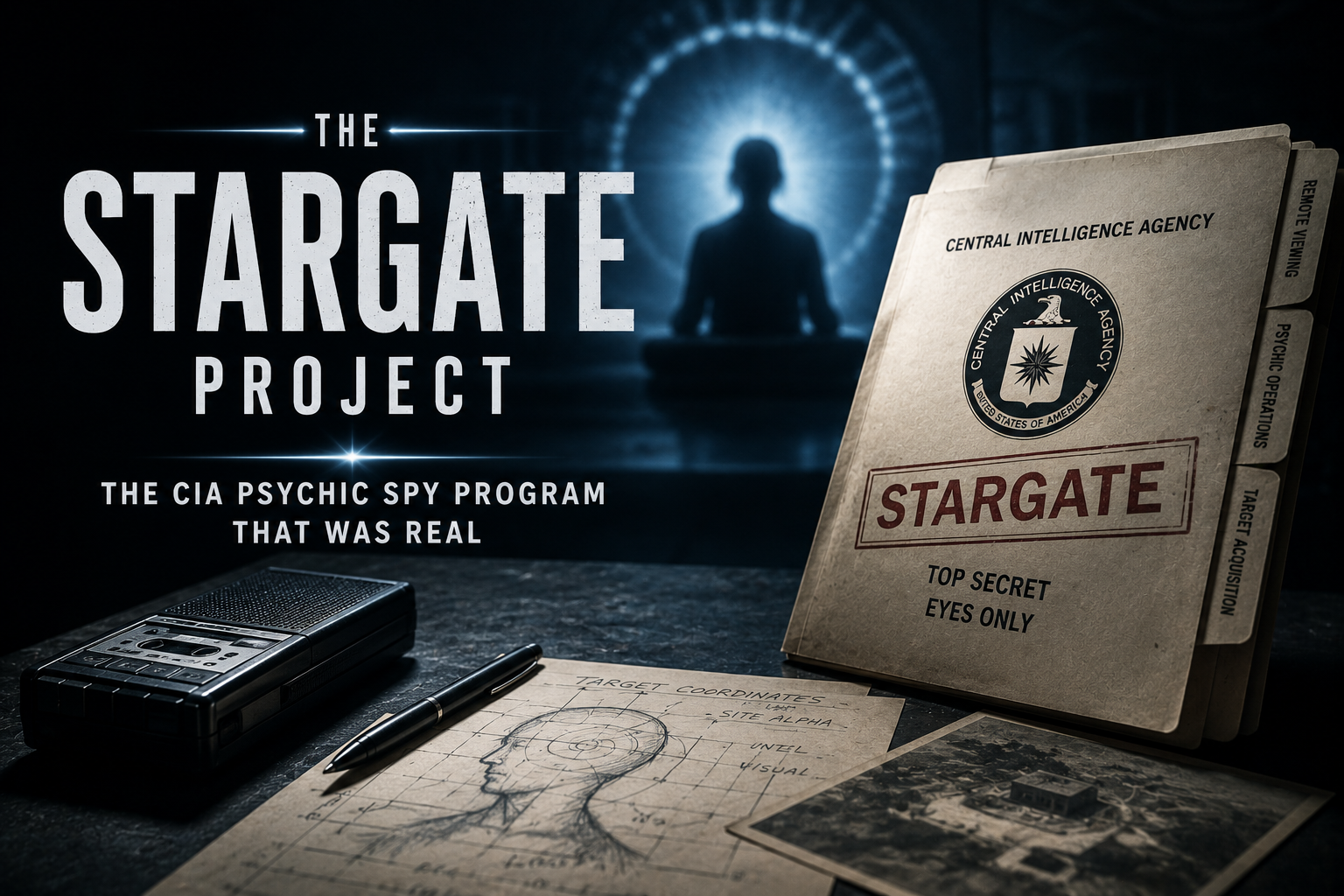
Subsequent disclosures post-1995 further enriched stories about the project — confirming instances where remote viewers claimed to identify overseas missile development sites and covert activities. These accounts became part of an official narrative acknowledging at least partial success, despite prevailing uncertainties.
What Has Been Alleged
Throughout its operational years, Project Stargate swirled amid controversy and allegations of both internal and external improprieties. Allegations purported that much of the success claimed by remote viewing practitioners was overstated. Critics, including several government officials who later spoke anonymously, alleged that the so-called 'hits' were often coincidental or the result of vague, ambiguous target descriptions.
Skepticism extended to the methodologies employed—habits that were accused of being loose and scientifically unfounded. Methods like Associative Remote Viewing (ARV) faced accusations of conceptual flaws that skewed results towards favorable interpretations, heightening success ratios without empirical legitimacy. Others alleged that the program's more promising results were cherry-picked to maintain political favor and funding from the Department of Defense (Source: Clairvoyant Remote Viewing: The US Sponsored Psychic Intelligence Operations, 2002).
One significant allegation that plagued Project Stargate involved the potential exaggeration or fabrication of certain remote viewing achievements by its proponents. Insiders claimed that in efforts to deter external scrutiny, some of the remote viewing 'sessions' were modified to emphasize perceived success while suppressing details of ambiguous or unsuccessful endeavors.

Supporters of the program, including former CIA officials, rebuffed these accusations by emphasizing the experimental nature of remote viewing and the unknown variables at play. They asserted that the scrutiny faced was part of a natural scientific exploration process under extreme pressure, not deliberate deception. Despite defensive posturing, gaps in data and transparent reporting left the project vulnerable to waves of skepticism that ultimately factored into its closure.
What Remains Disputed
A number of significant disputes revolve around the legacy of Project Stargate, particularly concerning the actual effectiveness of remote viewing. Official CIA reports consistently underscored complication in translating psychic insights into actionable military operations, yet notable participants and their supporters have consistently documented anecdotal successes absent from official narratives.
The question of reliability remains a focal point of contention. Some defenders claim that their unacknowledged achievements during periods of the project would later be overshadowed by dismissive institutional reports. Figures like Ingo Swann maintained an unwavering belief in his own results and continuously found opposition to accounts as rooted in bureaucratic self-preservation rather than merit-based assessments.
Moreover, the termination of the project was occasionally contested as being politically motivated rather than analytically sound. Projects exploring unconventional tools often required concrete deliverables that Stargate was evidently unable to produce with consistency, but debates endure about whether further potentialed exploration would have unveiled new understandings or faltered under persistent scrutiny. The USA's subsequent diminishing interest in funding psychic research further underpins contentions cited in historic accounts.

What Was Later Confirmed
As with many shadowy government projects, certain aspects of Project Stargate initially concealed or denied, eventually found validation through declassification and retrospective analysis. Noteworthy was the enduring speculation around specific missions wherein Joseph McMoneagle and other participants correctly identified aspects of strategic Soviet facilities or armament deployments later proven consistent with disclosed military intelligence (Source: STAR GATE PROJECT: AN OVERVIEW, 2003).
McMoneagle’s activities were acknowledged multiple decades later as substantial contributions, authenticated through erstwhile disputed medal awards like the Legion of Merit. The confusion arose primarily from initial secretive protection measures around remote viewing’s practical utility in his designated espionage outputs. The documented evidence about mission objectives and cognitive achievements aligned with respected accounts, mitigating specific allegations of falsification.
These confirmations vindicated some claims by Stargate proponents that remote viewing merited more examination than dismissals allowed. Consequently, while official conclusions remained skeptical, later admissions sustained mixed interpretations that Stargate wielded unforeseen promise conjunctionally undervalued. Its archival release brought to light a measure of authenticity blended with unresolved ambiguity.

Common Myths & Exaggerations
Over the years, myths and misconceptions regarding Project Stargate have proliferated, partly driven by sensationalist portrayals. One prevalent myth was that the program allowed individuals with psychic abilities to perform acts indistinguishable from magic. In reality, documented experiments displayed varied outcomes, with only sporadic instances of successes often surrounded by inconclusive results.
Another misleading narrative was the duration of the project's underlying secrecy, popularly believed to have covertly continued past its official shutdown in 1995. However, records verify that declassification on Stargate operations began shortly thereafter, providing public access to formerly secured information by early 2000s.
Additionally, a common myth propagated the belief that Stargate was a haphazard venture devoid of scientific structure or oversight — a misconception contrary to verified reports ensuring governmental protocols and internal evaluations, albeit interspersed with operational discrepancies. Understanding these clarifications demystifies exaggerated tales while underscoring the genuine, though imperfect, quests strived towards harnessing ostensible untapped potential of cognitive phenomenon.
Why It Matters
Project Stargate's historical significance stems from its emblematic representation of the Cold War-era zeal to explore unconventional avenues for defense and intelligence. It illustrates the lengths to which national security concerns drove agencies like the CIA, challenging traditional scientific, ethical, and military boundaries.
The publication of Stargate information fueled broader societal debates on public transparency and accountability in intelligence operations. Revelations provoked reconsiderations of ethical practices when employing unverified methodologies poised at the fringes of established applications. This ties back to broader governmental obligations towards open information sharing and restraining overreach in citizen research involvement.
Furthermore, the narrative of Project Stargate today resonates in current speculative scientific avenues, such as AI developments and neuroscience, delineating cautionary tales when innovation encounters persistent verification gaps. With advancing technologies ushering similar interrogations on the consciousness and perception utopia, Stargate's narrative functions as both a precursor and a reflective mechanism for emerging realities.
By revisiting these dialogues, we anchor contemporary scrutiny and decision philosophies in empirical learning insights emanating from Project Stargate. At its heart, this reflection represents an informative conduit for shaping rational progress bounded by empirical awareness and ethical consideration.
Connections to Other Archive Entries
Project Stargate relates intrinsically to contemporaneous initiatives like MKUltra—famed for its experimental apprehension of mind control. Both programs demonstrate a historical willingness to experiment with the psyche under the aegis of national defense, emphasizing risk versus reward assessments in controversial endeavors.
Adding to its connections, similarities with 'Operation Paperclip' emerge as the fielding of expertise in extraordinary scenarios, reconciling Germany's wartime advancements with American pursuits. Modern parallels show alignment in secret intelligence strategies, where ripple effects of information manipulation mirror interventions experienced during 'Operation Ivy Bells' to serve post-Stargate analysis.
These cross-interconnections encapsulate emerging trends of such unconventional espionage activities, mapping out increasingly integrated paradigms in intelligence affairs exploring human cognition’s limits under continual reassessment.
Sources & References
PRIMARY SOURCES
SECONDARY SOURCES
The Hidden History Archive is part of The Beacon Wire entertainment and informational platform. All archive articles are based on public sources, declassified documents, court records, and reputable journalism. Facts are clearly separated from allegations, disputed claims, and unsupported speculation. Nothing in this archive should be interpreted as legal advice or as incitement to harm. Readers are encouraged to consult primary sources directly.
We use cookies to improve your experience and analyze site usage. See our Cookie Policy for details.