
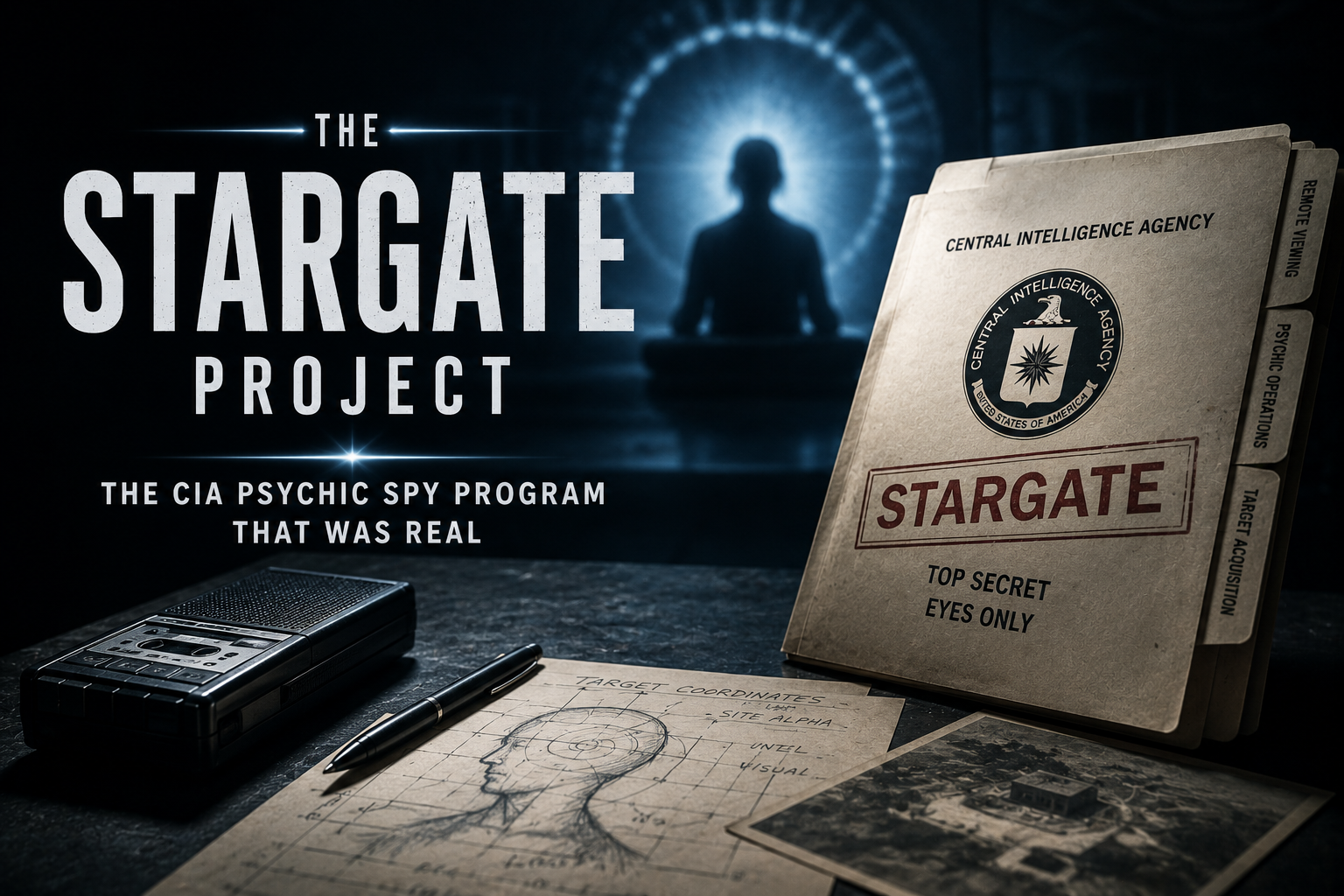
A declassified document from the CIA's archives revealing details about the setup and functioning of Project Stargate, dating back to the 1980s.
Stargate Mysteries: The CIA's Venture into Psychic Espionage
In a time when technological innovation seemed limitless, the CIA embarked on an astonishing mission: to tap into the human mind as a tool of war. Within the clandestine corridors of government agencies, Project Stargate unfolded, a bizarre experiment combining espionage and extrasensory perception. This exploration into remote viewing unravelled over seventeen years, sparking debate and raising questions about reality versus illusion.
What Happened
The year was 1978. In the shadowy yet real battlefields of the Cold War, where espionage was King and secrecy was its loyal ambassador, the CIA launched a program unlike any that had come before. Dubbed Project Stargate, it was a covert effort to uncover whether psychic phenomena, specifically remote viewing, could be harnessed for intelligence gathering. Remote viewing itself was a curious idea: the belief that someone, anyone potentially, had the ability to perceive details about a distant or unseen target via mental imagery.
Picture the scene - a dimly lit room, hushed tones, and intense focus as a psychic struggles to 'tune into' a remote location, perhaps a Soviet base deep behind enemy lines or a hidden submarine submerged in the Arctic. Was it possible to gain insights only the most advanced technology could provide, all from within the confines of the human mind? The CIA, spurred by curiosity and perhaps a hint of desperation during tenuous Cold War tensions, decided it was worth finding out.

The roots of Stargate were earlier experiments at the Stanford Research Institute (SRI) led by Russell Targ and Harold Puthoff. Their work laid the groundwork, catching the CIA’s interest. It was here that the concept of remote viewing truly took form and function, transforming from a mere curiosity into a government-endorsed experiment.
Throughout its lifecycle, Project Stargate veered through peaks and troughs, capturing moments of success, skepticism, and serious scientific inquiry. Remote viewing seemed to deliver on promise at times, with claims from individuals like Joseph McMoneagle, a leading remote viewer, who accurately described the detailed configurations of Soviet installations without leaving American soil.

Yet the project was not without its detractors. The scientific community balked at the lack of empirical evidence, branding the endeavor speculative at best and pseudoscience at worst. Internally, the initiative was also tumultuous; leadership shifted, strategies morphed, and funding often teetered on the brink of evaporation.
The fragile tapestry of Stargate unraveled finally in 1995. It ended not with a bang, but a quietly orchestrated whimper as new intelligence priorities took center stage post-Cold War. A review by the American Institutes for Research, however critical, was instrumental in this ending. They concluded remote viewing had scant evidence supporting operational benefits, despite documenting individual instances of success. The program folded, but the questions—and the mystique—remained open-ended.
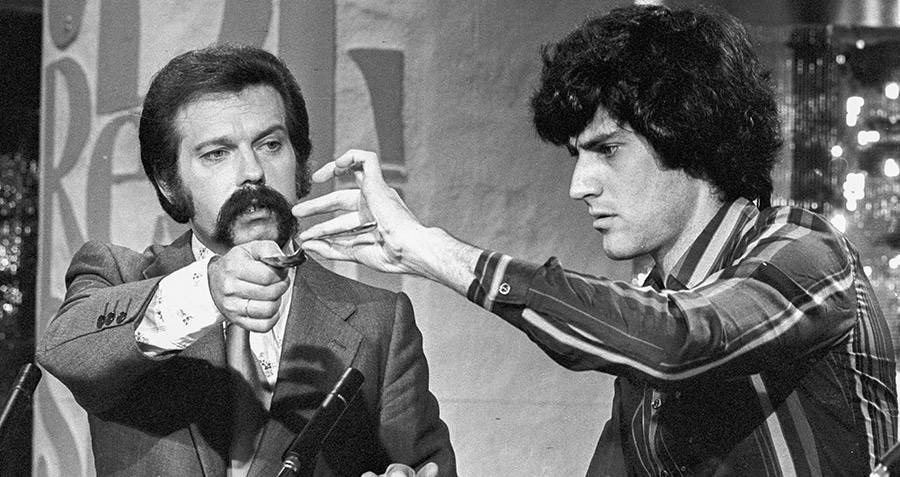
Timeline of Key Events
1970 — Research into psychic phenomena begins at Stanford Research Institute.
1972 — CIA takes notice of early positive results from remote viewing experiments.
1978 — Official start of Project Stargate, spearheaded by the CIA.
1980 — DIA and U.S. Army join efforts under Stargate's expanding scope.
1981 — Remote viewers reportedly succeed in identifying a Soviet base location.
1983 — Joseph McMoneagle claims to locate a downed Soviet plane through psychic means.
1984 — Project renamed 'Grill Flame' and adjusted for focused military applications.
1985 — Funding challenges lead to program reevaluation and reduction.
1986 — Reported success stories cause renewed internal interest.
1987 — Project returns to original name, Stargate, under heightened scrutiny.
1989 — DIA assesses the practical value of remote viewing for intelligence.
1990 — Remote viewing trials attempt to contribute to broader defense strategies.
1992 — Focus shifts towards counter-terrorism attempt; limited success noted.
1994 — Rigorous review by American Institutes for Research initiated.
1995 — Conclusion dismisses effectiveness; CIA terminates Project Stargate.
1996 — Declassified documents reveal operational history and findings.
1997 — Public hearings and debates intensify over fiscal oversight of the project.
2000 — Renewed interest driven by media spurred analysis and retrospectives.
2004 — Post-9/11 security environment prompts brief reconsideration of psychic tools.
2013 — Research on unconventional intelligence strategies revisits Stargate elements.
2018 — Anniversary discussions rekindle debates on remote viewing's potential.
What Is Documented
Project Stargate's journey through the annals of clandestine operation is thoroughly documented through numerous declassified CIA files. These documents sketch a vivid chronology of the project from its inception to closure, encapsulating the drive behind the mysterious undertaking. Initially kickstarted under the auspices of the Stanford Research Institute (SRI), lead physicists Russell Targ and Harold Puthoff conducted foundational work in alternative psychic exploration.
The official launch in 1978 marked a deep dive by the CIA into investigating remote viewing, a decision driven by faint but intriguing pilot results suggesting operational promise. The project expanded its reach with involvement from the Defense Intelligence Agency (DIA) and the U.S. Army, consolidating collective efforts in an era steeped in intense global superpower rivalry.

One of the more compelling accounts emerged in 1981; remote viewers purportedly mapped out a secret Soviet installation, an achievement that found itself immortalized within intelligence circles. Nevertheless, each successive report met a wall of skepticism, questioning not merely the specifics but the very feasibility of such outcomes.
In a culmination of effort, an extensive review by the American Institutes for Research in 1995 critically interrogated the program’s viability. The review unveiled inconsistencies and contextual gaps yet acknowledged specific instances of noteworthy precision in viewing. This examination catalyzed Stargate's termination, pronouncing it a limited yet ambitious venture in the realms of psychic potential. The documentation facet illuminates the complex grasp of reconnaissance in the shadows of cognitive frontiers.

What Has Been Alleged
Despite the documented history, Project Stargate is shrouded in allegations that suggest darker undercurrents beneath its surface. Some insiders, notably former participants like Ed Dames, have voiced claims that the program delved deeper than publicly acknowledged. Dames and other ex-operatives have alleged that the project unearthed more mysterious phenomena and that certain findings, notably those straddling the line between psychic and technological, were deliberately muffled.
Rumors persisted that Stargate was more than a scientific endeavor; it played dual roles—both experimentation and psychological warfare. Critics have suggested that aside from gathering intelligence, it may have served as a covert psychological operation designed to intimidate foreign adversaries by showcasing seemingly supernatural abilities.
Conjectures also emerged surrounding the program's reported outcomes. Contentions arose that data was either enhanced or spun into positive light to sustain funding, obscuring genuine results. Critics proposed that discrepancies existed between viewer experiences and the distilled narrative presented in internal reports. Allegedly, selective reporting of results compromised the program’s integrity internally and externally.

The CIA and its affiliates, despite these swirling accusations, maintained a steadfast narrative centered on remote viewing. This adherence to an official story leaves a tantalizing gap of unconfirmed potential and compounded curiosity, a chasm that still captures the imagination of investigators, skeptics, and believers alike.
What Remains Disputed
Project Stargate is a pivot around which many disputes circle. At its core is the debate over the credibility of remote viewing itself. Skeptics, including noted psychologist Ray Hyman, have long challenged the project's outcomes, crediting any semblance of success to coincidental accuracy or confirmation biases rather than authentic psychic phenomena.
On the opposite side, supporters of remote viewing assert that at least some of the results justify the project's extensive scope, pointing to systematically documented instances where viewers described what appeared to be accurate depictions of distant sites or objects. The clash of opinions leaves an indelible mark on Stargate's legacy, with evidence often cited being nebulous or subject to interpretation.
Another disputed domain stems from project transparency and reporting methodology. Detractors cite inconsistent records and opacity regarding data collection tactics, arguing that the CIA potentially obfuscated actual findings to either boost morale or hidden agendas separate from espionage.

The disputed status of these claims results in Stargate being a reflection more of the era’s ideological and espionage-driven ambitions than confirmed psychic triumph. This unresolved tension persists today, encapsulated in discussions on the limits of intelligence strategies and the complex nature of scientific inquiries in governmental domains.
What Was Later Confirmed
In the climate of shifting understandings, some aspects of Project Stargate have found later acknowledgment, posthumously altering interpretations of its efficacy. Initial skepticism eventually eased as newer insights emerged through declassified material and shifted perspectives.
These revelations include validated accounts of the program’s operational deployment within certain circles of military planning, suggesting a more entangled usage of its findings than the initial termination and reviews suggested. Reports from the CIA's own declassification processes acknowledged high-level attention from multiple defense divisions seized by the potential intelligence applications remote viewing purportedly offered.
Confirmation was also levied in the form of renewed military interest in parapsychology-inspired methodologies long after Stargate's official cessation. Investigations into similar concepts, under various guises, found traction occasionally, spurred by broader explorations of alternative recon paradigms, even outside government confines.

The partial admission of Stargate’s exploration acknowledges that while its closure tokened an end, it left echoes across intelligence operations, revealing an enduring open-mindedness to strategies that teetered between reality and imagination, worthy of serious contemplation.
Common Myths & Exaggerations
Project Stargate, with its tantalizing blend of espionage and parapsychology, is fertile ground for myths and misconceptions. Foremost among these is the exaggerated belief in remote viewers’ prowess. Multiple pop-culture retellings embellish the feats of these psychic spies, peddling tales of effortless predictions and resounding precision results, a narrative far from grounded reality.
A further fallacy rests in the misconception that Project Stargate was solely the province of the CIA. While the agency was instrumental, the actual operation was a multi-agency effort, incorporating insights and resources from the Defense Intelligence Agency and various military factions. This complexity is often glossed over, leading to a skewed view of its orchestration.
Perhaps most misleading is the conspiracy theory suggesting nefarious agendas were the real driver of the project’s termination—a myth unsupported by evidential records. Mainstream scientific communities remain wary of unfounded claims shrouded in dramatization, maintaining recognition of scientific limits rather than validating psychic heroes.
Disentangling fact from fiction in Stargate's narrative reveals substantial gaps between public imagination and historical accounts. It serves as a reminder of how intricate, often misunderstood, endeavors can leave enduring legacies beyond intended scopes, ripe for embellishments.
Why It Matters
Deciphering the profound significance of Project Stargate is essential to understanding its imprint on both history and contemporary paradigms. In essence, the program represents an epoch where exploration intertwined with ambition, driving the government to delve into enigmatic territories where persistence meets perplexity.
The project is a testament to adventurous intelligence strategies during the Cold War, reflecting the intense pressures and ideological warfare characteristic of the period. Investing in psychic espionage speaks volumes about the extents a superpower would venture to secure an upper hand, intricately weaving science fiction into national defense.
Furthermore, from a fiscal governance perspective, Project Stargate ignites discussions about resource allocation and oversight—compounded by taxpayer dollars funneled into speculative domains. It challenges policy-makers to draw precise boundaries between innovative resourcefulness and scientific dramaturgy.
The resonance today can be found within ethical inquiries about transparency, paving way for dialogues about research challenging conventional norms and embracing ambiguity. It provokes reflections on how questions posed in the past have evolved, prompting introspection on both possibilities explored and avenues intentionally abandoned.
In the shadowy nook of history that Project Stargate reveals, there exists a vibrant cautionary tale. It symbolizes technology and imagination tested, conjuring the age-old conflict between known realities and uncharted frontiers perpetually casting the allure of what might be.
Connections to Other Archive Entries
Within the larger tapestry of covert Cold War operations, Project Stargate links subtly and directly to programs like MK-Ultra, tying into broader themes of psychological investigations veering into human potential.
Additionally, paralleling Soviet interest in psychic endeavors underlines the commonalities in global espionage strategies as superpowers dabbled into overlapping realms. This interplay of mutual interest in psychic applications reflected an era prone to creative explorations mirroring clandestine rivalries.
Today, Project Stargate continues to inspire narratives across media and research, interconnected within the legacy of innovative intelligence measures, sidling alongside contemporaneous exploratory ventures, crafting an integrative historical mosaic of common pursuits bound by competitive zeal.
Sources & References
PRIMARY SOURCES
SECONDARY SOURCES
The Hidden History Archive is part of The Beacon Wire entertainment and informational platform. All archive articles are based on public sources, declassified documents, court records, and reputable journalism. Facts are clearly separated from allegations, disputed claims, and unsupported speculation. Nothing in this archive should be interpreted as legal advice or as incitement to harm. Readers are encouraged to consult primary sources directly.
We use cookies to improve your experience and analyze site usage. See our Cookie Policy for details.