
A photo from the 1994 Congressional hearings, showing tobacco executives testifying under oath about nicotine's health impacts.
Smoke and Mirrors: The Tobacco Industry's Hidden History of Deception
In a chilling ballet of deception, the tobacco industry orchestrated one of the most profound disinformation campaigns in modern history, concealing connections between smoking and cancer. Unveiling decades of strategic obfuscation, this exposé reveals why these manipulations matter more than ever.
What Happened
Picture the year 1953, a smokey boardroom filled with the luminaries of America’s most powerful tobacco companies. Tension crackles in the air, each executive aware that the imminent threat is not a competitor, but truth itself. Recent scientific studies have linked smoking to lung cancer, a revelation poised to explode decades of carefully constructed image and revenues. The men in this room have a choice: confront the truth or embark on a campaign of deceit unlike anything seen before.
They choose the latter. It’s not just a story of corporate collusion; it’s a conspiracy of silence that would span decades. Under the guise of the Tobacco Industry Research Committee (TIRC) – ostensibly a collective to explore health impacts – they commence the mother of all disinformation campaigns. Underneath its noble-sounding mission lurks a darker purpose: discredit scientific findings linking tobacco to cancer and promote ‘safer’ smoking through manipulated research.

The machinations begin with clever marketing and public messages, asserting the lack of conclusive evidence linking smoking to health issues. Ambiguous language, legalistic in its precision, becomes the tool of choice. Smiling actors in pristine labs appear on screens, echoing assurances that resonate far beyond the TV set. It's mesmerizing, the perfect sleight of hand that dulls the public's suspicion while lining the pocketbooks of Big Tobacco.
Throughout the 1960s, the TIRC, later rebranded as the Council for Tobacco Research, continues its charade. The scientific community grows restless, and public health advocacy increases. Yet, the enormity of the disinformation effort makes proving tobacco's culpability a monumental task. Courtrooms across America become battlegrounds, with tobacco's ironclad legal teams victorious through technicalities and procedural labyrinths.

But by the 1990s, the web of deceit begins to unravel. Insider accounts, whistleblowers, and relentless journalism shine a light on internal memos revealing strategy meetings akin to war councils, where the enemy is the truth itself. In 1999, landmark lawsuits defy tobacco's fortress of obfuscation, with Judge Gladys Kessler's ruling that the industry intentionally misled the American public about the dangers of smoking.
Finally acknowledging this dark chapter, the release of millions of internal documents in the wake of legal battles illuminates the scale of manipulation. The convergence of media, law, and activism unites to ensure that the story of how tobacco companies chose profits over lives is not forgotten.

Timeline of Key Events

1950 — The first wave of studies is published linking smoking to various cancers.
1953 — Tobacco industry leaders meet at the Plaza Hotel in New York to plan responses to mounting evidence against smoking.
1954 — The Tobacco Industry Research Committee (TIRC) is formed, launching campaigns to create confusion over tobacco's health impacts.
1962 — Royal College of Physicians publishes 'Smoking and Health,' implicating tobacco in serious health conditions, pushing U.S. public health authorities to investigate further.
1964 — U.S. Surgeon General Luther Terry releases the first report definitively linking smoking to lung cancer.
1970 — Tobacco companies allegedly begin suppressing internal research showing the harmful effects of smoking.
1980 — Philip Morris and other companies launch campaigns to refute growing scientific evidence about secondhand smoke.
1987 — Tobacco whistleblower Jeffrey Wigand starts gathering evidence about scientific suppression and corporate deceit.
1992 — Dr. Stanton Glantz releases “The Cigarette Papers,” a collection of internal documents exposing the tobacco industry's strategies.
1994 — Tobacco CEOs testify before Congress, falsely asserting that nicotine is not addictive.
1997 — The tobacco industry faces over 40 state lawsuits seeking compensation for public health costs.
1998 — The Master Settlement Agreement is reached, forcing companies to pay billions and release once-secret documents.
1999 — Judge Gladys Kessler's ruling finds tobacco companies guilty of misleading the public about the risks of smoking.
2001 — Internal documents reveal years of marketing strategies aimed at downplaying smoking's health risks.
2004 — Reports surface documenting ongoing efforts by tobacco companies to target young and minority consumers.
2006 — Federal court rules tobacco companies falsely advertised cigarettes as ‘light’ and ‘low tar’.
2009 — The Tobacco Control Act grants the FDA authority over tobacco products.
2012 — U.N. acknowledges the tobacco epidemic as a significant barrier to developmental goals.
2015 — Studies show reduced smoking rates post-tobacco control regulations.
2020 — Research indicates e-cigarettes and inhaled tobacco products face similar resistance from the industry.
2023 — Legal scholars reflect on Judge Kessler's case, reaffirming its pivotal impact on corporate accountability.
What Is Documented
The horrifying truth first emerged in the early 1950s when landmark reports linked smoking directly to lung cancer. In 1954, the advent of the Tobacco Industry Research Committee (TIRC) was a direct response to mounting scientific scrutiny. Documents from the committee, presented during later Congressional hearings, revealed their primary aim was to cast doubt rather than conduct unbiased research.
Court documents, such as those from the 1999 U.S. v. Philip Morris USA Inc. et al. case, outline a broad pattern of deceit. Judge Gladys Kessler's verdict specifically highlighted decades of fraudulent conduct, marking a turning point for accountability measures. She cited memos from as early as the 1960s, indicating a deliberate effort to mislead the public about the health implications of tobacco use.

Numerous hearings and documentations through the 1980s and 1990s, such as the release of 'The Cigarette Papers,' exposed internal communication where toxicology research findings were buried or misrepresented to sustain marketing claims that cigarettes were safe and socially desirable.
The Library of Congress now houses thousands of documents recovered during the 1998 Master Settlement Agreement, which served as a comprehensive acknowledgment by the tobacco industry of its past misconduct. These documents detail extensive efforts to distort public understanding of smoking’s health dangers.
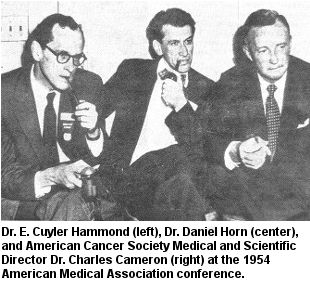
Among the most revelatory are records of deliberate policy decisions revealed during congressional hearings in 1994, where industry executives, under oath, denied nicotine’s addictive properties, despite possessing contrary evidence within their own research portfolios.
What Has Been Alleged
Allegations against the tobacco industry extend beyond merely hiding the truth about health risks; claims emerged that they actively funded research to develop ‘optimized’ nicotine delivery systems, enhancing addiction while manipulating public perception. Notably, whistleblowers like Jeffrey Wigand, a former executive at Brown & Williamson, alleged in explosive interviews that the company deliberately manipulated nicotine levels in cigarettes to enhance consumer dependency, claims that catalyzed public outrage and subsequent legal challenges.
During the height of denial in the 1970s and 1980s, it was alleged that tobacco executives orchestrated a coordinated effort to undercut the rising body of independent research linking smoking to cancer. Authors such as Stanton Glantz and Naomi Oreskes have highlighted internal memoranda and corporate strategies aimed at influencing scientific debate in their published works.
There have also been allegations of lobbying efforts coerced to suppress regulatory impacts. The CIA archives mention instances of policy manipulation, wherein private executives allegedly exerted undue influence on political representatives, shaping legislative landscapes to benefit the industry. Although the direct links remain clouded by legal non-disclosure, documents released post-lawsuit reveal compelling circumstantial evidence.
A particular focus of allegation revolves around the industry's targeting of vulnerable populations. Critics, including public health advocates referenced in legal essays, argue that companies devised marketing specifically aimed at hooking young adults and minority groups to maintain consumer bases against growing societal pushback.
What Remains Disputed
The tangled narrative of tobacco’s ties to cancer is complicated by disputes between official industry narratives and third-party investigations. Industry representatives perpetuated assertions, often in coordinated media campaigns, that early lung cancer studies were methodologically flawed and statistically insignificant. Their strategy involved highlighting uncertainties in scientific methodology rather than addressing indisputable evidence, a tactic dissected in period analyses.
On the opposition side, researchers and public health advocates cited robust longitudinal studies illustrated in entities like the Journal of the American Medical Association (JAMA) that consistently demonstrated correlations between smoking and various forms of cancer. Their findings were often publicly challenged by tobacco statements cloaking claims in scientific ambiguity.
Notable is the conflicting discourse in congressional hearings. During testimonies in 1994, executives maintained positions that nicotine's addictive nature was unsubstantiated, despite stacks of internal research suggesting otherwise. Papers like those archived at the National Institutes of Health (NIH) indicate industry research that consistently projected contrary evidence, leading to a broader dispute within the scientific community about ethical scientific disclosure and corporate accountability.
What Was Later Confirmed
In the wake of ongoing legal battles and relentless investigative journalism, many assertions that tobacco companies initially derided as myths were later proved to be solid facts. The infamous 1998 Master Settlement Agreement forced Big Tobacco to divulge a trove of internal documents, significantly corroborating earlier suspicions about their systemic misinformation strategies.
The previously alleged manipulation of scientific findings was confirmed through memos retrieved post-settlement. These documents exposed instances where leading tobacco scientists were pressured to alter study outcomes. The documents also verified claims that executives were acutely aware of nicotine’s addictiveness—a fact they had long denied in public forums.
Similarly, the strategic targeting of advertising towards youths and minority groups, once considered conjecture, was validated through marketing plans outlined in public court records. These records delineated deliberate efforts to create youth-friendly imagery associated with tobacco use, woven skillfully into advertising campaigns.
The controversial 1994 CEO testimonies on the non-addictiveness of nicotine have also been unequivocally discredited by internal correspondence, now public, admitting to systematic nicotine content adjustments, ensuring peak addiction potential of their consumer products.
Common Myths & Exaggerations
Several persistent myths overshadow the documented history of the tobacco industry's operations. One such exaggeration is the belief that early anti-tobacco legislation was universally opposed by political figures as a vast industry-controlled conspiracy. While industry lobbying was notable, records reflect nuanced political landscapes with substantial support for early public health initiatives.
Contrary to popular myths, it was not a singular whistleblower event that unraveled the tobacco industry’s deceptions. The reality featured a tapestry of journalistic efforts, scientific communities, and incremental legal victories long predating the explosive revelations of the 1990s.
Another misrepresented notion is the exaggeration that all tobacco companies were equally complicit or had identical policy goals. In truth, internal competitive tensions often influenced various corporate strategies, with some entities favoring different approaches to public health challenges.
Finally, the simplistic narrative that tobacco executives were formerly uninformed about health impacts does not hold water under the weight of evidence. Early scientific reports and recommended studies to executives were not only frequent but strategically ignored or buried in pursuit of favorable economic outcomes.
Why It Matters
The historical trajectory of tobacco industry deception offers critical lessons in corporate practices and public health policy. Its impact reverberates through legal precedents that now govern corporate disclosures and consumer protection standards. The landmark legal cases, such as the 1999 ruling against major tobacco companies, established rigorous precedents for how corporations account for scientific evidence in public communication.
Understanding this history is vital as it underscores the lasting health implications of delayed policy intervention. Today's vaping and e-cigarette debates echo tobacco’s historic denial strategies, highlighting the continuous power struggle between industry imperatives and public health advocacy. The evolution of tobacco regulations informs broader public health mechanisms, emphasizing transparency, informed consent, and legislative oversight.
On a socio-political level, the tobacco saga challenges how governments and regulatory bodies confront vast corporate influence. It illustrates the necessity for vigilant media and tenacious legal structures to counter disinformation campaigns, ensuring societal interests prevail over entrenched economic powers.
Public consciousness has since shifted, informed by the gravity of this historical cover-up. For modern consumers, the extent of past deceit is a beacon prompting critical thinking about industry claims, fostering a more discerning public attitude towards corporate narratives.
Connections to Other Archive Entries
The disinformation strategies employed by tobacco companies find eerie parallels in the narratives surrounding other historical events such as the sugar industry's influence on dietary guidelines during the 1960s, another topic covered by The Hidden History Archive. Strategies from the tobacco playbook have also been observed in climate change debates and pharmaceutical industry practices, warranting comparisons in public discourse.
This narrative connects to the broader theme of industrialized consumer manipulation prevalent across many Archive entries, including topics like the leaded gasoline controversy and the asbestos industry’s prolonged denial of health risks. Each is a testament to the lengths powerful entities will go to preserve economic interests over public welfare.
Sources & References
PRIMARY SOURCES
SECONDARY SOURCES
The Hidden History Archive is part of The Beacon Wire entertainment and informational platform. All archive articles are based on public sources, declassified documents, court records, and reputable journalism. Facts are clearly separated from allegations, disputed claims, and unsupported speculation. Nothing in this archive should be interpreted as legal advice or as incitement to harm. Readers are encouraged to consult primary sources directly.
We use cookies to improve your experience and analyze site usage. See our Cookie Policy for details.