
Industry executives testify during Congressional hearings on tobacco health impact, April 1994.
Under Smoke and Mirrors: The Chilling Cover-Up of Tobacco’s Cancer Lies
In a shocking revelation, decades of deceit by tobacco giants are uncovered—revealing suppressed cancer research and a ruthless agenda to keep the public in the dark. Delve into how Big Tobacco manipulated science, the legal battles that ensued, and why their fallout still reverberates today.
What Happened
The year was 1950 when one of the earliest formal studies identified a significant correlation between smoking and lung cancer. It was a time when the dangers of smoking weren't common knowledge, and cigarettes were seen as symbols of sophistication and rebellion. This was the perfect cover under which the tobacco industry could act. From the crowded offices of ambitious young researchers to dusty boxes in forgotten archive rooms, a story of deception and health trauma began to unfold.
The tobacco industry faced a stark reality as medical evidence against them mounted which forced them to choose between transparency and deceit; they chose deceit. The stage was set for a scandal that would span decades, involving manipulation of scientific research, influence over public perception, and collusion at the highest levels. The major players in this conspiracy were household names. Brands like Philip Morris and R.J. Reynolds became synonymous not only with cigarettes but with the act of sophisticated subterfuge. These companies navigated legal loopholes and scientific ambiguities with precision, crafting a narrative that smoking was merely a personal choice, unassociated with undeniably severe health consequences.

This strategic denial began earnestly in the mid-1950s, aided by spin-doctors and advertising executives who flooded markets with addictive imagery of sophisticated smokers, a tactic designed to distract from the serious health risks. While the public was beguiled by the glamorous marketing campaigns, inside boardrooms, another narrative was unfolding. Murmurs of nicotine's addictive properties and the carcinogenic dangers of cigarettes began circulating internally.
By the late 1960s, internal tobacco industry documents, now declassified, depicted a chilling level of awareness among executives about the inherent dangers associated with smoking. Despite possessing substantive evidence of these risks, they chose to conceal it. Instead, tobacco companies spent millions in litigation and public relations campaigns designed to reassure consumers and stave off regulation. They funded dubious research, casting doubt on independent studies that linked smoking to cancer and heart disease.
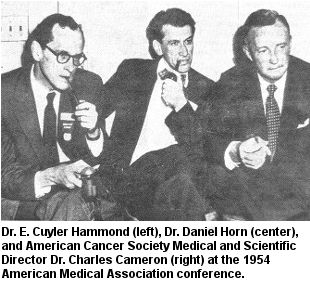
The curtain began to lift in the 1990s, driven by the relentless pursuit of truth from whistleblowers and advocacy groups. Testimonies and leaked documents were the catalysts for a flurry of lawsuits against Big Tobacco, with stakes numbering in billions of dollars. One of the watershed moments came in 1999, when U.S. District Judge Gladys Kessler delivered a landmark ruling. She declared that tobacco companies had engaged in a decades-long conspiracy to deceive the public about the dangers of smoking and secondhand smoke.
These revelations illustrated not just a disregard for consumer health, but an orchestrated effort to prioritize profits over truth. The details of this cover-up highlighted the complex lengths to which these companies went to manipulate or inhibit research, manage public perception, and avoid regulatory consequences.

Today, the tobacco industry’s legacy of deceit leaves its mark, as today's consumers and public health advocates strive for transparency and truth in advertising and scientific research. This chapter in public health history serves as a stark reminder of the lengths industries might go to safeguard their profits at the expense of human lives.
Timeline of Key Events

1950 — Initial studies establish a link between smoking and lung cancer.
1953 — Tobacco companies form a collaborative response to counteract emerging research.
1954 — The important paper 'Smoking and carcinoma of the lung' is published by researchers Bradford Hill and Richard Doll in the British Medical Journal.
1964 — The U.S. Surgeon General releases a groundbreaking report linking smoking to cancer.
1965 — The Federal Cigarette Labeling and Advertising Act requires health warnings on cigarette packages.
1969 — Philip Morris internal documents expose industry's knowledge of nicotine addiction.
1970 — The Public Health Cigarette Smoking Act bans cigarette advertising on TV and radio.
1971 — Tobacco industry documents reveal their strategic focus on increasing youth consumption.
1977 — R.J. Reynolds launches the infamous Joe Camel campaign aimed at attracting younger smokers.
1982 — The first nicotine patch is introduced, yet tobacco companies continue to refute claims.
1984 — Surgeon General issues a report detailing smoking-related ailments outside of cancer.
1988 — Tobacco executives testify before Congress, denying nicotine's addictive nature.
1991 — Leak of a videotaped industry executive meeting discussing ways to undermine health claims.
1994 — 'Tobacco documents' begin leaking, detailing internal industry knowledge and ethics.
1997 — Liggett Group, a tobacco company, breaks ranks, acknowledging smoking link to cancer.
1998 — Tobacco Master Settlement Agreement is reached, resulting in historic regulation and massive fines.
1999 — Judge Gladys Kessler finds tobacco companies guilty of racketeering and fraud.
2000 — Court rulings demand public access to 'Tobacco Industry Documents' database.
2006 — Kessler's ruling calls for corrective statements and ongoing public disclosures.
2012 — Public interest groups intensify calls for tighter regulatory oversight through the FDA.
2014 — A landmark ruling mandates tobacco companies to acknowledge historical deceit publicly.
2016 — Released documents reveal strategies to manipulate public opinion across various countries.
2020 — Health advocacy groups highlight comparisons between vaping debates and historical tobacco tactics.
2023 — Ongoing legal battles draw direct lines from historic deceit to modern regulatory challenges.
What Is Documented
The 1964 report from the U.S. Surgeon General was a critical moment, acting as a linchpin in public health discourse by formally linking smoking to cancer. The enormity of this report lay in its comprehensive analysis of epidemiological evidence, such as that provided by British physicians Richard Doll and Bradford Hill, effectively consolidating years of research into an unassailable public health directive.
Early rumblings of scientific concern were heard as early as the 1950s, but it wasn't until the release of declassified industry documents in the 1990s that the full extent of the tobacco industry's deceit was realized. These documents elucidate the lengths to which companies like Philip Morris and R.J. Reynolds went to obscure the scientific realities of smoking.
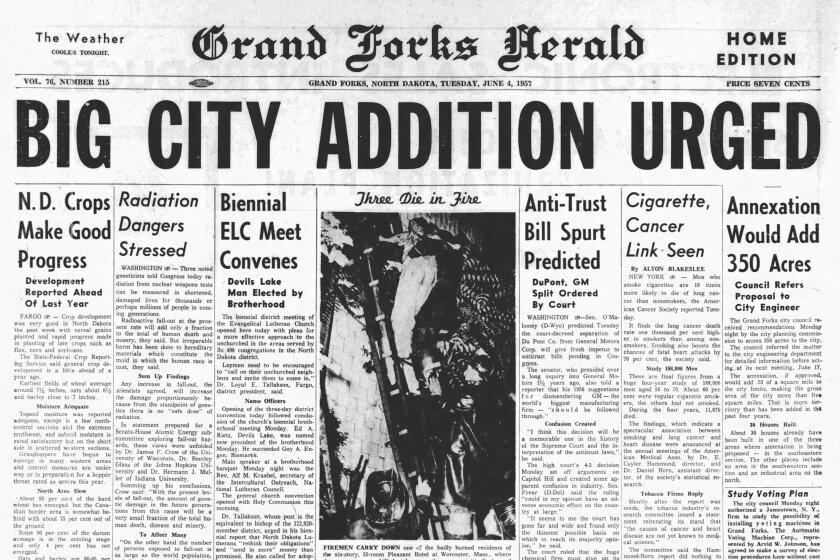
One of the most notorious pieces of evidence emerged in the form of the industry's 'playbook', which was referenced in a series of congressional hearings throughout the late 1990s. This playbook meticulously outlined strategies aimed at creating doubt and controversy around scientific findings incriminating tobacco as a major health hazard.
The congressional deposition of tobacco executives in 1994 remains a chilling testament to corporate duplicity. Assembled under oath, executive leaders from major tobacco companies brazenly rejected the well-established notion of nicotine addiction, reaffirming this position despite their private acknowledgment of the contrary.

Judge Gladys Kessler’s landmark ruling, handed down in 1999, emphatically substantiated claims of a calculated industry conspiracy. This ruling was underpinned by a wealth of court files and corporate communications that illuminated a campaign of falsehoods perpetuated against both the American public and regulatory bodies.
The historic Tobacco Master Settlement Agreement of 1998 compelled big tobacco firms to undertake significant corrective actions—including financial payouts and smoking cessation education—while setting a new standard for regulatory practices. An important facet of this agreement was the mandated public disclosure of internal documentation, offering an unprecedented window into the internal machinations and moral failings of the industry.
What Has Been Alleged
Over the decades, a tapestry of allegations has been woven around the tobacco industry, portraying a systematic approach to mislead and manipulate the public. These allegations, while varied in evidence, consistently suggest a pervasive culture of manipulation and deception.
Critics within the public health sector have long alleged that the tobacco industry systematically undermined scientific inquiry. Accusations point towards funding front groups and pseudo-scientific research aimed at contradicting independent findings which linked smoking with serious diseases. Allegations focus particularly on the manipulation of research funding to produce studies that muddied understandings of the health implications of tobacco use.
Internationally, several reports have surfaced alleging that tobacco companies knowingly flouted emerging regulatory frameworks in developing nations. Accusations suggest systematic efforts to penetrate vulnerable markets, employing marketing strategies that circumvented restrictions and targeted students and young adults, potentially compromising an entire generation.

There have also been allegations around the strategic political donations made by tobacco companies. These claims suggest that significant contributions were made to key political campaigns, seeking to secure regulatory favorable outcomes or delay impending legislation. Reports from watchdog organizations, such as Campaign for Tobacco-Free Kids, illuminate these alleged attempts to sway policy through economic influence.
A chronic allegation is that of tobacco companies’ deliberate attempts to obfuscate findings by fostering debates over smoking's causal links to health conditions, an effort to construct a narrative emphasizing consumer freedom over scientific evidence. While never conclusively proven in court, these allegations contribute to a larger narrative of corporate manipulation, consolidation, and control.
What Remains Disputed
Despite numerous investigations and a significant body of evidence suggesting otherwise, tobacco companies have steadfastly contested allegations surrounding the concealment of scientific research and the intentional manipulation of public opinion.
One significant point of contention remains the accusation that tobacco companies suppressed awareness of nicotine’s addictive properties. Industry representatives have consistently claimed that nicotine’s addictive nature was exaggerated by critics and that internal research did not specifically focus on enhancing addiction.
The veracity of industry-funded research has also been called into question. Tobacco companies fired back, arguing that their support of scientific inquiry was misinterpreted, placing emphasis on the autonomy and credibility of the researchers they funded.

On the international front, tobacco companies argue that accusations of targeting youth populations in weaker regulatory regions are overblown. Industry voices assert defended practices as standard marketing maneuvers typical of any multinational corporation seeking growth across diverse geographic landscapes.
These disputed claims reflect a broader legal and ethical grey area: wherein academic freedom collides with corporate intent and when outcomes of funding create biases, whether perceived or real. The persistence of these controversies underscores the enduring complexities of power dynamics, money, and knowledge in influencing public health discourse.
What Was Later Confirmed
What was once clouded with corporate legalese and carefully orchestrated marketing paradigms has, over time, come to light in stark clarity. Initial denials by tobacco companies about the addictive nature of nicotine were systematically dismantled as documentation and scientific consensus overcame industry stonewalling.
The public release of tobacco industry documents—compelled through legal battles such as the Tobacco Master Settlement Agreement—yielded evidence that cigarette manufacturers not only knew of the addictive nature of nicotine but sought to maximize its effect and marketability knowingly.
Among the revelations was an abundance of memoranda that detailed internal concerns about the addictive nature of nicotine that predated public acknowledgment, as well as discussions on how to mitigate emerging scientific inquiries and policy responses. These confirmations were part of the broader suite of disclosures which catalyzed Congressional hearings, laid the framework for legislative reform, and formed the basis for corrective statements mandated by U.S. courts.
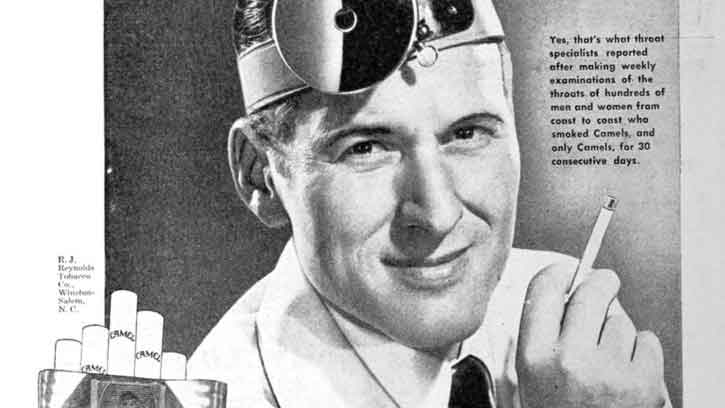
Overtime, a clearer picture emerged—not through any single revelation, but a cumulative process of declassification, journalistic perseverance, and legal obligation—that emphasized that beneath the veneer of corporate respectability lay deliberate, orchestrated deception. This painful proof ultimately forced a public reckoning teetering on financial recompense and systemic reform.
Common Myths & Exaggerations
The history of the tobacco industry’s attempts to obscure scientific truths has naturally led to the development of several myths, often amplified by public sentiment and misinformation.
One common misconception involves attributing contemporary tobacco regulations solely to the tobacco industry's historical missteps. While the industry's misconduct certainly played a role, these regulations also evolved through decades of broader public health advocacy and evolving scientific understanding.
A persistent myth involves the notion that all tobacco company executives were complicit in deception. While many were indeed aware and complicit, historical records indicate that not universally all members understood the depth of manipulation or strategic motives of larger corporate agendas.
Another widely expressed myth, rooted more in exaggeration, is the overstatement of alleged scientific corruption—suggesting that funded scientists deliberately lied to sway findings. While industry influence was undeniably substantial, many scientific participants conducted research free from conscious manipulation, even if certain conclusions were amplified by tobacco firms to advantageously sway public opinion.
Finally, the assertion that the tobacco industry created the youth market from scratch is overstated. Although their actions certainly influenced youth smoking rates, numerous intersecting societal factors—advertising, cultural trends, and peer pressure—equally played into the flourishing of youth smoking during the 20th century.
Separating fact from fiction in examining the tobacco saga is crucial for understanding how misconceived truths evolve into accepted narratives over time.
Why It Matters
The complex web of cover-ups and deceit spun by the tobacco industry over the decades holds a profound significance that resonates beyond the immediate realm of public health or legislative ramifications.
Legally, the uncovering of these deceptions established pivotal precedents for corporate accountability, underscoring the necessity of stringent regulatory oversight and the implementation of consumer protection laws. The unprecedented legal actions, including the Tobacco Master Settlement Agreement, have consequently informed contemporary litigation and regulatory frameworks that now govern industries from pharmaceuticals to food production.
On a political front, this scandal drove critical legislative reforms, promoting comprehensive anti-smoking measures and restrictions. This involved the complete overhaul of marketing strategies, bolstering of youth protection clauses, and systematic scientific transparency to prevent the propagation of misinformation.
These events serve as a potent reminder in today’s context; the narrative of Big Tobacco operates as an allegory for the careful scrutiny needed in other industries where potential conflicts between profit motives and public safety persist. It pitches a cautionary tale on the dangers of corporate influence over public policy and health education, encouraging a holistic regulatory vigilance across sectors.
For contemporary society, the narrative surrounding the tobacco industry is not merely historical—it’s a testament to the necessity of an informed, skeptical public, aware of the potential for systemic deception by industries motivated by monetary gain. As new health challenges unfold globally, drawing on these lessons offers a blueprint in navigating corporate claims and consumer safety concurrently.
Connections to Other Archive Entries
Historical echoes of the tobacco industry’s strategies resonate beyond the realm of nicotine and smoke, forging connections with broader corporate narratives.
Comparisons can readily be drawn to the pharmaceutical industry's dealings during the opioid crisis, where litigation exposed manipulating research findings and marketing drugs despite known risks, mirroring tobacco's prioritization of influence over ethical standards.
Environmental scandals such as the infamous polychlorinated biphenyls (PCBs) case also parallel tobacco's history. Here, chemical companies withheld health impact data, underscoring a universal corporate strategy to minimize liabilities, similar to how cigarette firms initially disclaimed any health hazards.
These cross-industry narratives, archived in The Hidden History Archive, serve as somber reminders of recurring patterns—corporations prioritizing profit over public health. They underscore a critical need for continued vigilance, conscious policymaking, and ethical transparency across all sectors.
Sources & References
PRIMARY SOURCES
SECONDARY SOURCES
The Hidden History Archive is part of The Beacon Wire entertainment and informational platform. All archive articles are based on public sources, declassified documents, court records, and reputable journalism. Facts are clearly separated from allegations, disputed claims, and unsupported speculation. Nothing in this archive should be interpreted as legal advice or as incitement to harm. Readers are encouraged to consult primary sources directly.
We use cookies to improve your experience and analyze site usage. See our Cookie Policy for details.